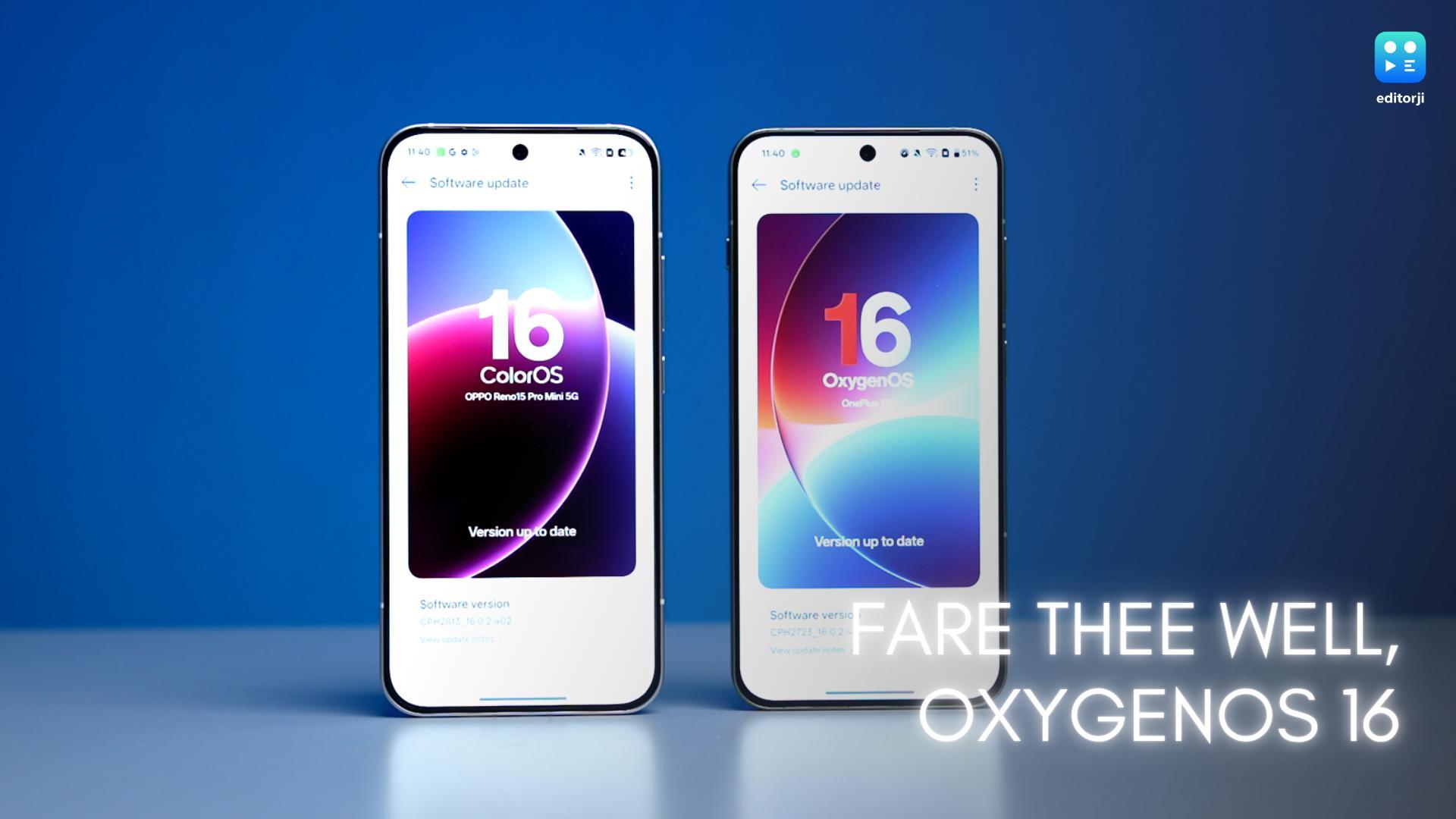
OnePlus is about to lose one of the things that made it unmistakably OnePlus. After more than a decade, the company has confirmed that OxygenOS is coming to an end, with future smartphones set to ship with Oppo's ColorOS instead. OxygenOS 16 will be the final release under the branding, while existing OnePlus devices will also make the switch as part of future software updates, a transition that's expected to begin alongside Android 17.
For years, OxygenOS wasn't just another Android skin. It was a key part of OnePlus' identity, earning a loyal following for its clean interface, fluid performance and restrained approach to software. At a time when most Android manufacturers were packing their phones with increasingly feature-heavy interfaces, OxygenOS stood out by doing the opposite.
OnePlus insists this isn't the result of a full merger with Oppo, maintaining that its hardware business will continue to operate independently. Even so, after integrating its after-sales service network with Oppo earlier this year, the move to ColorOS is another sign that the two brands are becoming increasingly intertwined, even if they continue to wear different logos.
OnePlus is retiring OxygenOS, but existing update promises will be honoured
According to OnePlus, OxygenOS 16 will be the final release under the OxygenOS branding. Every new OnePlus smartphone launched after the transition will run Oppo's ColorOS instead, while current devices will gradually migrate to the new software during their update cycle.
Importantly, OnePlus says all existing software support commitments will be honoured. Devices promised Android version upgrades and security patches will continue receiving them, even after switching to ColorOS.
Although the company has repeatedly dismissed rumours of a full merger with Oppo, it has acknowledged that certain processes are being streamlined between the two brands. The move to a single software platform is the latest example of that strategy.
Earlier this year, OnePlus also integrated its after-sales network with Oppo in India, allowing OnePlus customers to visit Oppo service centres for repairs and warranty claims. Together, these changes point towards a closer operational relationship between the two companies, even if they continue to operate as separate consumer brands.
OxygenOS and ColorOS: Same foundations, but different
For many enthusiasts, the news may feel more emotional than practical.
At their core, OxygenOS and ColorOS already share the same software foundation. Ever since OnePlus merged OxygenOS with ColorOS' underlying codebase in 2022, the two operating systems have steadily grown closer. The fact that almost every Android skin has also been borrowing interface ideas and features from iOS has only narrowed the gap further.
Even so, OxygenOS managed to retain its own personality.
Compared to ColorOS, OxygenOS offered a cleaner, more restrained interface with fewer visual flourishes. It was generally regarded as slightly lighter and more responsive in everyday use, particularly among long-time OnePlus users who preferred a near-stock Android experience. ColorOS, by comparison, leans into greater customisation, richer animations and a broader suite of AI-powered tools for editing, productivity and personalisation.
The practical differences between the two are no longer dramatic, but the philosophy behind them remains distinct. OxygenOS appealed to users who wanted simplicity, while ColorOS has increasingly focused on offering as many features as possible.
A Defining Part of OnePlus' Identity
From a purely technical standpoint, consolidating software development makes sense.
Maintaining multiple Android skins that already share much of the same code requires separate development, testing and quality assurance teams. Moving OnePlus onto ColorOS should allow Oppo to streamline development, roll out updates more efficiently and quickly, fix bugs faster and concentrate resources on new features rather than maintaining parallel software experiences.
But software has always been about more than features.
For years, OxygenOS represented what made OnePlus different from every other Oppo brand. Even as the hardware became increasingly similar across Oppo, OnePlus and Realme devices, OxygenOS remained a reminder that OnePlus still had its own identity.
With ColorOS now set to replace it entirely, that distinction becomes much harder to see.
OnePlus says its hardware business will continue to chart its own course, and that may well prove true. Yet with service operations already integrated and software now being unified under Oppo, OxygenOS' retirement feels like the end of an era for a brand whose identity was built as much on its software as the hardware of its smartphones.