The mid-range smartphone market has never been more competitive. Whether your budget is around ₹25,000 or stretches closer to ₹30,000, you'll find plenty of options promising better cameras, larger batteries, faster charging and more powerful processors. Standing out has become increasingly difficult, especially as rising component costs and memory prices have made meaningful upgrades harder to deliver without increasing prices.
After spending time with the Galaxy A27, it became clear to me that Samsung isn't trying to win the specifications race. Instead, it has focused on the areas where the Galaxy A series has traditionally excelled. You get a refreshed design, a 120Hz Super AMOLED display, Qualcomm's Snapdragon 6 Gen 3 chipset and One UI 8.5 based on Android 16.
On paper, several rivals offer more impressive hardware. But Samsung is betting on its polished software experience, reliable cameras and unmatched long-term software support instead. So, after using the Galaxy A27 as my daily driver, is that enough to justify its asking price? Let's find out.
Samsung Galaxy A27 Design: Familiar Style, With Some Thoughtful Refinements
Samsung hasn't dramatically changed its design language over the past few years, and the Galaxy A27 continues that trend. It looks and feels very similar to last year's Galaxy A26. That's not necessarily a bad thing, because the previous design was already comfortable to use, but if you were expecting a major visual refresh, you won't find one here.
The Galaxy A27 uses Gorilla Glass Victus+ for both the front, and back glass, along with a plastic frame. In the hand, it feels reassuringly solid and more premium than many mid-range phones with plastic rear panels.
At 7.8mm thick and weighing 200g, it isn't the lightest device around, but I never found it uncomfortable to hold during extended use. The flat frame offers a secure grip, while the slightly raised section on the right houses tactile power and volume buttons that are easy to locate without looking.
The side-mounted fingerprint scanner is quick and accurate most of the time, although at this price, I was expecting an in-display scanner. Every now and then, I noticed a slight delay when waking the phone, along with a somewhat sluggish unlock animation.
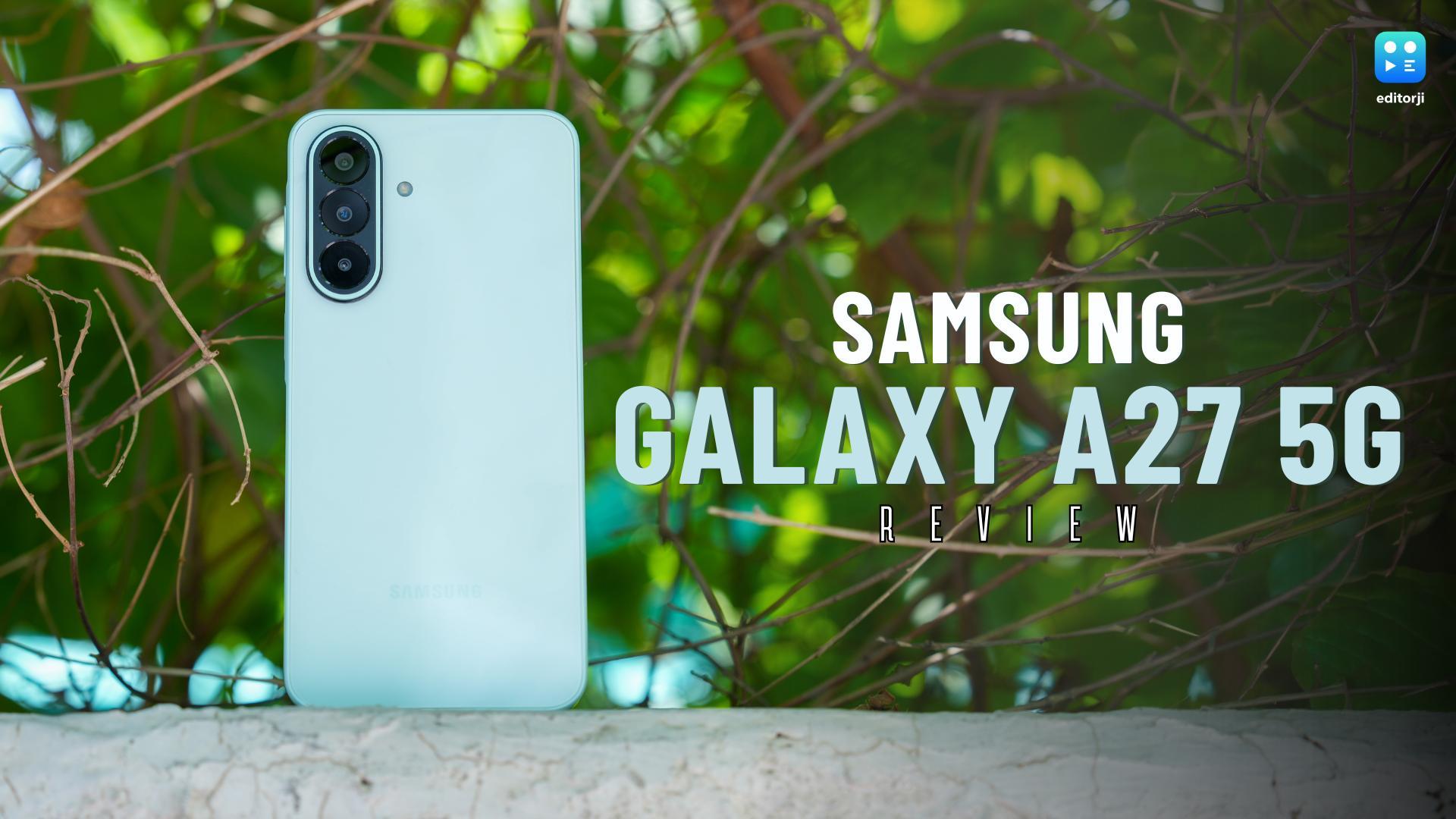
Around the back, Samsung has retained the familiar pill-shaped camera module, although it now gets a colour-matched border that blends more neatly into the rear panel. It's a subtle tweak, but I think it gives the phone a cleaner, more polished look.
Not everything is an improvement, though. The IP64 rating is actually a downgrade from the Galaxy A26, which feels like an odd decision.
My biggest complaint, however, is the haptics. The standard vibration motor lacks the crisp feedback I've come to expect at this price point.
Getting back to the positives, you get a hybrid SIM slot, so you can add a microSDXC card, making the overall experience feel a whole lot more positive than what others in this price range have started offering this year.
Samsung Galaxy A27 Display & Audio: Excellent Visuals, Ordinary Sound
The Galaxy A27 features a 6.7-inch Full HD+ Super AMOLED display with a 120Hz refresh rate, support for around 16 million colours, and Corning Gorilla Glass Victus+ protection. On paper, it offers the sort of specification sheet you'd expect from a competitive mid-range smartphone, combining a high-resolution panel with smooth scrolling and a durable layer of protection.
After using it for a while, I came away fairly impressed with the screen itself. Samsung continues to deliver some of the best AMOLED panels in this segment, and that shows here. Colours look rich without appearing overdone, blacks are suitably inky, and contrast remains excellent whether you're watching videos, browsing social media or simply reading articles. The move to a modern punch-hole cut-out also makes the front look cleaner than older Galaxy A-series devices.
That said, the bezels are thicker and less symmetrical than I'd have liked, especially that bottom chin. The A27’s competition, from practically every other major manufacturer at this pricepoint, comes with slimmer bezels. Another surprising omission is the lack of an Always-On Display, which feels unusual on an AMOLED phone.
Audio, meanwhile, is handled by a single bottom-firing speaker. It gets loud enough for casual use, but the sound profile is heavily biased towards vocals and higher frequencies, leaving music and movies without much bass or depth.
Samsung Galaxy A27 Cameras: Reliable and Consistent
The Galaxy A27 features a triple-camera setup comprising a 50MP primary sensor with OIS, a 5MP ultrawide camera and a 2MP macro lens, while selfies are handled by a 12MP front-facing camera. On paper, it isn't the most exciting camera system in this segment, but after using it extensively, I found Samsung's focus on consistency more valuable than headline-grabbing specifications.
The 50MP primary camera is easily the star of the show. In daylight, it captures detailed images with natural-looking colours and well-controlled dynamic range. Samsung has resisted the temptation to oversaturate photos, so the results look realistic without appearing dull. I was particularly happy with the portrait mode, which produced accurate skin tones, dependable exposure and surprisingly clean edge detection, even around trickier subjects like curly hair. The background blur is software-generated, but it rarely looks distracting.
I also enjoyed shooting close-ups. Whether I was photographing flowers or everyday objects, the main camera retained plenty of detail and reproduced colours faithfully without relying on excessive sharpening or heavy processing.
The 5MP ultrawide camera is useful when you need a wider perspective for landscapes or group photos, although the drop in quality is immediately noticeable. Images lose fine detail, and softness around the edges becomes fairly obvious, so I generally preferred sticking to the primary camera whenever possible.
Low-light performance turned out to be better than I expected. The main sensor keeps noise under control, handles artificial light sources well and preserves a respectable amount of detail in darker scenes. Indoor shots also maintain a pleasing balance between highlights and shadows.
For video, the rear camera supports recording at up to 4K at 60fps or 1080p at 30fps. Footage is sharp, and the electronic stabilisation does a respectable job of smoothing handheld movement, even if some rivals still perform better.
The 12MP selfie camera is another highlight. I consistently got sharp selfies with accurate skin tones and good HDR performance, making it a dependable option for video calls and social media.
Overall, I found the Galaxy A27 to be a reliable everyday camera phone. It won't be my first recommendation for photography enthusiasts, but if your priority is predictable, natural-looking results across most situations, it gets the job done well.
Samsung Galaxy A27’s Performance: Reliable, Day-in, Day-out
The Galaxy A27 is powered by Qualcomm's Snapdragon 6 Gen 3 chipset, paired with LPDDR5X RAM and UFS 3.1 storage. In day-to-day use, I found the phone to be perfectly capable of handling the basics. Apps launched quickly, multitasking felt smooth enough, and routine tasks such as messaging, web browsing, streaming videos, checking social media and using navigation apps never posed a problem. The fast UFS 3.1 storage also helps keep loading times short, making the overall experience feel responsive.
Even when I had multiple apps open, switched between emails, social media and Chrome tabs, or jumped into a video call, the Galaxy A27 kept up without any major hiccups. For the average user, there's more than enough performance on offer.
Where the phone begins to fall behind is under heavier workloads. At this price, several competing smartphones now ship with newer Snapdragon 7-series processors that offer noticeably stronger CPU and GPU performance. If raw power or gaming is high on your priority list, there are better options available.
Gaming, in particular, isn't the Galaxy A27's biggest strength. Casual titles run without any issues, but more demanding games require lower graphics settings to maintain smooth gameplay. During my testing, frame rates generally hovered between 50 and 55fps on smoother graphics presets. It's certainly playable, but it doesn't deliver the sort of performance I'd expect from the most powerful phones in this segment.
Samsung Galaxy A27 Software: OneUI 8.5 Continues To Lead The Pack
If there's one area where the Galaxy A27 genuinely stands out, it's the software experience. The phone ships with One UI 8.5 based on Android 16, and after using it for a while, I was reminded why Samsung's software remains one of the biggest reasons to buy its smartphones. It isn't just polished, it's packed with genuinely useful features that many competitors still don't offer.
Most of Samsung's familiar ecosystem features are present here, including Samsung Wallet with NFC tap-to-pay, Secure Folder, Good Lock, Edge Panels, Multi Window, Smart Switch and Samsung Knox. I particularly appreciate Good Lock, which lets me customise everything from the lock screen and quick settings to gestures and animations. If you enjoy tweaking your phone, there are very few Android skins that offer this level of flexibility.
Samsung has also brought a healthy dose of AI to the Galaxy A27. You get Gemini, Circle to Search, Object Eraser, AI Select, custom photo filters, Gallery editing suggestions, Voice Transcription and Read Aloud in Samsung Internet. The Now Bar is another welcome addition, displaying live information such as media controls, navigation directions and sports scores without needing to unlock the phone. There's even Direct Voicemail built into One UI, allowing calls to be sent to voicemail without relying on your carrier's service.
Bixby is still available, although it doesn't offer the more advanced AI capabilities found on Samsung's flagship Galaxy S series devices.
Perhaps the biggest advantage, however, is Samsung's long-term software commitment. The Galaxy A27 is promised six major Android upgrades along with six years of security updates, which is exceptional for a phone in this price range. When I combine that with One UI's smooth performance, clean interface and extensive feature set, it's easy to see why I consider the software to be one of the Galaxy A27's strongest selling points.
Samsung Galaxy A27 Battery & Charging: Dependable, But Slow Charging
The Galaxy A27 packs a 5,000mAh battery with support for 25W fast charging. While that capacity is perfectly respectable, it's no longer class-leading. Several Chinese rivals in the same price segment now offer significantly larger batteries, giving them an edge when it comes to outright endurance.
Even so, I had little reason to complain during everyday use. With a mix of web browsing, WhatsApp, Telegram, social media, music streaming, phone calls and a bit of casual gaming, I consistently ended the day with around 20 to 25 per cent battery remaining. Screen-on time generally ranged between seven and eight hours, which is a noticeable improvement over the Galaxy A26.
Charging, however, remains the weaker part of the experience. Using a 70W charger, the phone still took roughly 90 minutes to go from empty to full, making it one of the slower-charging devices in its segment.
Samsung Galaxy A27 Verdict: A Well-Rounded Phone That Gets The Essentials Right
After using the Galaxy A27 as my primary phone, I came away with the feeling that Samsung has focused on getting the fundamentals right rather than chasing flashy specifications. It isn't trying to offer the biggest battery, the fastest charging or the most powerful chipset in its class. Instead, it's built around a polished software experience, dependable cameras, a vibrant AMOLED display and the kind of long-term software support that very few brands can currently match.
That isn't to say it's without flaws. The Snapdragon 6 Gen 3 is perfectly adequate for everyday use but falls behind several rivals when it comes to gaming and sustained performance. The IP64 rating is a step backwards from its predecessor; the single speaker is average, the haptics feel inexpensive, and 25W charging began looking dated aeons ago in this segment.
Even so, I don't think the Galaxy A27 is aimed at spec hunters. If your priorities revolve around stability, clean software, reliable cameras, useful AI features and the confidence of six years of Android and security updates, Samsung has put together a phone that's easy to recommend. It may not top benchmark charts or win every specification battle, but it delivers a refined, dependable experience that I think many buyers will appreciate long after the excitement of launch day fades.