Top-tier smartphones have started to feel a bit boring and stale this year. We all know the drill by now: the exact same flat edges, the identical oversized camera bumps, generic AI marketing talk, and pictures that look a bit too artificial. Most premium devices are practically interchangeable at this point, but the Oppo Find X9 Ultra actually stands out from the crowd.
This is Oppo's direct challenge to the Vivo X300 Ultra, but the strategy here is totally different. Vivo wanted you to mess around with extra modular gear and clip-on lens attachments to get the best shot. Oppo, on the other hand, figured a true flagship should give you maximum performance straight out of your pocket without the extra gimmicks.
I have been using the Find X9 Ultra as my main device for over two weeks now, and I think Oppo made the right call. It is a massive phone, it feels incredibly heavy, and that Rs 1,69,999 price tag will absolutely make your eyes water. But Oppo clearly had one goal in mind: build an absolute beast of a camera phone without cutting corners on the rest of the flagship experience. They got incredibly close.
Oppo Find X9 Ultra Review: Design & Build
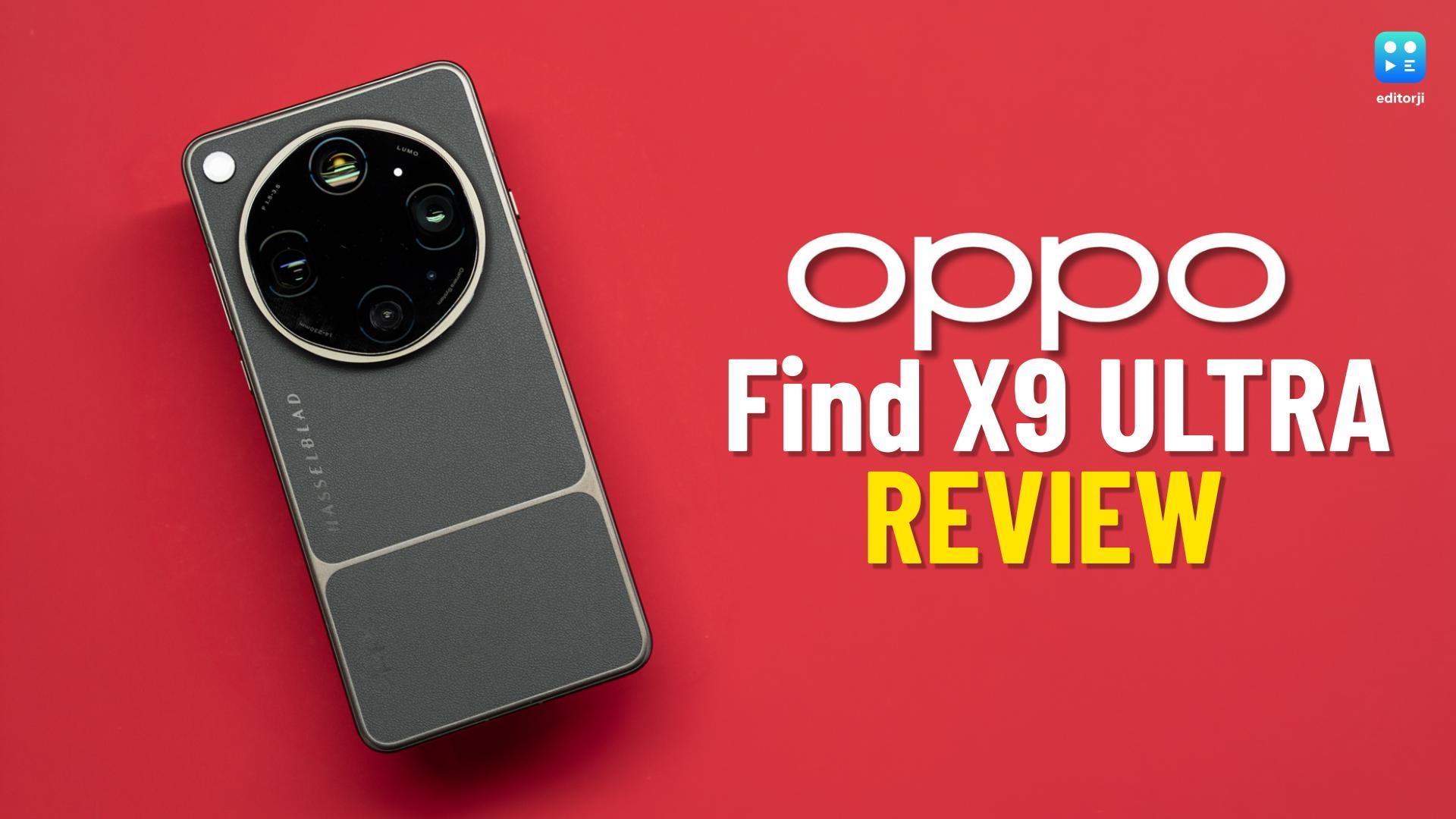
The massive camera housing on the Oppo Find X9 Ultra grabs your attention immediately, but the real story is how this thing feels in your hand. I have been testing a steady stream of slick, glass-backed flagships lately, so switching to the Tundra Umber version was a massive surprise. The textured vegan leather back feels incredibly soft and grippy. Instead of sliding around, the phone stays firmly planted in your palm, which is a massive relief given how large the hardware actually is.
Make no mistake, this is a hefty device. It weighs 235 grams and measures 9.1mm thick, putting it right in the same size bracket as rival heavyweights like the Samsung Galaxy S26 Ultra and iPhone 17 Pro Max. The Vivo X300 Ultra is slightly thinner but carries a bit more weight. Still, Oppo nailed the ergonomics here. The balance is spot on, and that textured rear panel saves your wrists during long periods of doomscrolling or shooting. Oppo also ditched the curved edges for a flat screen and an industrial aluminium frame, making the daily experience feel much cleaner and more precise.
Over on the back, Oppo embraces the camera-centric look rather than trying to downplay it. The main housing is round, but the lenses inside sit in a sharp hexagonal layout that catches the light nicely. A clean metal bar cuts across the lower half of the back panel, balancing out the look so the top doesn't visually overpower the rest of the chassis.
The layout isn't entirely perfect. Because the camera housing extends quite low on the back, my index finger kept brushing against the glass elements when I held it naturally. You will also have to deal with a lot of wobbles if you type while your phone is resting on a desk.
The physical controls are where things get fun. The dedicated shutter button is easily one of my favourite features. It is pressure-sensitive, letting you zoom smoothly just by sliding a finger across it, which beats tapping a screen any day. One press pulls up the camera, and a double-tap snaps the photo. On the opposite frame, the customizable Snap Key handles shortcuts nicely.
The durability is rock-solid too. You get a rare combo of IP66, IP68, and IP69 ratings alongside Gorilla Glass Victus 2 up front, so you can toss it into a bag without stressing. Every single piece of this hardware feels like it serves a clear purpose.
Oppo Find X9 Ultra Review: Display & Audio Quality
For the display you are looking at a massive 6.82-inch LTPO AMOLED panel running at 3168 x 1440, and honestly, the sharpness is spectacular. Fine print and dense photos look incredibly clean. They are hyping up a 144Hz refresh rate this generation, but don't expect to see that all the time. For normal apps and swiping around, the software locks things at 120Hz and aggressively scales down to 1Hz when you stop scrolling to save your battery. That full 144Hz speed is pretty much exclusive to a handful of supported games.
The overall panel quality is top-tier. Colours feel vibrant without hitting that fake, glowing look some competitors love, and the viewing angles are perfect. If you work outdoors, the 1800 nits in HBM, or high brightness mode handles direct noon sunlight without a struggle, while HDR peak brightness pushes up to 3600 nits. Dolby Vision and HDR10+ content look incredible here.
Late-night users will appreciate the 2160Hz PWM dimming, which keeps screen flicker from giving you a headache in the dark. The ultrasonic fingerprint sensor underneath is incredibly fast too. Setup takes seconds since you just glide your thumb around the glass instead of tapping repeatedly.
As for the sound, the built-in stereo speakers get plenty loud. Vocals stay perfectly intelligible when gaming or watching videos, and there is a surprising amount of lower-end thump so music never feels hollow.
Oppo Find X9 Ultra Review: Performance & Benchmarks
Oppo threw in the Snapdragon 8 Elite Gen 5 chipset, backed it up with 12GB RAM, and gave you 512GB of UFS 4.1 storage. Yes, those are massive numbers, but the real magic is how well Oppo has optimised the software. Everything just flies. You can jump between a dozen heavy apps without a single hint of lag, and mobile games run beautifully.
The cooling setup is what actually impressed me during testing. I looped the 3DMark Wild Life Extreme stress test to see where it would choke, and the phone topped out at 43 degrees Celsius. That is a fantastic result when you realise the Vivo X300 Ultra runs noticeably hotter under the same heavy load. The stability settled right around 69 per cent, which is perfectly normal behaviour for this generation of chips.
If you care about synthetic benchmark scores, it is basically a tie between the two flagships. The Oppo scores slightly higher on AnTuTu and Geekbench multi-core runs, while the Vivo takes a tiny win in single-core metrics. Honestly, you will never notice a difference outside of a lab because both feel lightning fast. The glass around that massive camera module does get a bit warm if you shoot 4K video for twenty minutes, but it never throttles or stutters. Also, the typing experience is excellent. The X-axis vibration motor gives you these crisp, tiny taps that make texting incredibly satisfying.
Oppo Find X9 Ultra Review: Battery Life & Charging
Oppo did something crazy with the Find X9 Ultra by packing a massive 7,050mAh silicon-carbon battery inside. It is easily the biggest cell you can get on an Ultra flagship right now, and the real-world performance is ridiculous. Even during long days packed with heavy camera use, active GPS maps, 5G data, and streaming audio, this phone refuses to die before bedtime. If you are a light user, hitting two full days of juice is entirely possible.
They talk up a custom PowerCore Battery Management Chip to justify the efficiency, but the main takeaway is simply that the stamina rules. For charging, Oppo bundles a 100W SuperVOOC brick in the box. A complete zero to 100 per cent charge takes roughly 45 minutes. That might look a bit slower on a spec sheet compared to rival brands, but remember you are filling a significantly larger tank here, so the actual real-world difference is completely unnoticeable.
Generic USB-PD chargers will still juice this thing up at 55W speeds, which actually beats out what most flagships can do with their official chargers. You also get 50W wireless charging speeds, though Oppo did skip out on Qi2 magnetic alignment this year.
Oppo Find X9 Ultra Review: Camera Test
Let’s be real, the only reason you are even considering this phone is that massive, unapologetic camera bump on the back. After shooting with it relentlessly, I am just going to say it: Oppo has put together what might be the most fun and versatile camera system on any phone right now.
The spec sheet is frankly ridiculous. You get a massive 200MP main camera, another 200MP shooter locked at a 3x zoom for portraits, a 50MP ultrawide with autofocus, and a second periscope lens hitting a native 10x optical zoom. It sounds like pure marketing overkill, but the actual shooting experience is incredibly seamless.
The best part about this setup is that your photos do not look like they came from a smartphone. Most flagships lately are obsessed with hyper-realistic, clinical sharpness, which just makes images look flat, cold, and boring. Oppo went a totally different route. The processing here has an actual artistic character without looking fake. Colours are rich, the contrast is deep and punchy, and the images feel cinematic right out of the gallery. Hasselblad's tuning adds this gorgeous warmth that makes you want to keep clicking.
The main 200MP sensor is an absolute beast. It handles difficult lighting without breaking a sweat, highlights stay under control, and the details are incredibly clean. I love how it handles harsh afternoon sun because it finds a beautiful middle ground instead of blowing out the sky or turning shadows into pure black. Even the ultrawide stands out because the built-in autofocus lets you capture close-up macro shots that are actually sharp.
But the zoom lenses are why you buy this phone. That 3x portrait lens quickly became my absolute default camera. Portraits look incredible because the larger sensor creates a beautiful, natural background blur before the software portrait tricks even kick in. Compared to the Vivo X300 Ultra, which goes for a very flat and natural look, the Oppo shoots portraits with much brighter tones and heavier contrast.
The 10x optical zoom is just as wild. Usually, pushing a phone past 5x zoom gives you a muddy mess unless the lighting is perfect. The X9 Ultra completely surprised me here. The 10x shots are genuinely sharp and usable every day for street photography or distant architecture. Plus, the sensor is large enough that images do not fall apart into noise when you step indoors.
Video is just as solid. Switching lenses while recording is perfectly smooth, and you can shoot 4K Dolby Vision across every single lens. If you want total control, the Master Mode lets you tweak ISO, white balance, and RAW settings manually. Oppo did not build a scientifically perfect camera phone here. They built one that takes beautiful, moody photos, and honestly, that is way better.
Oppo Find X9 Ultra Review: Software & AI
Oppo is shipping the Find X9 Ultra with ColorOS 16 built on top of Android 16, and honestly, this is easily the most refined software experience they have ever delivered. The system animations feel incredibly fluid, and jumping between active apps is completely seamless. To be frank, compared to the Vivo X300 Ultra and its highly convoluted OriginOS 6 setup, ColorOS 16 is much cleaner and way easier to live with on a daily basis.
Now, Oppo definitely copied a few homework assignments here. Their new Live Space notification layout is clearly inspired by Apple's Dynamic Island. There is also a massive focus on translucent menus, chasing that trendy liquid glass aesthetic everyone loves right now. Still, I do appreciate that it stays out of your face.
The embedded AI features also remain blessedly quiet until you ask for them. The audio recorder transcribes conversations and labels different speakers in real time, Mind Space automatically files away your screenshots, and you get quick text summarisation throughout the system. It is mostly invisible utility, which is exactly how software should be.
They also fixed the camera interface, using swipe gestures to hide advanced settings so your viewfinder stays clean. On the lockscreen, notifications now collapse into tiny, tidy capsules, and full-screen album art looks brilliant.
As for updates, Oppo is promising five major Android platform updates and six years of security patches. It is not class-leading anymore, but it is more than enough coverage for most people.
Oppo Find X9 Ultra Review: Verdict
The Oppo Find X9 Ultra feels like the absolute peak of the giant Ultra phone trend. Oppo clearly had no interest in creating a subtle or minimalist flagship. Instead, they went completely over the top, packing in a massive battery, a giant camera module, dual periscope lenses, and incredibly fast charging. They wanted a no-compromise camera phone, and honestly, they pulled it off.
What stands out most is how balanced the actual phone feels despite all that heavy hardware. The cameras are obviously the headline story, but the rest of the device holds its own. The battery life is top-tier, the display looks beautiful, thermals stay completely under control, and ColorOS is finally clean enough that it does not ruin the experience.
Oppo's distinctive image processing will not please everyone since it favours a contrast-heavy, moody look over the flatter profiles from Google or Vivo. But after shooting hundreds of pictures, the conclusion is obvious: these photos just look incredibly exciting.
The phone isn't perfect. The massive camera bump gets in the way of your fingers and the update schedule lags slightly behind Samsung. But none of those complaints matters when you look at the bigger picture. The Find X9 Ultra manages to make using a flagship smartphone feel genuinely fun again, and that is a massive achievement.