The Vivo X300 Pro comes to us at a time when nearly every major flagship brand is reworking its entire photography playbook. OnePlus has stepped away from it’s collab with Hasselblad and built a fresh imaging system powered by the DetailMax Engine inside the OnePlus 15. iQOO, a company that usually focuses on sheer speed, has also shifted its priorities this year by giving the iQOO 15 a far more serious camera setup. Across the industry, everyone seems to be rewriting their rules for mobile photography from the ground up.
Vivo stands apart because it never needed to rediscover its direction. It established its reputation in mobile imaging long ago, and that legacy still holds strong. When everyday users casually place your photos next to those from an iPhone or a Pixel and still lean towards yours, the task is no longer to close gaps. The real effort is to maintain that lead.
Which brings us to the obvious questions. What exactly has Vivo changed or refined this year? Does it still hold the top spot in smartphone photography in 2025? And beyond the camera, how well does it perform as a premium flagship priced at ₹1,09,999 for the single 16 GB RAM and 512 GB storage version?
After spending two full weeks with the Vivo X300 Pro, testing every feature thoroughly and using it as my everyday phone, I think I can answer that
Vivo X300 Pro Review: A camera setup that feels built for creators
I have been testing the Vivo X300 Pro for a while now, and the first thing I wanted to figure out was simple. Is this the new camera champion for 2025? Vivo has been delivering excellent imaging for years, so I knew it would perform well, but I honestly did not expect it to be this enjoyable to use. Within a day of shooting with it, I felt like a discounted version of Joseph Radhik or Atul Kasbekar. All I really had to do was compose the frame, tap the shutter and let the phone handle the rest.
The camera hardware alone reads like a checklist that any photography enthusiast would appreciate. The primary camera uses a 1/1.28 inch 50MP sensor with optical stabilisation. The telephoto setup is built around a 200MP periscope sensor paired with 3.5x optical zoom. The ultrawide camera is a 50MP unit. The front camera is also 50MP and can shoot 4K video at 60 frames per second. On paper, it already feels stacked, and in day-to-day use, that impression stays true.
The main camera consistently produced shots that made me want to keep finding new things to photograph. In bright outdoor conditions, images looked lively, crisp and incredibly well judged in terms of exposure. The dynamic range is handled confidently. Shadows do not collapse into muddy patches and highlights rarely blow out without reason. Colours look vibrant without being pushed to a point where they turn unrealistic.
Low-light performance is where this sensor really shines. The amount of detail it captures in dim environments is remarkable. There were moments where I checked the gallery and thought an invisible light source had been added to the frame. Surfaces on buildings, strands of fur, fabric patterns and even foliage stayed beautifully textured. The results did not turn waxy or muddy. Several of the evening shots I captured looked ready to be printed and hung on a wall.
Zoom performance follows the same trend. At 2x and 3x, sharpness stays intact and the overall look stays consistent with the main camera. Vivo’s colour tuning remains reliable, and the white balance rarely drifts into warmer or cooler territory without reason. The real standout is the 200MP periscope camera. This thing feels like a dedicated tool packed inside the phone. Close-up photos show so much detail that I kept zooming into textures just to appreciate how much it could resolve. At times, I felt the contrast leaned a bit higher than ideal, but the overall clarity made up for it. Yes, the phone uses plenty of AI, but the processing never crossed into looking fake or glossy.
Portrait shots were equally impressive. Even when I did not switch to portrait mode, the natural depth of field produced by the main camera created a soft background blur that looked like something out of a proper interchangeable lens camera. When portrait mode was enabled, edge detection stayed accurate, and the separation between subject and background looked clean.
The ultrawide camera also held up well. It handled large scenes with minimal bending at the edges, and the annoying fisheye look that many phones struggle with was barely noticeable. The colour profile still needs a slight amount of fine tuning to perfectly match the main sensor, but it is already dependable enough for landscape shots and architectural photos.
The 50MP selfie camera performed nicely in most conditions. Skin tones looked believable, and colours stayed true to life. Under harsh backlighting, the phone sometimes brightened the entire frame a little more than required, which shifted skin tones slightly, but the results were still usable for both photos and video.
Video recording was the part I approached with caution because Vivo has traditionally been behind Apple in this category. This time, though, the gap feels much smaller. All four cameras can shoot 4K at 30 and 60 frames per second. The main and telephoto cameras can even record 4K at 120 frames per second. The primary lens supports 8K at 30 frames per second at both 1x and 2x. Dolby Vision recording works in all modes except 8K. Stabilisation is smoother than before, colours look pleasing and the telephoto unit captures steadier footage than I expected. Digital zoom still loses detail, but that is completely normal. Pro mode includes Log recording with a live preview and a built-in LUT, which is perfect for anyone who enjoys colour grading.
After testing everything, I genuinely feel that if Apple does not deliver a major upgrade in video recording soon, Vivo will take the top spot here too. It has already beaten most brands in photography, and the video gap with the iPhone is now the narrowest it has ever been.
Vivo X300 Pro Review: A refined design that keeps things clean and premium
The Vivo X300 Pro instantly reminded me of older X-series models, yet it still feels like a clear step forward. The overall shape is recognisable, but the tweaks this year give it a more polished character. Vivo has gone with a completely flat front and back, and when that is paired with the frosted glass rear and flat aluminium frame, the phone feels far more modern. It has that clean, slab-like look many 2025 flagships are embracing, and it sits very naturally in my hand during long sessions of gaming, typing or watching videos.
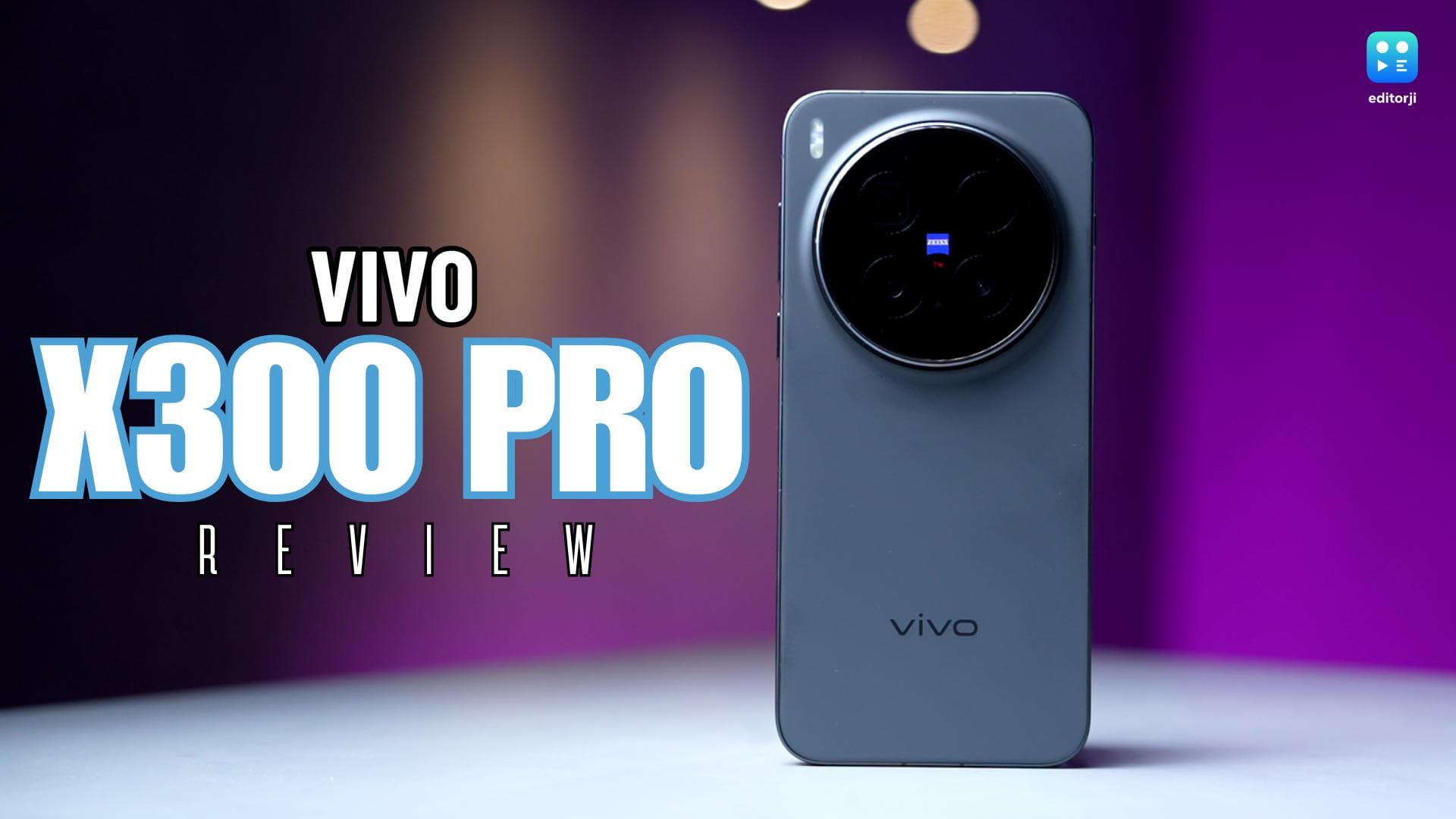
The moment you turn the phone around, the familiarity disappears because the camera module still grabs all the attention. The island remains large and sits high on the back, so there is no hiding it. What I like, though, is how Vivo has refined the design. The thick border around last year’s camera housing has been replaced with a neat circular ring. The ribbed metal texture on the ring continues, and it adds a nice premium touch that makes the module feel more deliberate rather than oversized.
Even with the substantial camera hardware and glass on both sides, the phone never felt awkwardly weighted. The X300 Pro measures 226 grams and about 8 mm in thickness, which sounds heavy on paper, yet the distribution is done well. Whether I was shooting photos, gaming for long stretches or simply scrolling through social media, the phone did not feel uncomfortable or top-heavy. It is definitely not a light device, but the ergonomics keep the weight from becoming annoying.
As for the bump itself, I have no real complaints because the output it delivers more than justifies the size. Vivo includes a soft rubber case in the box, and it not only improves the grip but also visually tones down the camera bump, which helps the overall design look a little cleaner.
My review unit is the Elite Black colour, and I think it might be my favourite finish from the entire X-series so far. The matte texture feels smooth and premium, barely attracts fingerprints and only becomes slightly slippery when I use it without the case. The placement of the buttons and ports feels natural, and I am happy that the shortcut button remains. The only thing I miss is the dedicated camera control key from the X200 Ultra.
For durability, the phone comes with IP68 and IP69 ratings, and the Diamond Armour Glass on the front held up perfectly during day-to-day use without visible wear.
Vivo X300 Pro Review: A display that stays elite without chasing gimmicks
The X300 Pro’s screen does not attempt anything wildly experimental, and I actually think that works in its favour. Vivo has reused the same display found on the X200 Pro and even the X100, and there is no real reason to complain because it was a flagship-grade panel back then and it still performs like one today. The phone features a 6.78 inch 2K LTPO panel with a 120Hz refresh rate, full DCI P3 colour coverage, 2000 nits of HBM brightness and an impressive 4500 nits of peak brightness. In everyday use, it consistently feels premium, fluid and exceptionally sharp.
HDR10+ and Dolby Vision support help round out the visual experience. No matter what I was watching or browsing, the panel delivered rich colours without pushing them into an unnatural zone. Highlights stayed controlled and textures remained detailed. Whether it was Netflix, YouTube or downloaded HDR clips, the display handled everything confidently, and I never felt the need to adjust the colour profile for extra punch.
There is an optional Vision Booster mode for people who want more saturation and deeper contrast. I tested it out for a short while, but eventually switched back to the standard tuning because it already looks lively and well-balanced.
What stood out more to me was the sheer number of eye comfort features Vivo has included. Smart Eye Protection Mode 3.0, Anti Fatigue Brightness 2.0, Adaptive Color Temperature, Full Range High Frequency PWM Dimming, Full Range DC Dimming and Night Eye Protection Mode all work behind the scenes to reduce strain. The screen also carries TÜV Rheinland Flicker Free and Low Blue Light certifications, which adds to the reassurance when I use the phone for long sessions.
The ultrasonic fingerprint reader is just as dependable as before. It unlocks the phone quickly, stays accurate and even works if my fingers are a little damp.
If I had to point out one weak link, it would be the speakers. They get reasonably loud and stay clear, but the overall audio lacks depth and feels slightly flat for a phone at this price point.
Vivo X300 Pro Review: A performance beast that loves showing off
The Vivo X300 Pro delivers the kind of performance you expect from a proper flagship, and a lot of that comes down to the Dimensity 9500. This chip holds its own against the Snapdragon 8 Elite Gen 5 and occasionally even feels a touch quicker in real use. My unit has 16GB of LPDDR5X Ultra RAM and 512GB of UFS 4.1 storage, so there is absolutely no shortage of speed anywhere in the system.
Calling the phone fast feels too mild. Across my two weeks of testing, the X300 Pro behaved like it was built to stay ahead of whatever I threw at it. General navigation is incredibly fluid, animations glide smoothly, and multitasking never forced the phone to pause or reset anything in the background. Even with a stack of apps open, the overall responsiveness remained consistent. It has the kind of reliability I expect from a flagship that costs more than a lakh, and it never once dipped below that expectation.
Gaming performance has also been impressive. I played multiple extended BGMI sessions lasting around 45 minutes at a time, and the phone barely warmed up. This is especially noteworthy because previous high-end MediaTek chips often ran hot even with aggressive cooling setups. Vivo’s approach this year uses a sizeable vapour chamber paired with a graphite sheet, and the difference is obvious. The X300 Pro manages heat extremely well, frame stability stays high and the phone never throttled enough for me to notice any drop in smoothness.
Overall, the Dimensity 9500 performs like a proper flagship-class processor and finally gives MediaTek the level of consistency and thermal control users have been waiting for.
Vivo X300 Pro Review: A smoother, shinier UI that refuses to slow down
The Vivo X300 Pro marks a proper turning point for the X series on the software front. It ships with OriginOS 6, and from the moment I started using it, the difference felt dramatic. The whole interface has been refreshed with a transparent, liquid-like design language that feels modern and polished. It reminded me a little of Apple’s glossy visual style, but it still carries enough of Vivo’s personality to stand out on its own.
Lock screen customisation has taken a big step forward. There are more layout options, more styles and an overall easier setup flow. Animations across the system feel smoother, and the dynamic island style pop-up now looks far more refined than previous versions. The newly designed icons and cleaner transitions give the software a level of sophistication that earlier builds of OriginOS never fully reached.
What surprised me most is the sheer smoothness of the entire system. App launches, fingerprint unlocks, swiping through menus and pulling down notifications all feel fluid. This is the first time Vivo’s software has had that uninterrupted premium feel from top to bottom. There were stretches during testing when I genuinely did not feel like going back to my other review devices because the experience here was so consistently pleasant.
OriginOS 6 also feels better organised. The revamped control centre looks sharper and behaves more predictably. The layout is less busy, icons match each other more neatly and the overall visual structure is far easier to follow. Origin Island adds an interactive element for apps such as Maps, Music and Clock. I do wish more third-party apps supported it, but the idea itself is fun and practical. Phone to PC mirroring and cross-device note syncing have already become a regular part of my everyday workflow.
There is also a visible push towards AI. You get tools for text and image creation, an AI circle search feature and enhanced editing options including object removal and image expansion. Most of these feel useful rather than gimmicky.
Vivo has also committed to five years of OS updates and six years of security updates, which significantly boosts the long term value of the X300 Pro.
Vivo X300 Pro Review: A battery setup that lasts longer than you expect
The X300 Pro packs a 6510 mAh battery, which is a slightly unusual capacity at a time when other brands are jumping to 7000 mAh and beyond. Even so, the battery life has been consistently reliable. I usually pulled six to seven hours of screen time on a full charge, and that included long gaming stretches and a fair amount of OTT streaming. With lighter use, the phone comfortably lasted a day and a half.
Charging speeds are equally dependable. The included 90W adapter takes the phone from zero to full in just under an hour, and you also get 40W wireless charging. The device supports both wired and wireless reverse charging for accessories, which adds extra convenience.
Vivo X300 Pro Review: A flagship that gets almost everything right
So, how good is the Vivo X300 Pro? In my experience, Vivo has not only protected its long-standing camera legacy, it has pushed it to a new high. The main, telephoto and ultrawide cameras deliver dependable results across every scenario I tried, and the consistency alone makes this the most enjoyable camera setup I have used this year. Video recording is still a notch below the iPhone, but the gap has never been this small.
The overall package feels equally strong. The refreshed design looks cleaner and more mature, the display continues to compete with the best in the business and the Dimensity 9500 keeps the phone running fast and cool without any drops in stability. OriginOS 6 might be the biggest leap of all. It finally feels unified, premium and smooth in a way previous versions never quite managed, and Vivo’s long-term update promise only strengthens the phone’s value.
Sure, the speakers could have used more depth and the camera bump remains large, but these are minor complaints in a device that excels in so many areas. At ₹1,09,999 for the 16GB and 512GB variant, the Vivo X300 Pro sets the standard for 2025 and is easily the phone to beat this year.