India on Saturday successfully completed the first unmanned test flight in its ambitious human space flight mission Gaganyaan, less than two hours after the launch was aborted with just four seconds to go for the lift-off.
After some tense moments following a system monitoring anomaly and two weather-related holds, the Indian Space Research Organisation(ISRO) said scientists simulated an abort situation for the Crew Escape System (CES) to carry the Crew Module(CM) out of the test vehicle TV-D1.
The module to test the safety of crew in emergency situations descended using parachutes for a splashdown into the Bay of Bengal with planned precision, the space agency said.
ISRO chief S Somanath said the crew module has been fully recovered from the sea and it has been brought to Chennai port.
"Eastern Naval Command units recovered the Crew Module — a path paved by extensive planning, training of Naval divers, formulation of Standard Operating Procedures (SOP) and joint communication by combined teams of Navy and ISRO," the Indian Navy said in a statement in the evening. The Navy, on its X handle, also shared pictures of its personnel recovering the module from the waters, about 10 km from the coast of Sriharikota.
The successful key test in the country's manned space programme was greeted with cheers at ISRO's Mission Control Centre(MCC) at Satish Dhawan Space Centre in Sriharikota. The test essentially involved launching the empty CM into outer space, bringing the module back to earth and recovering it from the sea after touchdown.
The Test Vehicle mission is a significant milestone for the overall Gaganyaan programme as a nearly complete system was integrated for a flight test.
Saturday's flight was the first of the two abort missions planned to test the safety mechanisms that will allow the Gaganyaan crew to leave the spacecraft in an emergency. It came close to two months after the successful soft landing of India's unmanned moon mission Chandrayaan-3 on August 23.
"I am very happy to announce the successful accomplishment of the TV-D1 mission. The purpose of the mission was to demonstrate the crew escape system for the Gaganyaan programme through a test vehicle demonstration in which the vehicle has gone up to Mach 1 and above, which is the speed of sound and initiated an abort condition for the CES to function," a beaming Somanath said from the MCC. Mach 1 is equal to about 1,200 km per hour.
The crew module is where the astronauts will be stationed in a pressurised earth-like atmospheric condition during the Gaganyaan mission. For the 34.9 metre tall rocket TV-D1, the CM was an unpressurised version, the ISRO said.
India plans to send up to three astronauts into space on a Low Earth Orbit of 400 km for three days and bring them safely back to the Earth as part of the Gaganyaan mission likely to be launched in 2025.
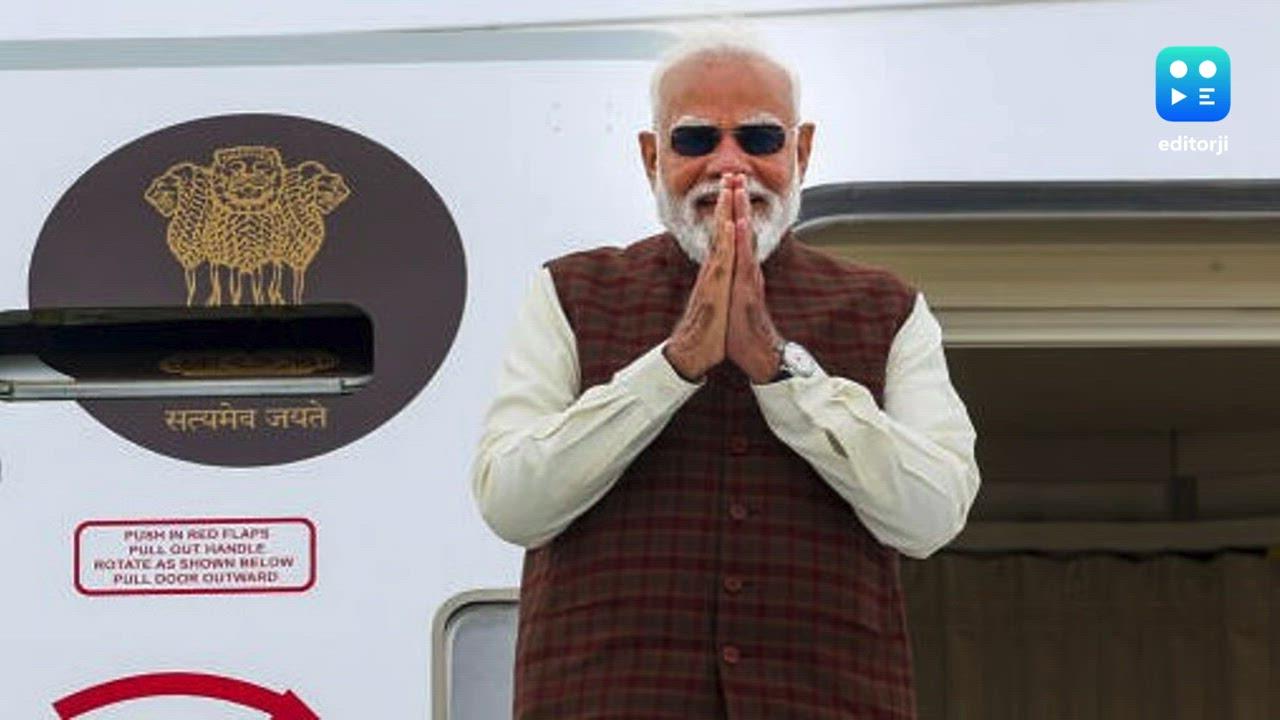
Prime Minister Narendra Modi said the successful launch on Saturday takes India a step closer to realising its first human space flight programme.
In a post on X, Modi said, "This launch takes us one step closer to realising India's first human space flight programme, Gaganyaan. My best wishes to our scientists at ISRO." Officials said the entire mission lasted for about 20-25 minutes with precise separation of the CM from the rocket which happened around 9 minutes after lift-off at 10 am. The separation of the CM was planned at an altitude of 16.9 km from the ground.
Saturday's mission is the first of a series of tests of systems and procedures by the ISRO with the aim to ultimately launch an Indian astronaut into space.
Smiles returned to the faces of ISRO scientists a couple of hours after the planned launch time as weather-related issues first forced a rescheduling of the lift-off, from the original 8 am to 8.30 am and again 15 minutes later. Again, just 4 seconds before the single-stage liquid propulsion rocket was set to soar into the skies at 8.45 am, a "hold" sign flashed on the screens.
"...after going through the nominal liftoff process, there was a hold issued by the ground computer which is called the automatic launch sequence computer. It detected sort of a non-conformance following the engine to continue the thrusting to further go," Somanath explained.
"This happened due to a monitoring anomaly in the system. So we could identify it very very fast and correct it." It took some time to refill the gases and once that was completed, the team went through the proper automatic launch sequence which checked the entire health of the vehicle, he said. Earlier, after the initial 'hold,' Somanath had said the vehicle was in good health.
And finally the mission computer and the ground support computer authorised the launch which allowed the rocket to take off at 10 am after a two-hour delay.
"I am happy our team could understand an anomaly, rectify it and come back as fast. Congratulations to everybody. It is a big training for everybody here to prepare for the Gaganyaan programme...happy that the launch could happen within the allocated launch window," the ISRO chief said.
"The CES took the crew module away from the vehicle and subsequent operations of the crew module, the separation of the CES, all the parachutes opening and the touch down at the sea at the required velocity has been very well accomplished." Somanath further said ISRO will come back with another unmanned Gaganyaan test vehicle mission early next year.
The CM houses the crew interfaces, life support system, avionics, and deceleration systems. It is also designed for re-entry to ensure the safety of the crew during the descent till touchdown. The module underwent various testing at the ISRO centres ahead of its integration into the launch complex in Sriharikota.
R Hutton, Mission Executive for Crew Module Realisation and Mission Director, Gaganyaan hailed the successful launch.
"In this particular mission, the most important aspect is the safety of the crew...that has been demonstrated in the mission like a bird takes its chicken to a safe place." The Gaganyaan misson was robust and reliable, "but we cannot take anything to chance and therefore, if any malfunction happens there has to be a system in the launch vehicle which is called the Crew Escape System which will take the Crew Module away and then land," he said.
This has been "exactly demonstrated" today in the first mission of the test vehicle, Hutton added.
Science and Technology Minister Jitendra Singh said the successful test flight has set the stage for the remaining qualification tests and unmanned missions, which would lead to India's first human spaceflight.
"Well begun is half done," said Singh, who is also the Minister of State for Space.
"Today's event has paved the way for a series of tests of systems and procedures with the aim to ultimately launch an Indian astronaut in Space, possibly around the year 2025," Singh said in a statement.
Human safety is of paramount importance in the Gaganyaan mission, the minister said, adding that the test flight this morning validated the capability to move the crew to safety in case of adverse conditions soon after the launch.
"This has been a great journey for the young team of HSFC, who have prepared the crew module from the scratch to final configuration accommodating all the parachutes, all the systems, perfectly timing all the openings of the parachutes," said M Mohan, Director for Human Space Flight Centre of the ISRO.
Also watch: India's Gaganyaan mission: after initial snag, TV-D1 test vehicle successfully lifts-off from Sriharikota