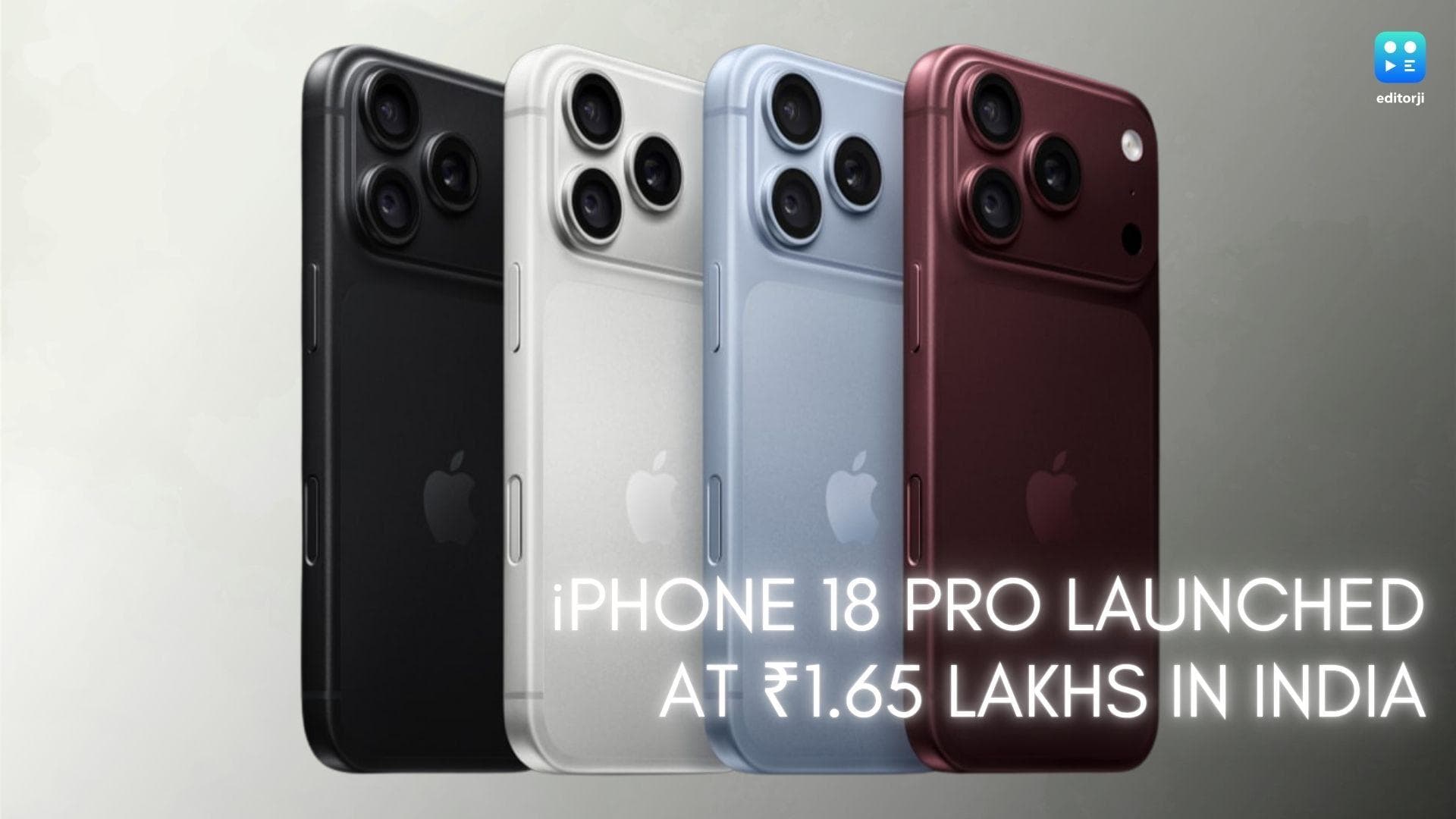
Apple wants ₹1.65 lakh for the base iPhone 18 Pro in India.
That is a lot of money for a phone that, at first glance, looks remarkably similar to the iPhone 17 Pro it replaces.
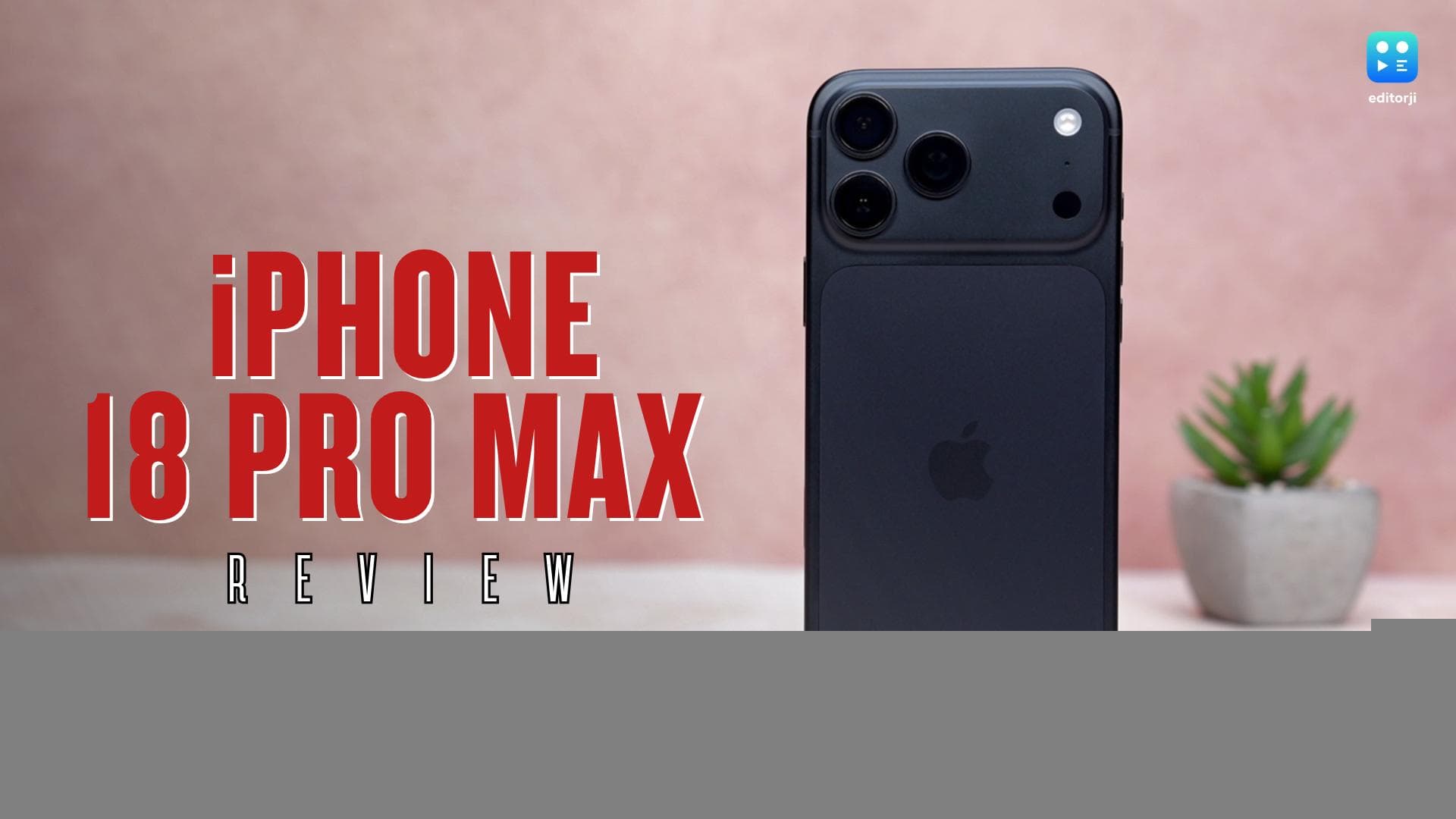
The dimensions are unchanged, Apple has stuck with the aluminium unibody design introduced last year, and you still get a 6.3-inch Super Retina XDR display with ProMotion. The Pro Max similarly sticks with its massive 6.9-inch panel.
In fact, barring the new colours and a redesigned, smaller Dynamic Island, you’d be hard-pressed to spot many differences from the outside.
Inside, however, Apple has been considerably busier.
So, if we put the iPhone 18 Pro next to the iPhone 17 Pro, what exactly does the new ₹1.65 lakh flagship offer that last year’s phone doesn’t?
iPhone 18 Pro vs iPhone 17 Pro: Most Of The Design Is Unchanged
Apple made its big design switch with the iPhone 17 Pro, moving from titanium to an aluminium unibody construction, and that basic formula carries over.
You still get Ceramic Shield protection, the same display sizes and ProMotion, while familiar features such as the Action button and Camera Control remain.
The biggest visual changes are the new colours and smaller Dynamic Island, which Apple says can now display up to three Live Activities simultaneously.
Interestingly, the iPhone 18 Pro is also slightly heavier than its predecessor.
So, if you were expecting the 18 Pro to look or feel radically different, it doesn’t. This generation is primarily about what Apple has changed underneath.
iPhone 18 Pro vs iPhone 17 Pro: A20 Pro And Much More Serious Cooling
This is where things get interesting.
The A19 Pro makes way for the new 2nm A20 Pro. It retains a six-core CPU but moves from six GPU cores to seven, while memory bandwidth has increased by 50%.
The Neural Engine gets an even larger upgrade. Instead of the 16-core Neural Engine on the A19 Pro, A20 Pro uses a Dual 16-core design, effectively doubling the number of Neural Engine cores available for on-device AI workloads.
Apple has also redesigned how the chip itself is packaged. An M-series-inspired layout places the silicon die alongside the memory rather than stacking them in the thermal path, allowing the chip to connect more directly with the vapour chamber.
And that vapour chamber is now enormous.
Apple says it has three times the surface area of the one introduced with the iPhone 17 Pro. Combined with the A20 Pro and new thermal materials, the company claims up to 40% better sustained performance.
There’s also a new C2 modem, which promises improved cellular reliability, lower power consumption and up to 50% faster uploads in supported markets.
iPhone 18 Pro vs iPhone 17 Pro: The Camera Gets Actual Moving Parts
Look purely at the megapixels and the camera systems appear almost identical.
Both generations give you three 48MP rear cameras, including Main, Ultra Wide and Telephoto cameras, with up to 8x optical-quality zoom.
But the iPhone 18 Pro introduces something entirely new for Apple: a physical variable aperture on its 48MP Fusion Main camera.
The aperture can switch between f/1.48, f/1.8, f/2.8 and f/4.0, automatically adjusting depending on lighting and the depth of field required. Apple also gives Pro users manual aperture controls.
That means the camera can open wider to pull in more light or stop down to keep more of a scene in focus, giving photographers genuine optical control instead of relying entirely on computational photography.
Apple claims around 50% better low-light performance from the Main camera as a result.
For photographers and video creators, this is probably the most meaningful difference between the two generations.
iPhone 18 Pro vs iPhone 17 Pro: More Battery And Faster Charging
Battery life gets a bump too.
On eSIM-only models, Apple rates the iPhone 18 Pro for up to 36 hours of video playback, while the 18 Pro Max stretches that figure to 45 hours. The latter represents six additional hours over the iPhone 17 Pro Max.
Charging is quicker as well. The iPhone 18 Pro can reach 50% in around 15 minutes with a compatible wired charger, compared with roughly 20 minutes on the previous generation.
Wireless charging can hit 50% in around 30 minutes.
So, What Does ₹1.65 Lakh Actually Get You?
Compared with the iPhone 17 Pro, the iPhone 18 Pro isn’t a dramatic reinvention.
The design and displays are largely familiar, and even the basic camera configuration hasn’t changed.
Instead, Apple has concentrated its efforts underneath the surface.
You’re getting considerably more AI processing power, improved sustained performance, much more aggressive cooling, a newer modem, better battery life and faster charging.
And then there’s the variable-aperture Main camera, arguably the one upgrade that fundamentally changes what the hardware can actually do.
So, the iPhone 18 Pro may look almost identical to the 17 Pro.
Underneath, though, there’s quite a bit more going on.