Highlights

  • Solar storm alert: NOAA and NASA monitoring
  • Coronal mass ejection (CME) heading towards Earth
  • Potential impacts: Mobile networks, GPS systems, power grids
  • G1 to G5-class geomagnetic storm possible

Latest news
India is a great country: Trump after controversial social media repost

India is a great country: Trump after controversial social media repost

Tamil Nadu surpasses previous best voter turnout, records over 84 per cent voting till 6 pm

Tamil Nadu surpasses previous best voter turnout, records over 84 per cent voting till 6 pm

Trump orders US military to 'shoot and kill' Iranian small boats choking Strait of Hormuz

Trump orders US military to 'shoot and kill' Iranian small boats choking Strait of Hormuz

Samsung Galaxy Book6 Pro Review: This Might Be Samsung’s Most Complete Laptop Yet

Samsung Galaxy Book6 Pro Review: This Might Be Samsung’s Most Complete Laptop Yet

SBI Life Insurance registers New Business Premium of ₹42,551 crores for the year ended on 31st March, 2026

SBI Life Insurance registers New Business Premium of ₹42,551 crores for the year ended on 31st March, 2026

RBI schedules underwriting auction for Rs 32,000 crore government securities on April 24

RBI schedules underwriting auction for Rs 32,000 crore government securities on April 24

'Heart Eyes 2' set for February 2028 release, Josh Ruben returns as director

'Heart Eyes 2' set for February 2028 release, Josh Ruben returns as director

Intertek opens its first EMC lab in India, expanding network across south of country

Intertek opens its first EMC lab in India, expanding network across south of country

Imminent Solar Storm Alert: Dangerous CME cloud set to strike Earth, warns NOAA

Today, Earth is at risk from a powerful solar storm caused by an X1-class solar flare, as the National Oceanic and Atmospheric Administration warns of a dangerous Coronal Mass Ejection (CME) that will hit Earth.

Imminent Solar Storm Alert: Dangerous CME cloud set to strike Earth, warns NOAA

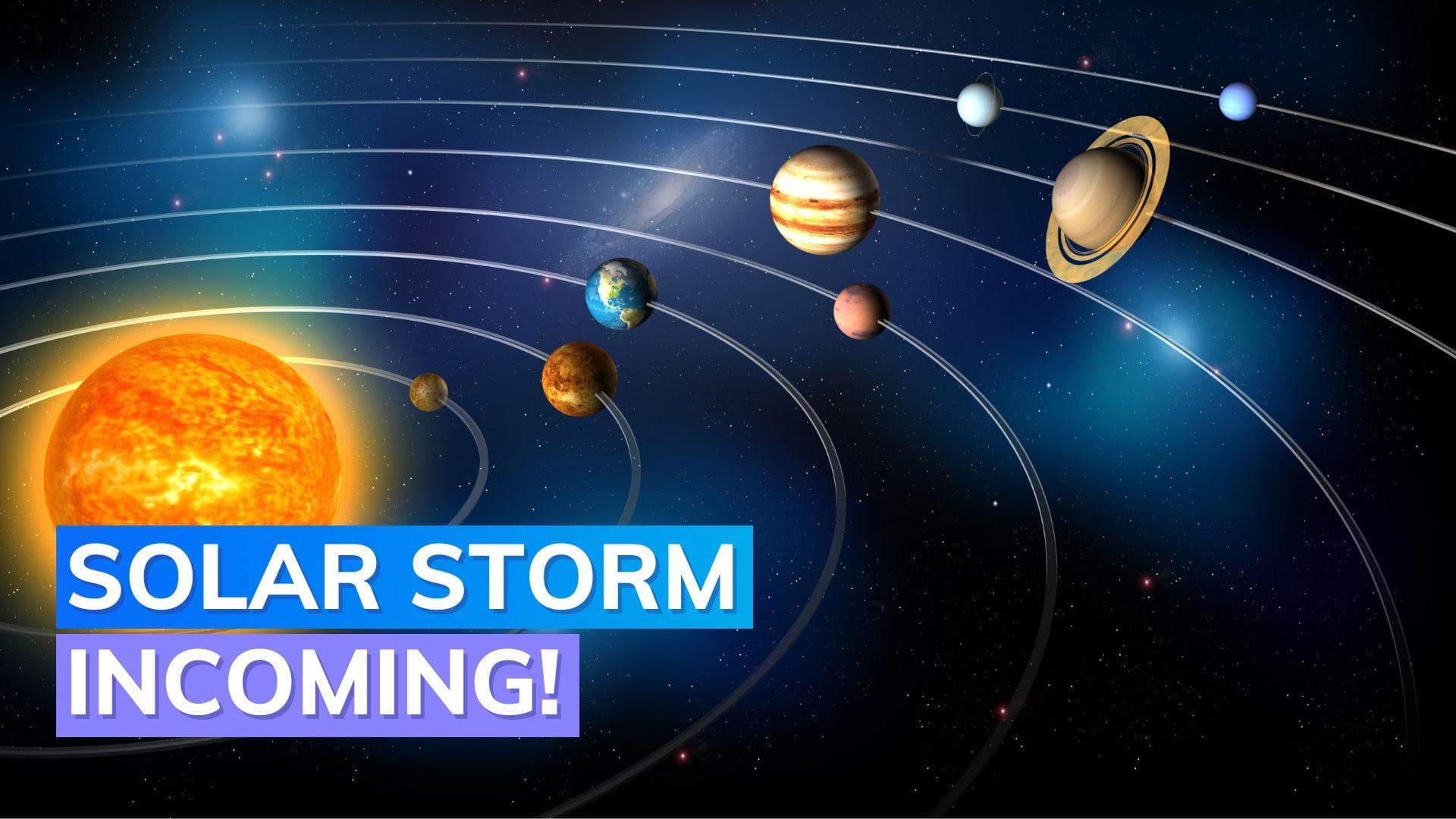
In the wake of an intense X1-class solar flare eruption, a colossal Coronal Mass Ejection (CME) was discharged. NASA's models had earlier anticipated this CME cloud to strike both Mars and Venus.

However, an updated forecast from the National Oceanic and Atmospheric Administration (NOAA) suggests that Earth isn't spared and is poised to experience this solar storm today, on June 23rd, 2023.

The potency of the CME is so extreme that NASA has predicted a possible erosion of a portion of Venus' atmosphere upon impact. The exact severity of this solar storm's effects on Earth remains unclear.

As reported by SpaceWeather.com, "Forecasters from NOAA predict the possibility of minor G1-class geomagnetic storms late on June 23rd, as a result of the CME potentially hitting Earth's magnetic field. This CME was propelled into space following the X1-class solar flare event on June 20.

Initial models suggested that Earth might escape the CME's path, but recent data implies a peripheral impact is plausible.

Impending Solar Storm Predicted to Hit Earth

Following its encounter with Venus today, the CME is expected to hit Earth, before proceeding to reach Mars by June 25.

According to NASA's model, the ensuing solar storm's intensity may be sufficient to stimulate observable auroras from satellites orbiting Mars.Assessing the potential impact of the impending solar storm on Earth is challenging.

The extent of the solar storm's effects will be dictated by whether the CME results in a grazing strike or a direct hit. A peripheral impact may trigger a G1 or G2-class geomagnetic storm, whereas a direct strike could potentially generate a more damaging G5-class storm.

These higher class storms can severely affect small satellites, disrupt mobile networks, GPS systems, and pose a significant threat to terrestrial electronics and power grids by drastically augmenting magnetic potential.

Exploring the GOES-16 Satellite

Launched on November 19, 2016, GOES-16, previously referred to as GOES-R prior to reaching geostationary orbit, is the pioneer of the GOES-R series of Geostationary Operational Environmental Satellites managed by NASA and NOAA.

Operational since December 18, 2017, GOES-16 orbits over the Atlantic Ocean and persistently provides imagery and atmospheric measurements of Earth's Western Hemisphere.

Furthermore, it features a lightning mapper that detects both inter-cloud and cloud-to-ground lightning. Given its crucial role in weather forecasting, climate monitoring, and predicting solar storms like the one expected today, GOES-16 is a truly indispensable tool.

ADVERTISEMENT

Up Next

Imminent Solar Storm Alert: Dangerous CME cloud set to strike Earth, warns NOAA

Imminent Solar Storm Alert: Dangerous CME cloud set to strike Earth, warns NOAA

Xiaomi TV S Mini LED 65-inch Review: Price, Specs, Features & Performance  

Xiaomi TV S Mini LED 65-inch Review: Price, Specs, Features & Performance  

Under Armour Velociti Distance Review: Built for the Long Run

Under Armour Velociti Distance Review: Built for the Long Run

Vivo T5 Pro Review: This Phone Refuses to Die

Vivo T5 Pro Review: This Phone Refuses to Die

OnePlus Nord 6 Review: The new endurance king that almost has it all

OnePlus Nord 6 Review: The new endurance king that almost has it all

HyperX Pulsefire Saga Review: The mouse that lets you be the designer

HyperX Pulsefire Saga Review: The mouse that lets you be the designer

ADVERTISEMENT

editorji-whatsApp

More videos

Samsung Galaxy A57 & A37 Review: Safe Upgrades or Missed Opportunity?

Samsung Galaxy A57 & A37 Review: Safe Upgrades or Missed Opportunity?

Samsung Galaxy Buds4 Pro Review: Flagship Sound Meets Elite ANC

Samsung Galaxy Buds4 Pro Review: Flagship Sound Meets Elite ANC

Realme 16 5G Review: Endurance Meets Everyday Use

Realme 16 5G Review: Endurance Meets Everyday Use

Vivo V70 FE Review: Style Meets Serious Battery Power

Vivo V70 FE Review: Style Meets Serious Battery Power

OnePlus Nord 6 First Look: Specifications, Features, and What to Expect

OnePlus Nord 6 First Look: Specifications, Features, and What to Expect

Samsung Galaxy S26 & S26+ Review: Exynos is Back, And It Means Business

Samsung Galaxy S26 & S26+ Review: Exynos is Back, And It Means Business

OnePlus Nord Buds 4 Pro Review: Better in All the Right Ways? feat. Nord Buds 3 Pro

OnePlus Nord Buds 4 Pro Review: Better in All the Right Ways? feat. Nord Buds 3 Pro

Poco X8 Pro Max Review: Big Battery, Bigger Ambitions

Poco X8 Pro Max Review: Big Battery, Bigger Ambitions

iQOO Z11x 5G Review: The best budget phone under 20K?

iQOO Z11x 5G Review: The best budget phone under 20K?

Nothing Phone (4a) Pro Review: This One Finally Feels Complete

Nothing Phone (4a) Pro Review: This One Finally Feels Complete

Editorji Technologies Pvt. Ltd. © 2022 All Rights Reserved.