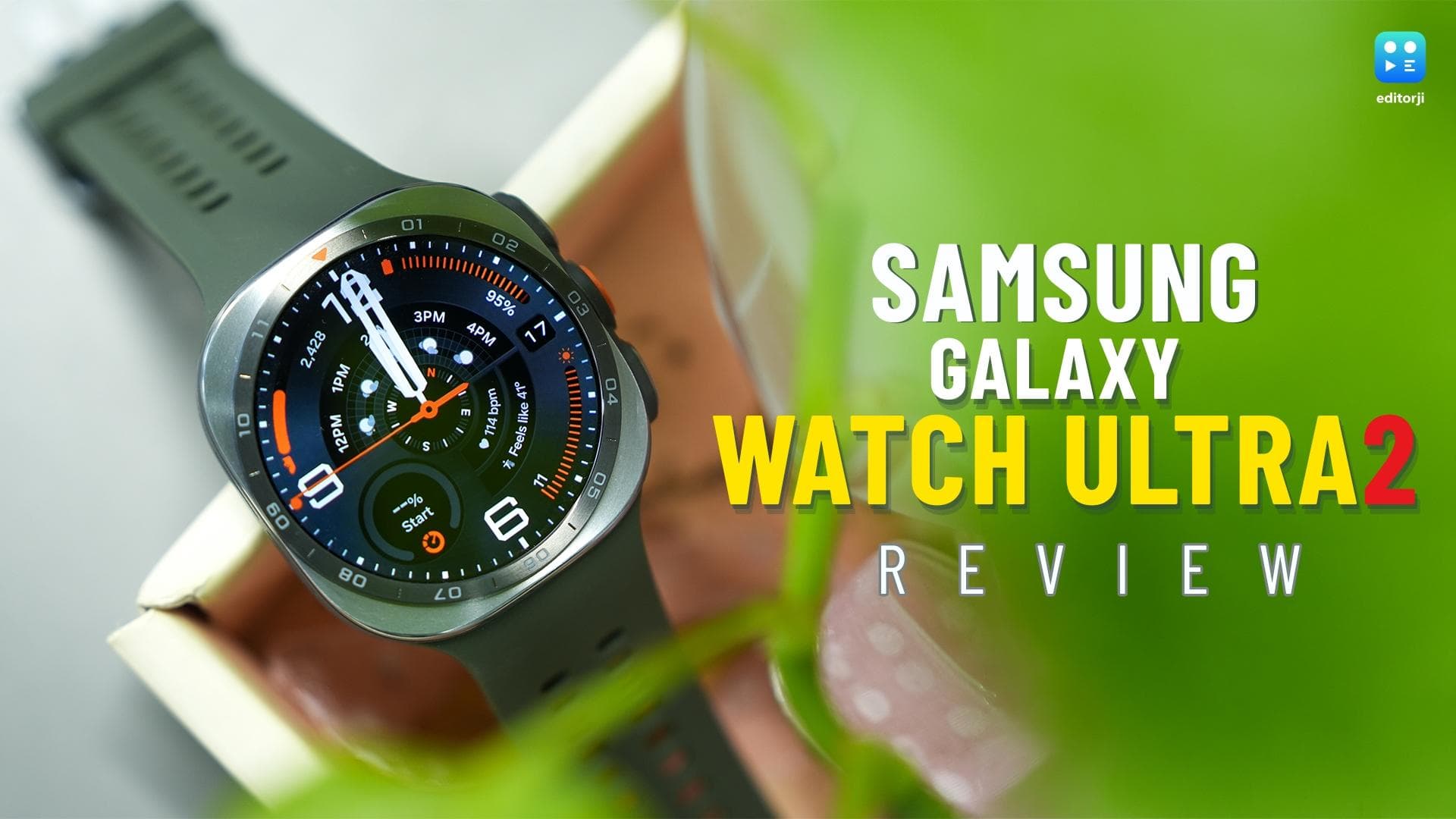
Samsung took two years to follow up the original Galaxy Watch Ultra, and that extra breathing room seems to have paid off. The Galaxy Watch Ultra2 isn't a dramatic reinvention, but Samsung has made meaningful upgrades in almost every area that mattered on the original.
The familiar 47mm ‘pizza in a box’ design, (Samsung calls it a cushion design) remains, but the watch is now thinner, gets a slightly larger and significantly brighter 5,000-nit AMOLED display, and switches from Samsung's Exynos silicon to Qualcomm's new Snapdragon Wear Elite chipset. More importantly, the battery has jumped from 590mAh to a massive 800mAh, addressing one of my biggest complaints with the first Ultra.
Samsung has also leaned harder into the 'Ultra' part of the name. You now get improved Trail Running features, proper diving support, turn-by-turn navigation, new health and recovery insights, and Gemini integration through Wear OS 7 and One UI Watch 9.
On paper, then, this is the Galaxy Watch Ultra Samsung probably wanted to make the first time around. But does it actually feel that way on the wrist after weeks of use?
Samsung Galaxy Watch Ultra2 Review: Design
The Galaxy Watch Ultra2 doesn't look dramatically different from its predecessor, and that's not necessarily a bad thing. Samsung has retained the same chunky 47mm design, with a circular display sitting inside a squarish titanium frame. It is still a big watch, though, and with no smaller size available, people with slimmer wrists may find it a little overwhelming.
The biggest change is something you notice more on the wrist than in photographs. Samsung has reduced the thickness from 12.1mm to 10.7mm, which makes the Ultra2 feel noticeably less cumbersome. That's particularly impressive considering the battery has grown substantially. There is a very slight increase in weight, but it still is manageable at just a hair under 62 grams.
Build quality continues to be excellent. You get a Grade 4 titanium frame and sapphire crystal over the display, along with IP68, IP69K and 10ATM water resistance. There's MIL-STD-810H certification too, while the new EN13319 certification allows the Ultra2 to function as a dive computer down to 40 metres.
The familiar three-button arrangement returns, with the customisable Quick Button sitting between the Home and Back buttons. I still wish Samsung had given us a physical rotating bezel, especially for outdoor use. The touch bezel works reasonably well, but it simply isn't as precise or satisfying.
Samsung has also redesigned the strap, making it softer and lighter. Combined with the slimmer case, it makes a surprisingly big difference to comfort, especially when wearing the Ultra2 throughout the day and overnight.
Samsung Galaxy Watch Ultra2 Review: Display
The display gets one of the more noticeable upgrades this year. The Galaxy Watch Ultra2 uses a slightly larger 1.52-inch Super AMOLED panel with a 498 x 498 resolution, up from the 1.47-inch, 480 x 480 display on the original Ultra. The difference in size and sharpness isn't something you'll immediately notice, but the increase in brightness certainly is.
Peak brightness has jumped from an already impressive 3,000 nits to a massive 5,000 nits. The original Ultra was never particularly difficult to read outdoors, but the Ultra2 takes visibility another step forward. Even under harsh sunlight, text, workout information and notifications remain exceptionally easy to read. That additional brightness should also prove useful underwater, particularly given Samsung's greater emphasis on diving this generation.
As before, the AMOLED panel itself is excellent. Colours are vibrant, blacks are properly deep, animations look crisp, and touch response is excellent. There's also an always-on display, although keeping it enabled naturally has an impact on battery life.
The display continues to be protected by sapphire crystal, while the slightly raised bezel provides some additional protection against accidental knocks and scrapes.
Samsung Galaxy Watch Ultra2 Review: Performance And Tracking
The Galaxy Watch Ultra2 gets a major change under the hood, with Samsung ditching its Exynos chipset for Qualcomm's 3nm Snapdragon Wear Elite. Paired with 2GB of RAM and 64GB of storage, performance is excellent. Apps open quickly, animations remain fluid and moving between workouts, notifications and widgets feels consistently responsive. That said, the original Ultra was already pretty smooth, so the difference isn't transformative in everyday use.
Tracking is where the Ultra2 starts earning its name. Samsung's BioActive sensor handles heart rate, SpO2, ECG and body composition, while the watch also tracks HRV, skin temperature, stress and sleep. You also get newer metrics such as Daily Cardio Load, Fitness Index, Heart Health and Vitals, which use your accumulated data to provide a broader picture of recovery and overall fitness.
Workout tracking is equally comprehensive, with support for more than 100 activities and dual-frequency GPS. Heart-rate tracking appears particularly dependable.
Trail Running gets more attention this year. The Ultra2 can provide turn-by-turn route guidance, elevation information, pace suggestions and hydration reminders based on estimated sweat loss. Samsung has also expanded the diving functionality. The watch is certified to 40 metres and can measure depth and water temperature, with more advanced Mares-powered diving features arriving later.
Sleep tracking remains detailed, covering stages, blood oxygen, heart rate, respiratory rate and skin temperature. The sheer size of the Ultra2 still makes sleeping with it something of an acquired taste, but the lighter strap and thinner chassis make overnight tracking noticeably easier than before.
Automatic workout detection is useful for everyday walks and runs, while advanced running metrics provide detail for anyone interested in improving form.
Samsung Galaxy Watch Ultra2 Review: Software
The Galaxy Watch Ultra2 runs One UI Watch 9 on top of Wear OS 7, and if you've used a recent Galaxy Watch, you'll feel right at home. Samsung hasn't dramatically changed how you navigate the interface, but everything feels polished, responsive and particularly well suited to the Ultra2's large display.
The bigger changes happen around the watch. Both Samsung Health and Galaxy Wearable have been redesigned, with cleaner layouts that make it easier to find health data, change watch faces and customise settings. Samsung Health remains particularly good at taking the enormous amount of information the Ultra2 collects and presenting it without becoming overwhelming.
Gemini is now integrated more deeply as well. You can use it to answer questions, send messages, set timers, create reminders or interact with supported apps. There's also a new raise-to-talk gesture, letting you lift your wrist and immediately speak to Gemini. It's a great idea, although reports suggest that activation can still be inconsistent.
Gesture controls go beyond Gemini. You can double-pinch to make selections, use a knocking gesture to launch an assigned app, or shake your wrist to dismiss calls and alarms.
The biggest advantage remains Wear OS itself. You get proper third-party apps including Spotify, Strava and Google Maps, alongside calls, messages, NFC payments and LTE connectivity without needing your phone nearby.
Samsung is also promising five years of major OS upgrades, giving the Ultra2 considerably more longevity than most people will realistically need from a smartwatch.
Samsung Galaxy Watch Ultra2 Review: Battery
Battery life was one of my biggest complaints with the original Galaxy Watch Ultra, and Samsung has addressed it properly this time. The Ultra2 packs a massive 800mAh battery, up from 590mAh, despite the watch itself becoming thinner.
That translates into noticeably better endurance. With the always-on display enabled, you can realistically expect close to three days of use, even with regular health tracking and a few GPS-enabled workouts thrown in. Turn the always-on display off, and four days of use is entirely achievable depending on how heavily you're using GPS and LTE.
That's a significant improvement over the roughly two-day endurance I experienced with the original Ultra, and it makes the Ultra2 considerably more practical for weekend trips, long treks or endurance activities where charging isn't always convenient.
Charging speed is a more mixed story. The Ultra2 introduces Samsung's first fast-charging support on a Galaxy Watch, with the company claiming up to 40% battery in 30 minutes. In practice, though, that improvement is hard to spot. A full charge from empty still takes around 90 minutes to two hours on the bundled 10W wireless puck.
Samsung Galaxy Watch Ultra2 Review: Verdict
The Galaxy Watch Ultra2 feels like the upgrade Samsung's original Ultra deserved. Waiting two years has allowed the company to make improvements that actually matter, rather than simply changing a few specifications and calling it a new generation.
The slimmer design makes it more comfortable, the 5,000-nit display is fantastic outdoors, and the Snapdragon Wear Elite keeps everything running smoothly. More importantly, the move from a 590mAh to an 800mAh battery addresses one of my biggest complaints with the original. Getting close to three days with the always-on display enabled makes a substantial difference to everyday usability.
Samsung has also strengthened the 'Ultra' proposition. Improved Trail Running, hydration guidance, dual-frequency GPS and proper diving support make this a considerably more capable adventure watch, while Samsung Health remains one of the most comprehensive health platforms available on Android.
There are still compromises. It's enormous, charging remains slow, there's still no physical rotating bezel, and some health features work best within Samsung's ecosystem.
But if you want a rugged Android smartwatch with excellent health tracking, proper Wear OS functionality and genuinely good multi-day endurance, the Galaxy Watch Ultra2 is easily Samsung's most complete smartwatch yet.