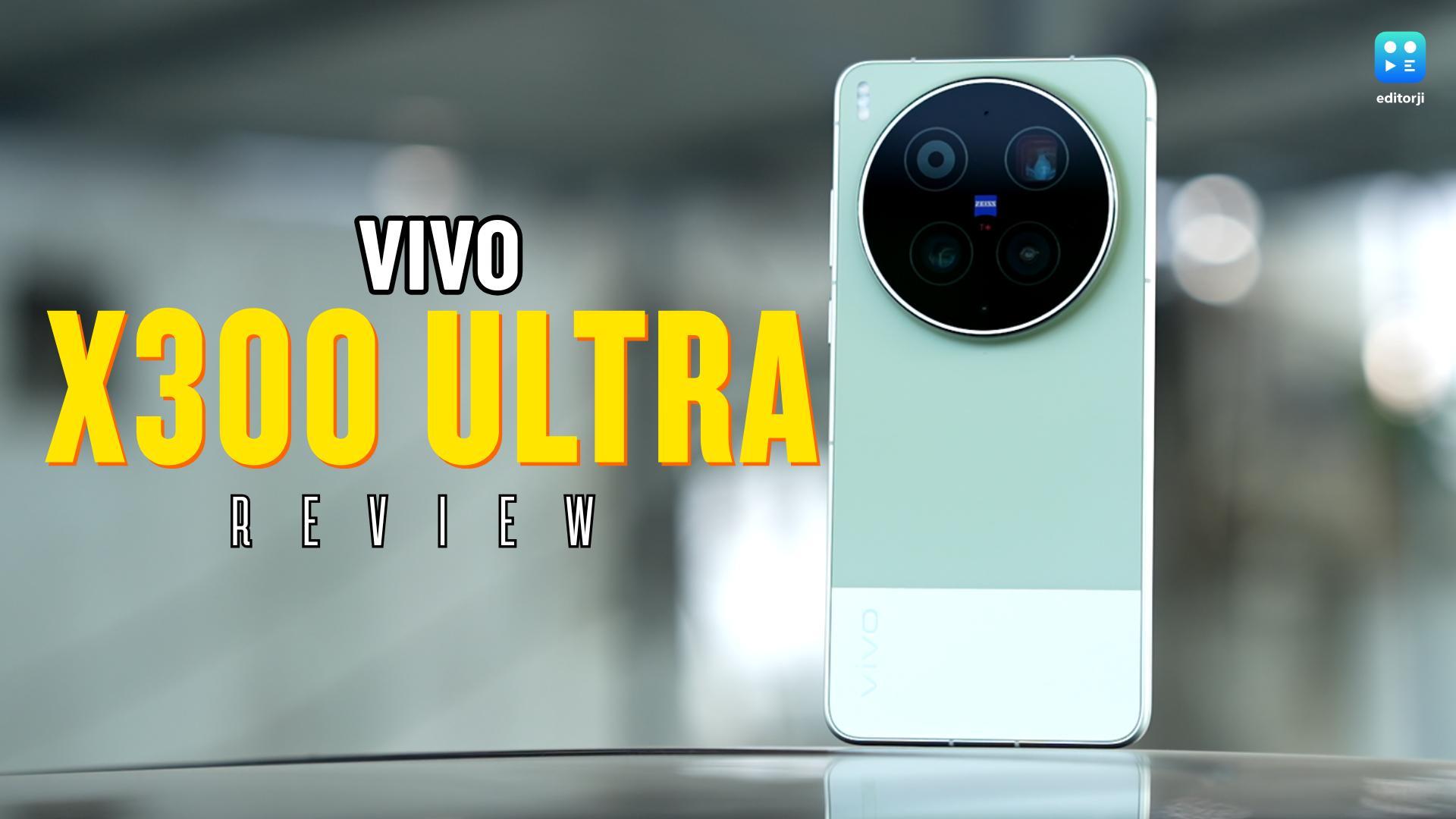
For a little over two weeks, the Vivo X300 Ultra became my primary phone, and honestly, it did not take long for me to figure out what Vivo was aiming for here. The first time I started shooting photos and videos with it, one thing became immediately obvious: this is a phone built almost entirely around the camera experience.
Over the past few years, Vivo has slowly turned itself into one of the biggest players in smartphone photography. While other brands chased flashy AI tricks and raw performance numbers, Vivo consistently focused on imaging, and the results have shown. Its X-series phones regularly delivered some of the best camera systems on any smartphone. The frustrating part, at least for Indian buyers, was that the Ultra models never officially made it here. We usually got the standard and Pro variants, while the real camera monsters stayed limited to China.
That finally changes with the X300 Ultra. Vivo has now brought its top-tier flagship to India alongside the X300 FE, entering a space already packed with serious competition like the Samsung Galaxy S26 Ultra and Xiaomi 17 Ultra, with the Oppo Find X9 Ultra expected soon. In 2026, though, calling a phone “Ultra” is no longer enough. Every brand is chasing the same dream of building the ultimate flagship.
Which also makes Vivo’s pricing strategy pretty bold. At ₹1,59,999, the X300 Ultra costs even more than the iPhone 17 Pro Max and Galaxy S26 Ultra, two phones most buyers instantly associate with the premium segment.
So what exactly makes the X300 Ultra stand out?
For me, the answer comes down almost entirely to the cameras.
Of course, the phone delivers everything else you would expect from a modern flagship too. But unlike most rivals that try balancing everything equally, the X300 Ultra feels like a device designed around photography first, with the rest of the hardware supporting that vision. The bigger question is whether Vivo’s camera-first approach is enough to justify that massive asking price.
Vivo X300 Ultra Review: Cameras
Talking about the Vivo X300 Ultra almost automatically means starting with the cameras first. Everything else about this phone feels like it exists to support Vivo’s imaging ambitions, and after using it extensively, this easily feels like one of the most serious camera systems on any smartphone right now.
The hardware itself is loaded. Vivo is using a 200MP Sony LYT-901 main sensor with gimbal stabilisation, alongside a 200MP Samsung ISOCELL HPB periscope telephoto camera with an 85mm focal length, 3.7x optical zoom, OIS, and an f/2.7 aperture. The ultrawide camera uses a 50MP Sony LYT-818 sensor with a 14mm focal length, dual-pixel autofocus, OIS, and a 116-degree field of view. Up front, there is a 50MP selfie camera with autofocus.
What immediately changes the feel of the main camera is Vivo’s decision to use a tighter 35mm focal length instead of the typical 24mm look most smartphones rely on. Photos end up looking far more natural and cinematic, especially for portraits, food shots, and street photography.
On paper, Vivo has slightly narrowed the aperture to f/1.9 this year, and pixel sizes are also smaller. But in actual usage, the large 1/1.12-inch sensor still delivers excellent detail, strong dynamic range, and surprisingly reliable motion handling.
Vivo’s colour science continues to be one of the best in the business. Images look cinematic without becoming overly sharpened or aggressively HDR-heavy. Colours are slightly richer than reality, especially greens and reds, but the processing usually makes photos look more vibrant rather than fake.
The standout camera here is easily the 85mm telephoto sensor. Zoom shots remain impressively detailed even at longer ranges, while the gimbal stabilisation genuinely helps reduce shaky results. I also ended up using the telephoto camera heavily for macro photography. Instead of relying on the dedicated Super Macro mode, the 7.4x telephoto zoom produced cleaner close-up shots with better subject separation and more comfortable framing distances.
Portrait mode is excellent too, and this is one of the few phones where the Zeiss branding actually feels meaningful. Edge detection is clean, skin tones mostly stay natural, and the background blur looks softer and more camera-like than what most phones manage.
The ultrawide camera is surprisingly strong as well. Vivo is using a massive sensor here, and unlike most ultrawide cameras that feel noticeably weaker than the primary sensor, this one stays consistently sharp with strong low-light performance and well-controlled distortion.
What impressed me most overall was the consistency between all three rear cameras. Switching between the main, telephoto, and ultrawide rarely feels jarring because colours and exposure remain cohesive across lenses. The only time I noticed slight differences was in lower light, where the ultrawide and telephoto cameras became slightly more prone to motion blur with fast-moving subjects.
Video has clearly become a huge focus this year too. The X300 Ultra supports 4K 120fps Dolby Vision recording across all rear cameras, while the selfie camera supports 4K 60fps Dolby Vision recording. You also get 10-bit LOG recording, LUT support, and extensive manual controls in Pro Video mode. Most casual users may never touch these features, but their presence makes it clear Vivo is targeting serious creators alongside regular users.
The 50MP selfie camera is excellent too. Selfies come out detailed, autofocus works reliably, and skin tones mostly stay natural. Vivo still adds a slightly warm tone to faces sometimes, but overall, the results look clean and pleasing.
Vivo X300 Ultra Review: Design
The first thing that stood out to me about the Vivo X300 Ultra was just how massive and substantial it feels in the hand. This is unapologetically a big flagship, and that gigantic camera module on the back makes the phone feel slightly top-heavy during one-handed use.
Thankfully, Vivo has still paid attention to ergonomics. The aluminium frame uses softly curved edges, which makes the phone more comfortable to hold compared to some aggressively flat-sided rivals. The matte finish on the frame also helps with grip while keeping fingerprint smudges under control.
The rear design looks premium without feeling overly flashy. Vivo has used a clean two-tone glass finish, and in this Victory Green colourway, the upper section leans heavily into the camera-inspired aesthetic while the lower half stays far more minimal. It gives the phone a distinct identity without looking excessive.
The camera module itself is enormous, but because it sits centrally, the phone surprisingly does not wobble much when placed on a table. My only minor complaint is that the module sits low enough for my index finger to occasionally brush against the housing and sometimes even the lenses while adjusting my grip.
You also get an IP69 rating, so the X300 Ultra can comfortably handle water immersion as well as high-pressure water exposure.
Vivo X300 Ultra Review: Display
The Vivo X300 Ultra features a massive 6.82-inch LTPO AMOLED display that can show over 1 billion colours, and gets a 144Hz refresh rate. We also get Dolby Vision, HDR10+, HDR Vivid, and 2160Hz PWM dimming.
In daily use, this is easily one of the best smartphone displays I have used in a long time. The panel looks incredibly sharp, colours appear vibrant without feeling artificially boosted, and the slim bezels make the entire front feel almost edge-to-edge. Watching HDR content, gaming, and even regular scrolling simply feels fantastic on this screen.
The adaptive LTPO refresh rate can intelligently scale between 1Hz and 144Hz depending on the task, helping the phone stay smooth while also managing battery life efficiently. Animations feel fluid throughout the interface, and high-refresh-rate gaming feels especially responsive.
Brightness is another area where the X300 Ultra performs exceptionally well. With 1,800 nits of high brightness mode output and a claimed peak brightness of 4500 nits, outdoor visibility remains excellent even under harsh sunlight.
One thing worth noting is that the phone does not run at full QHD+ resolution by default. Vivo dynamically adjusts resolution depending on usage to balance performance and battery life. Honestly though, the default setting already looks more than sharp enough in everyday use.
The ultrasonic fingerprint scanner also deserves credit. It is quick, reliable, and positioned comfortably for natural unlocking.
Vivo X300 Ultra Review: Performance
The Vivo X300 Ultra is powered by Qualcomm’s Snapdragon 8 Elite Gen 5, which is currently the chipset powering most serious Android flagships. Vivo has also paired it with its custom VS1+ imaging chip, giving the phone an absurd amount of processing power for both photography and everyday performance.
The variant I tested came with 16GB LPDDR5X Ultra RAM and 512GB UFS 4.1 storage, and the overall experience feels incredibly fast. App launches are instant, multitasking feels effortless, and large file transfers happen ridiculously quickly.
The benchmark numbers reflect that too. The phone scored over 3.8 million on AnTuTu, while Geekbench 6 delivered 3595 in single-core and 10,302 in multi-core tests. More importantly, those numbers translate into genuinely smooth real-world performance. The phone never really feels like it is struggling, regardless of what you throw at it.
Gaming performance is excellent as well. BGMI and COD: Mobile both support 120fps gameplay, while Genshin Impact runs at up to 60fps. Thermals are handled fairly well too. During the demanding 3DMark Wild Life Extreme stress test, temperatures rose from roughly 36°C to 51°C, which is not unusual for a benchmark this heavy.
In regular usage, the phone stays mostly under control. It does get noticeably warm during long outdoor camera sessions, especially while recording high-resolution video, but Vivo’s large vapour chamber cooling system helps bring temperatures down reasonably quickly afterwards.
The stereo speakers are excellent too. They get impressively loud, stay clear at high volumes, and offer strong stereo separation while gaming or watching videos.
Vivo X300 Ultra Battery Life: Big battery, fast charging
The X300 Ultra packs a huge 6600mAh battery, and thankfully, Vivo hasn’t built a camera monster that constantly lives next to a charger. Battery life here is genuinely dependable.
On lighter days with mostly messaging, browsing, music streaming, and some casual photography, the phone can comfortably spill into a second day. But even during heavier usage involving gaming, long camera sessions, and navigation, I never really found myself stressing about battery life before the end of the day.
That said, this is still a phone designed for power users, and once you start pushing all the high-end hardware simultaneously, the battery does begin to move. Shooting a lot of 4K video, especially at higher frame rates, using the camera outdoors at max brightness, or gaming for long stretches, definitely drains it faster.
What I like is that the battery performance feels predictable. Some flagship phones randomly nosedive once the camera gets involved, but the X300 Ultra remains fairly consistent even during intensive use.
Charging is predictably fast too. The phone supports 100W wired charging and 40W wireless charging, and with Vivo’s bundled adapter, the speeds are seriously quick for a battery this large. Around 20 minutes gets you close to 50%, while half an hour takes it comfortably past 70%. For a 6600mAh battery, that’s honestly kind of ridiculous.
Vivo X300 Ultra Review: Software
The Vivo X300 Ultra runs OriginOS 6 based on Android 16, and honestly, Vivo’s software experience has improved massively over the past few years. At this point, it is genuinely difficult to complain about how polished the overall experience feels.
What I like most about OriginOS is that it manages to feel playful and feature-rich without becoming overwhelming. There are customisation options almost everywhere, including lock screen layouts, icon styles, animations, wallpapers, and multitasking tools, but the interface still feels organised instead of turning into visual chaos.
Vivo has also added several genuinely useful AI and smart features. The live screen translation works surprisingly well, the recorder app’s transcription tool is extremely handy during meetings or interviews, and the AI summary feature saves time when dealing with long notes. Even Origin Island, which initially sounds gimmicky, becomes genuinely useful once you start dragging screenshots, files, and content between apps regularly.
The experience is not completely perfect, though. There are still a few pre-installed apps that most users will probably uninstall immediately, along with the occasional App Store notification that feels unnecessary on a flagship phone at this price.
On the bright side, Vivo is promising 5 years of Android updates alongside 7 years of security patches, which is exactly the kind of long-term support expected from a premium flagship in 2026.
Vivo X300 Ultra Review: Verdict
The Vivo X300 Ultra does not feel like another flagship chasing attention with flashy AI features and oversized spec sheets. This is a phone that has been very clearly built around the camera experience first. The consistency between sensors, the cinematic colour science, the incredible telephoto system, and the sheer flexibility for both photography and video make this one of the most capable camera phones available right now.
What impressed me even more is that the rest of the phone still holds up extremely well. The display is excellent, performance is ridiculously fast, battery life remains dependable, and OriginOS feels far more refined than older Vivo software ever did.
Of course, the X300 Ultra is not flawless. That enormous camera module makes the phone feel heavy during daily use, and the occasional pre-installed app still feels unnecessary at this price point. The phone also gets noticeably warm during long outdoor camera sessions, especially while recording high-resolution video.
Then there is the pricing. At ₹1,59,999, Vivo is entering territory dominated by phones like the iPhone 17 Pro Max and Samsung Galaxy S26 Ultra, which is never an easy comparison.
But if smartphone photography and videography matter more to you than almost anything else, the X300 Ultra absolutely belongs in that conversation. In many ways, this might be Vivo’s strongest camera flagship yet.