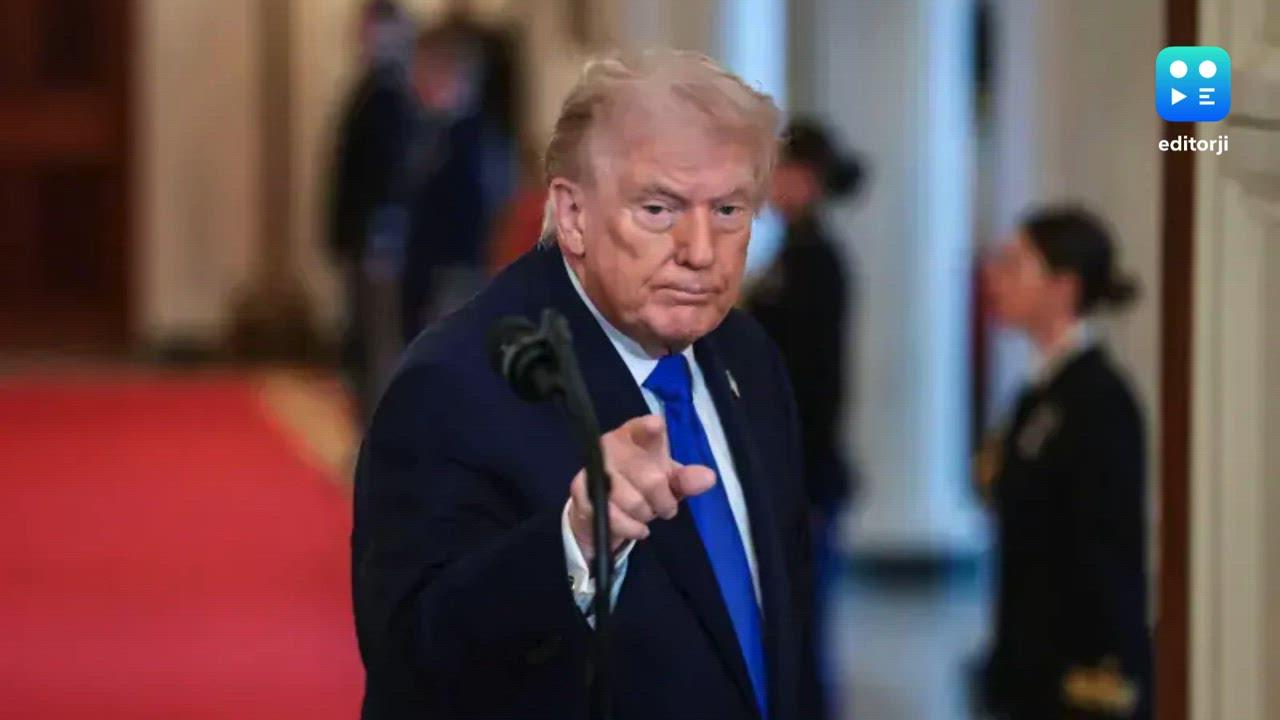
US President Donald Trump on Monday set a 25 per cent tax on goods imported from Japan and South Korea, as well as new tariff rates on a dozen other nations that would go into effect on August 1.
Trump provided notice by posting letters on Truth Social that were addressed to the leaders of the various countries. The letters warned them to not retaliate by increasing their own import taxes, or else the Trump administration would further increase tariffs.
“If for any reason you decide to raise your Tariffs, then, whatever the number you choose to raise them by, will be added onto the 25 per cent that we charge,” Trump wrote in the letters to Japanese Prime Minister Shigeru Ishiba and South Korean President Lee Jae Myung.
The letters were not the final word from Trump on tariffs, so much as another episode in a global economic drama in which he has placed himself at the center. His moves have raised fears that economic growth would slow to a trickle, if not make the US and other nations more vulnerable to a recession. But Trump is confident that tariffs are necessary to bring back domestic manufacturing and fund the tax cuts he signed into law last Friday.
He mixed his sense of aggression with a willingness to still negotiate, signaling the likelihood that the drama and uncertainty would continue and that few things are ever final with Trump.
“It's all done," Trump told reporters Monday. “I told you we'll make some deals, but for the most part we're going to send a letter.” South Korea's Trade Ministry said early Tuesday that it will accelerate negotiations with the United States to achieve a mutually beneficial deal before the 25 per cent tax on its exports goes into effect.
Imports from Myanmar and Laos would be taxed at 40 per cent, Cambodia and Thailand at 36 per cent, Serbia and Bangladesh at 35 per cent, Indonesia at 32 per cent, South Africa and Bosnia and Herzegovina at 30 per cent and Kazakhstan, Malaysia and Tunisia at 25 per cent.
Trump placed the word “only” before revealing the rate in his letters to the foreign leaders, implying that he was being generous with his tariffs. But the letters generally followed a standard format, so much so that the one to Bosnia and Herzegovina initially addressed its woman leader, Željka Cvijanovic, as “Mr. President.” Trump later posted a corrected letter.
Trade talks have yet to deliver several deals White House press secretary Karoline Leavitt said Trump, by setting the rates himself, was creating “tailor-made trade plans for each and every country on this planet and that's what this administration continues to be focused on.” Following a now well-worn pattern, Trump plans to continue sharing the letters sent to his counterparts on social media and then mailing them the documents, a stark departure from the more formal practices of all his predecessors when negotiating trade agreements.
The letters are not agreed-to settlements but Trump's own choice on rates, a sign that the closed-door talks with foreign delegations failed to produce satisfactory results for either side.
Wendy Cutler, vice president of the Asia Society Policy Institute who formerly worked in the office of the US Trade Representative, said the tariff hikes on Japan and South Korea were “unfortunate.” “Both have been close partners on economic security matters and have a lot to offer the United States on priority matters like shipbuilding, semiconductors, critical minerals and energy cooperation,” Cutler said.
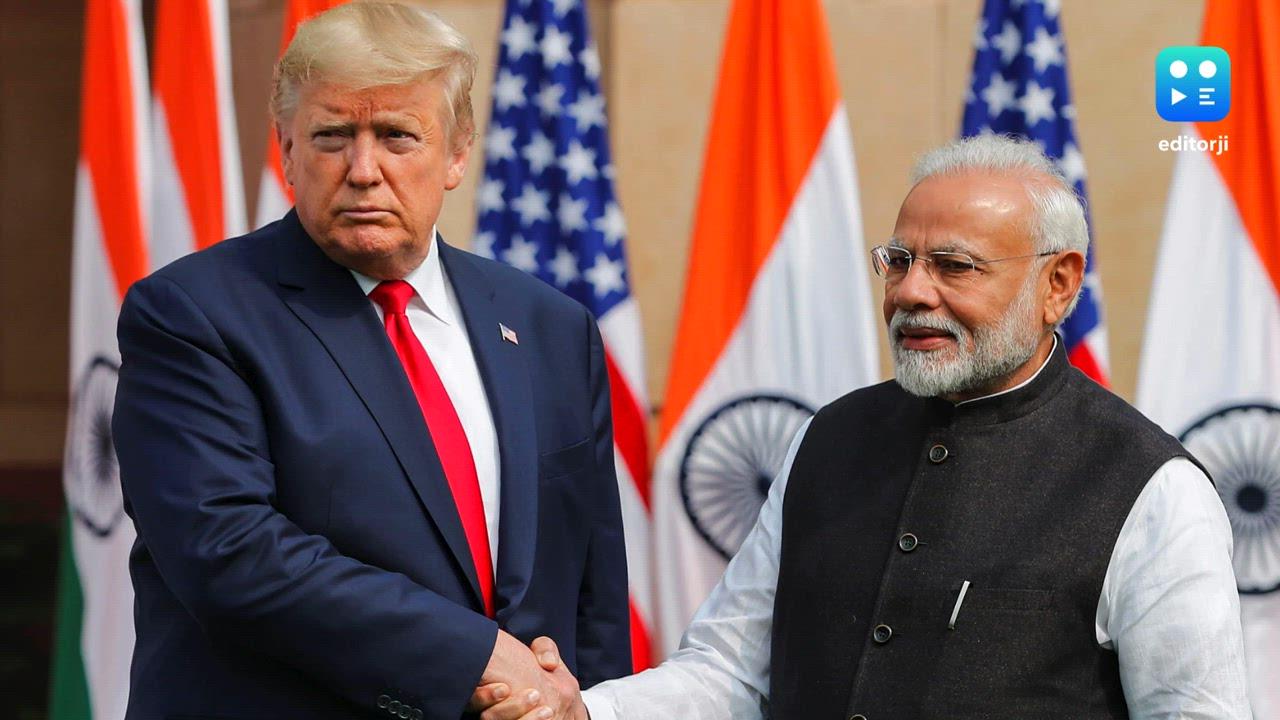
Trump still has outstanding differences on trade with the European Union and India, among other trading partners. Tougher talks with China are on a longer time horizon in which imports from that nation are being taxed at 55 per cent.
The office of South African President Cyril Ramaphosa said in a statement that the tariff rates announced by Trump mischaracterised the trade relationship with the US, but it would “continue with its diplomatic efforts towards a more balanced and mutually beneficial trade relationship with the United States" after having proposed a trade framework on May 20.
Higher tariffs prompt market worries, more uncertainty ahead The S&P 500 stock index was down 0.8 per cent in Monday trading, while the interest charged on 10-year US Treasury notes increased to nearly 4.39 per cent, a figure that could translate into elevated rates for mortgages and auto loans.
Trump has declared an economic emergency to unilaterally impose the taxes, suggesting they are remedies for past trade deficits even though many US consumers have come to value autos, electronics and other goods from Japan and South Korea. The constitution grants Congress the power to levy tariffs under normal circumstances, though tariffs can also result from executive branch investigations regarding national security risks.
Trump's ability to impose tariffs through an economic emergency is under legal challenge, with the administration appealing a May ruling by the US Court of International Trade that said the president exceeded his authority.
It's unclear what he gains strategically against China — another stated reason for the tariffs — by challenging two crucial partners in Asia, Japan and South Korea, that could counter China's economic heft.
“These tariffs may be modified, upward or downward, depending on our relationship with your Country,” Trump wrote in both letters.
Because the new tariff rates go into effect in roughly three weeks, Trump is setting up a period of possibly tempestuous talks among the US and its trade partners to reach new frameworks.
“I don't see a huge escalation or a walk back — it's just more of the same," said Scott Lincicome, a vice president at the Cato Institute, a libertarian think tank Trump initially roiled the financial markets by announcing tariff rates on dozens of countries, including 24 per cent on Japan and 25 per cent on South Korea. In order to calm the markets, Trump unveiled a 90-day negotiating period during which goods from most countries were taxed at a baseline 10 per cent. So far, the rates in the letters sent by Trump either match his April 2 tariffs or are generally close to them.
The 90-day negotiating period technically ends Wednesday, even as multiple administration officials suggested the three-week period before implementation is akin to overtime for additional talks that could change the rates. Trump signed an executive order Monday to delay the official tariff increases until August 1.
Congressionally approved trade agreements historically have sometimes taken years to negotiate because of the complexity.
Administration officials have said Trump is relying on tariff revenues to help offset the tax cuts he signed into law on July 4, a move that could shift a greater share of the federal tax burden onto the middle class and poor as importers would likely pass along much of the cost of the tariffs. Trump has warned major retailers such as Walmart to simply “eat” the higher costs, instead of increasing prices in ways that could intensify inflation.
Josh Lipsky, chair of international economics at The Atlantic Council, said a three-week delay in imposing the tariffs was unlikely sufficient for meaningful talks to take place.
“I take it as a signal that he is serious about most of these tariffs and it's not all a negotiating posture," Lipsky said.
Trade gaps persist, more tariff hikes are possible Trump's team promised 90 deals in 90 days, but his negotiations so far have produced only two trade frameworks.
His outline of a deal with Vietnam was clearly designed to box out China from routing its America-bound goods through that country, by doubling the 20 per cent tariff charged on Vietnamese imports on anything traded transnationally.
The quotas in the signed United Kingdom framework would spare that nation from the higher tariff rates being charged on steel, aluminum and autos, though British goods would generally face a 10per cent tariff.
The United States ran a USD 69.4 billion trade imbalance in goods with Japan in 2024 and a $66 billion imbalance with South Korea, according to the Census Bureau. The trade deficits are the differences between what the US exports to a country relative to what it imports.
According to Trump's letters, autos would be tariffed separately at the standard 25 per cent worldwide, while steel and aluminum imports would be taxed on 50 per cent.
This is not the first time Trump has tangled with Japan and South Korea on trade — and the new tariffs suggest his past deals made during his first term failed to deliver on his administration's own hype.
In 2018, during Trump's first term, his administration celebrated a revamped trade agreement with South Korea as a major win. And in 2019, Trump signed a limited agreement with Japan on agricultural products and digital trade that at the time he called a “huge victory for America's farmers, ranchers and growers.”
Trump has also said on social media that countries aligned with the policy goals of BRICS, an organisation composed of Brazil, Russia, India, China, South Africa, Egypt, Ethiopia, Indonesia, Iran and the United Arab Emirates, would face additional tariffs of 10 per cent.