Kathmandu, Sep 9 (PTI) Nepal is facing a significant political turmoil as Prime Minister KP Sharma Oli resigned amidst widespread anti-government protests. The demonstrations escalated with protesters targeting private homes of key political figures, party headquarters, and even vandalizing the parliament, a day after police action resulted in the death of 19 people.
The protests, led by students, highlight the growing dissatisfaction with Oli's administration over issues like a ban on social media and alleged corruption. Despite curfews and a heavy security presence, protesters set fires and stormed critical buildings and establishments.
Just before Oli’s resignation, demonstrators attacked the Nepalese leader’s private residence in Balkot and damaged properties belonging to President Ramchandra Paudel, former prime ministers Pushpa Kamal Dahal and Sher Bahadur Deuba, Communication Minister Prithvi Subba Gurung, and former home minister Ramesh Lekhak.
Protests, initially sparked by the government’s social media ban, intensified on Tuesday, with marches taking place in major cities and towns. As a result of the unrest, flight services at Kathmandu's Tribhuvan International Airport were partially suspended.
The situation’s urgency prompted top officials from the Nepali Army and other security services to issue a joint plea, advocating for restraint and dialogue to resolve the crisis.
"Given that the prime minister’s resignation has been accepted by the president, we urge restraint to prevent further loss of life and damage," they stated. "Dialogue remains the only path to restore order and stability."
The appeal was endorsed by Nepal Army Chief Ashok Raj Sigdel, Chief Secretary Ek Narayan Aryal, Home Secretary Gokarna Dawadi, Chief of Armed Police Force (APF) Raju Aryal, Inspector General of Police Chandra Kuber Khapung, and Chief of National Investigation Department Hutraj Thapa.
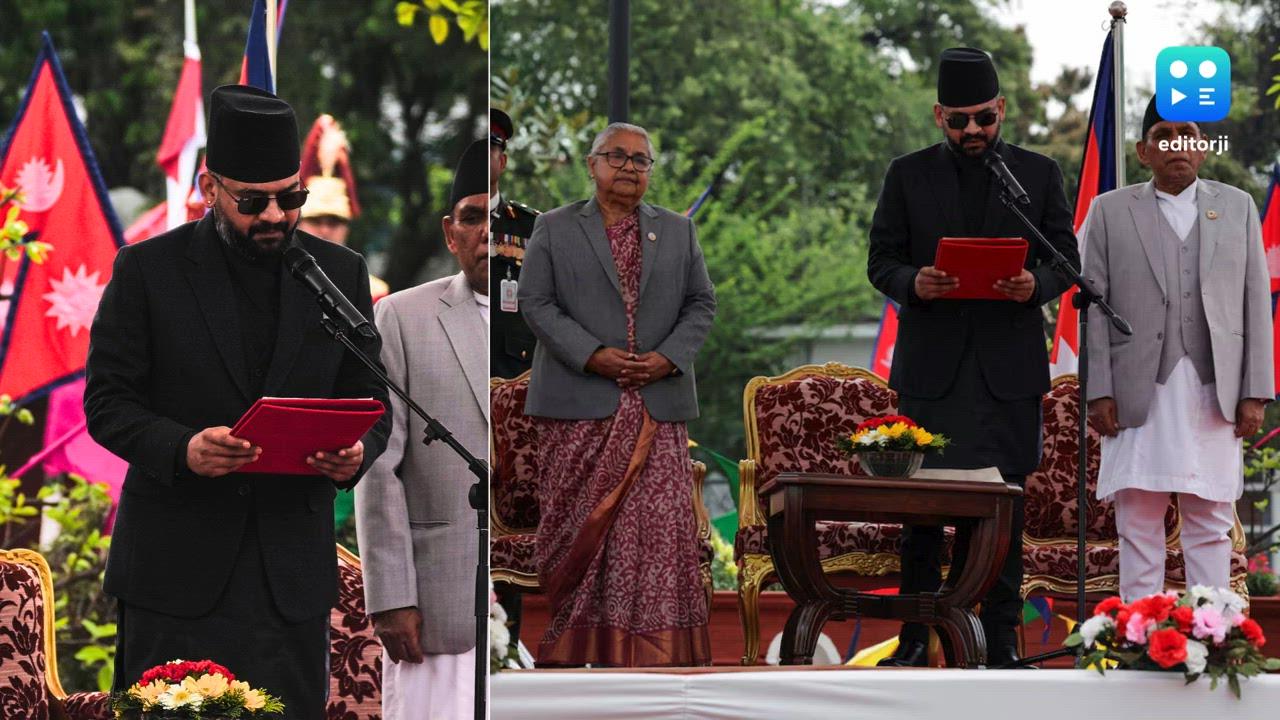
Oli, stepping down after demonstrators entered his office demanding his resignation for alleged inaction on corruption and the deaths in police action, cited "extraordinary circumstances" in his resignation letter to President Paudel. Oli, who has close ties to China, became prime minister for the fourth time in July 2024, with support from the Nepali Congress Party.
Despite the Nepalese government lifting its ban on social media following the protests, the demonstrators, under the banner of 'Gen Z', continued to rally against corruption and for accountability for the 19 protester deaths.
Chanting slogans like "KP Chor, Desh Chhod" (KP thief, leave the country) and "Take Action Against Corrupt Leaders," demonstrators set fire to former home minister Ramesh Lekhak's residence in Naikap and vandalized former PM Deuba's house in Budhanilkantha, among other incidents.
The protests were widespread across Kathmandu and Lalitpur districts. In Kalanki, demonstrators blocked streets with burning tires, according to witnesses. Stones were thrown at Communication Minister Gurung’s home, as his order instigated the social media ban.
The Gen Z group has used platforms like Reddit and Instagram to campaign against corruption, questioning the mystery behind luxurious lifestyles of ministers' children allegedly acquired through corrupt practices.
Agitators viewed the government’s social media ban as an effort to stifle free speech. The ban affected 26 sites, including Facebook and 'X', due to their noncompliance with registration requirements, but access was restored to ease tensions.
Protesters are also demanding guarantees for freedom of expression and a retirement age for political office holders. Meanwhile, the Nepal Army has expressed its dedication to safeguarding the nation's sovereignty and unity amidst the unrest. "We are monitoring the recent Gen Z movement developments," the military stated.
(Only the headline of this report may have been reworked by Editorji; the rest of the content is auto-generated from a syndicated feed.)