Honolulu, Jul 31 (AP) One of history's most powerful earthquakes unleashed a tsunami that struck a Russian port while sending smaller waves across the Pacific Ocean, reaching the Americas and New Zealand.
More than a day after the 8.8 magnitude earthquake off the coast of Russia’s Kamchatka Peninsula, the immediate threat diminished with no major damage reported. Tsunami warnings were lifted in most regions. However, Chile escalated its warning to the highest level early Wednesday for much of its extensive Pacific coastline, initiating evacuations for hundreds of residents.
What a tsunami is Tsunamis are caused by underwater seismic activities, including earthquakes, volcanic eruptions, and landslides. The disturbance of the seafloor during an earthquake causes displacement of water, translating energy into waves.
Dave Snider, tsunami warning coordinator with the National Tsunami Warning Center in Alaska, explained, “Tsunamis move across the ocean at speeds comparable to a jet airplane in deep water, but slow and build up as they approach shore.”
Following an underwater quake, waves can hit neighboring shorelines within minutes, but it might take hours to traverse the Pacific Ocean. The speed is influenced by ocean depth, with tsunamis traveling faster in deeper waters.
Warnings were issued to keep people away from coastlines as far as Fiji, Samoa, Tonga, the Federated States of Micronesia, and the Solomon Islands. Though some tsunamis might be minor, others lead to vast destruction. The 2004 magnitude 9.1 earthquake near Indonesia generated waves that devastated parts of Southeast and South Asia, resulting in approximately 230,000 deaths. Additionally, the 2011 quake and tsunami in Japan killed about 20,000 individuals and caused a nuclear crisis.
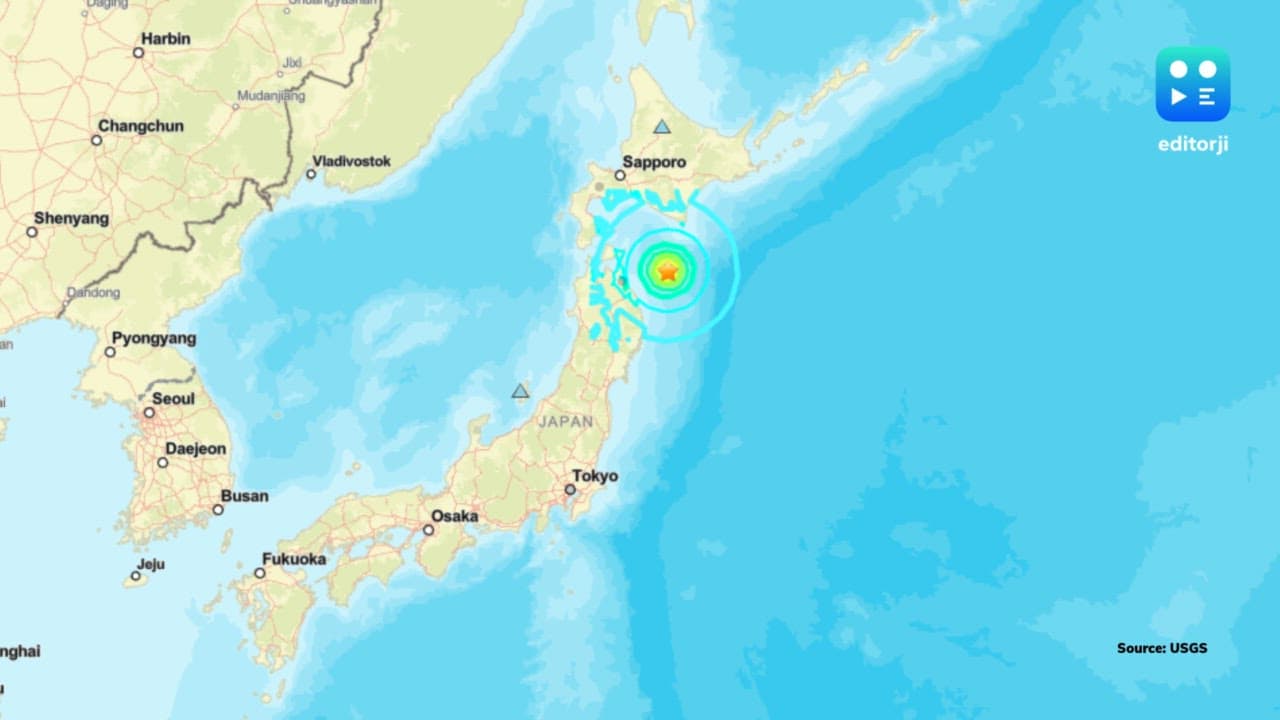
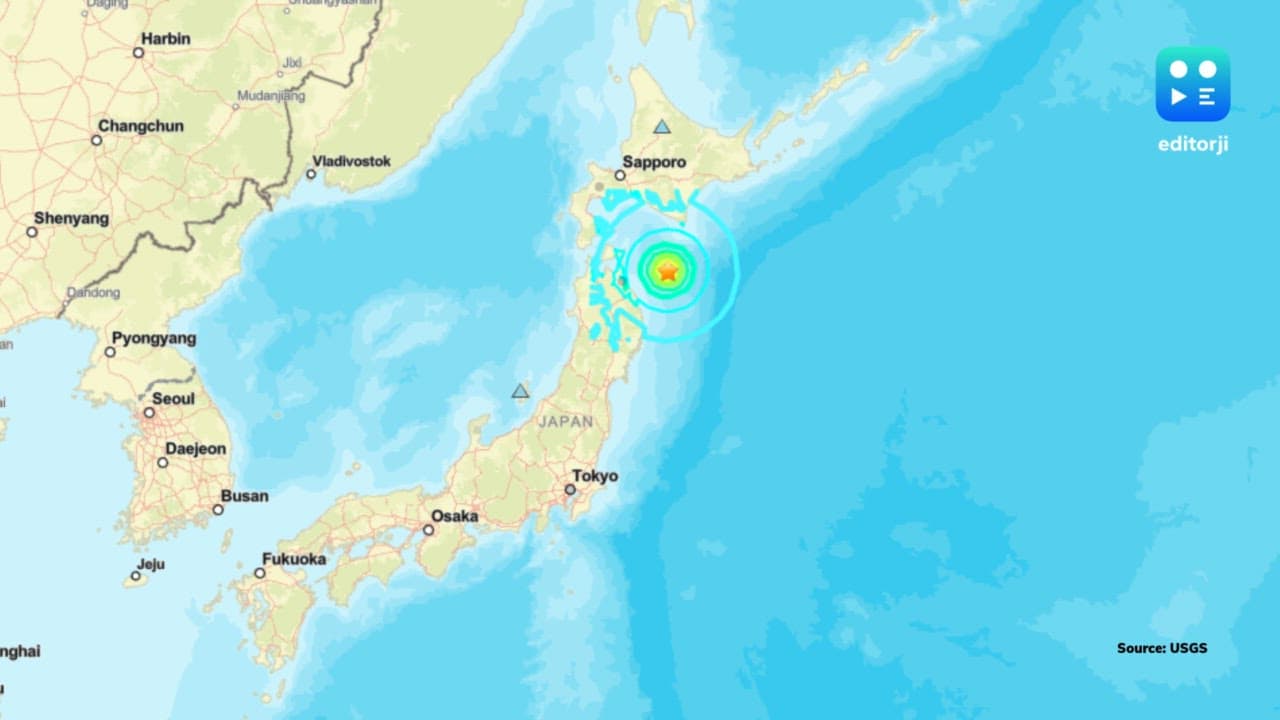
The power of this quake The recent 8.8 magnitude earthquake, which hit early Wednesday local time, ranks among this century’s four strongest earthquakes, according to the USGS. Simon Boxall from the University of Southampton’s Physical Oceanography Research Centre noted it was the sixth-largest quake on record.
This quake was followed by aftershocks up to 6.9 magnitude and occurred along the Pacific Ring of Fire, known for having more than 80% of the world's major quakes. The tectonic plate interactions in this area lead to significant seismic activity.
Boxall likened the earthquake's effect to “throwing an enormous rock in the sea and watching as waves propagate outward,” leading to a tsunami risk. Though not expected to cause mass devastation, it poses a threat of coastal flooding and damage, urging nearby residents to move to higher ground.
The effects of this earthquake so far A tsunami of 3 to 4 meters was recorded in Kamchatka. Buildings were not significantly harmed, while smaller waves, between 0.61 and 1.52 meters, reached San Francisco. Evacuations and marginal injuries were reported near Russia’s quake epicenter.
The International Atomic Energy Agency announced that Japan’s nuclear plants appeared unaffected. Following possible aftershocks, a tsunami advisory persisted for parts of northern California’s coastline.
How tsunami warnings are issued In areas like Hawaii, authorities disseminate alerts via cellphones, TV, radio, and sirens. Alaska also utilizes sirens in some communities, with updates on weather or public radio. The U.S. National Weather Service issues varying alerts:
— A warning signifies an expected or occurring tsunami that may cause widespread flooding; evacuation to higher ground is recommended.
— An advisory suggests potential strong currents or hazardous waves; people are advised to stay away from beaches and waterways.
— A watch indicates a possible tsunami, advising preparation. (AP) GRS
(Only the headline of this report may have been reworked by Editorji; the rest of the content is auto-generated from a syndicated feed.)