Tokyo, Jul 30 (AP) One of the most powerful earthquakes in history rattled the Far East of Russia early Wednesday, unleashing tsunami waves that reached Japan, Hawaii, and the U.S. West Coast. Several people sustained injuries, though none were serious, and no significant damage has been reported thus far.
Authorities cautioned that the threat from this 8.8 magnitude earthquake could extend for hours, initially advising millions in potential harm's way to move inland or seek higher ground. However, the danger appeared to be diminishing in some regions, leading to a reduction in warnings in Hawaii, Japan, and parts of Russia.
Residents in Kamchatka, near the quake's epicenter, retreated inland as the ports were flooded, while frothy waves reached the coasts of northern Japan. Honolulu's streets and highways were clogged with traffic even in areas distant from the ocean.
In Japan, people flocked to evacuation centers, still haunted by memories of the 2011 earthquake and tsunami that triggered nuclear reactor meltdowns. Fortunately, no irregularities were reported at Japan's nuclear plants on Wednesday.
Russian officials reported several injuries, though all individuals remain in stable condition, while injuries in Japan have been minimal, with at least one person affected.
The Kamchatka region recorded tsunami heights of 3 to 4 meters, while Hokkaido in northern Japan experienced waves of 60 centimeters. Tsunami waves ranging from 2 to 5 feet high hit San Francisco early Wednesday, according to officials.
Much of the U.S. West Coast, including California, Oregon, Washington state, and British Columbia in Canada, were under a tsunami advisory.
Hawaii Downgrades to Tsunami Advisory Hawaii was under a tsunami advisory as Wednesday began, but evacuation orders on the Big Island and Oahu, the most populated island, were lifted.
An advisory signifies the potential for strong currents, hazardous waves, and flooding on beaches or in harbors.
“As you return home, still stay off the beach and stay out of the water,” advised James Barros, administrator of the Hawaii Emergency Management Agency.
The tsunami's impact could persist for hours, possibly exceeding a day, according to Dave Snider, tsunami warning coordinator at the National Tsunami Warning Center in Alaska.
“A tsunami is not just one wave,” explained Snider. “It's a series of powerful waves over a long period. Tsunamis traverse the ocean at hundreds of miles an hour—akin to a jet airplane—in deep water. But upon nearing shore, they slow and begin to accumulate, which increases the inundation risk.”
Hawaii Gov. Josh Green stated that Black Hawk helicopters were mobilized and high-water vehicles were ready for use in potential rescue efforts.
The Oregon Department of Emergency Management noted on Facebook that small tsunami waves were anticipated along the coast, urging residents to avoid beaches, harbors, and marinas, and remain in secure locations away from the coast until the advisory ends.
“This is not a major tsunami, but dangerous currents and strong waves may pose a risk to those near the water,” the department stated.
A tsunami of less than 30 centimeters was predicted to strike Vancouver Island, British Columbia, and wave heights of up to 1.4 feet above tide levels were observed in Alaska's Aleutian Islands.
Russian Regions Report Limited Damage Russia's Oceanology Institute indicated that tsunami waves could have ranged as high as 10 to 15 meters along sections of the Kamchatka coastline.
Russian authorities later annulled tsunami warnings on the Kamchatka peninsula and Kuril Islands, though some risk remained.
The regional branch of Russia's Emergency Ministry on Kamchatka had warned that aftershocks could reach magnitudes of up to 7.5 and alerted that further tsunamis were possible in Avacha Bay, where the regional capital of Petropavlovsk-Kamchatsky is situated.
In Petropavlovsk-Kamchatsky, a local kindergarten sustained damage, but it was unoccupied due to ongoing renovations.
Oleg Melnikov, head of the regional health department, reported that a few individuals were injured attempting to evacuate buildings, while a hospital patient was hurt after jumping out of a window. Nevertheless, all injured individuals are stable.
A video released by Russian media depicted a team of doctors in an operating room at a cancer clinic in Kamchatka, stabilizing both a patient and medical equipment as the quake struck, ultimately resuming surgery post-shaking.
A state of emergency was declared on the sparsely populated Kurils, located between Kamchatka and Japan, following the tsunami. Reports indicated that several waves inundated the fishing port of Severo-Kurilsk, the islands' main city, disrupting power supplies. The port's mayor reported no major damage.
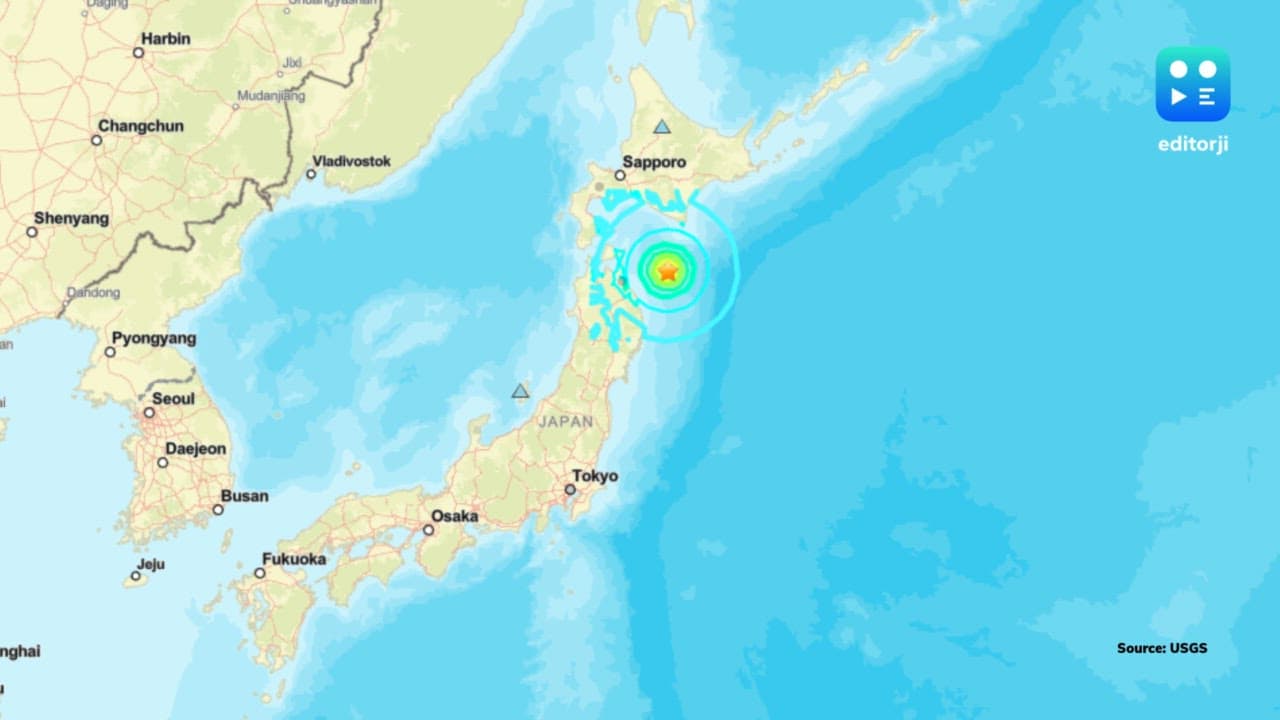
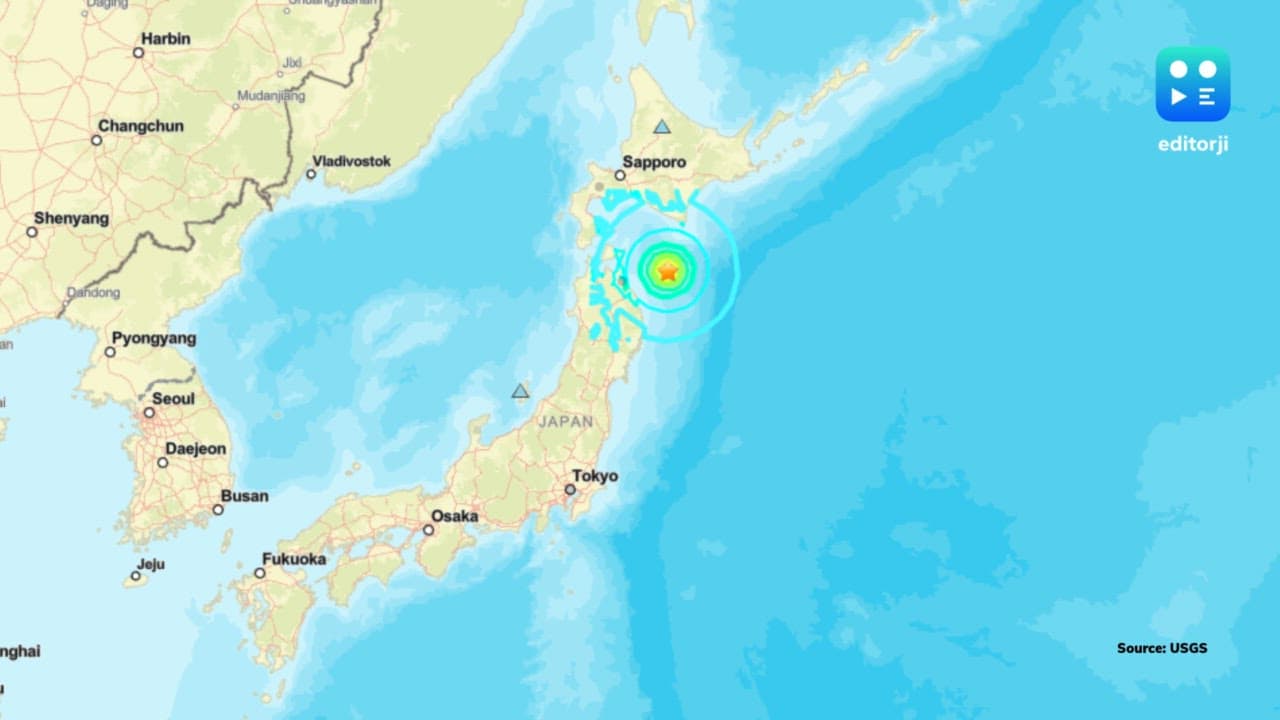
Among the World's Strongest Recorded Quakes The quake struck at 8:25 am Japan time with a magnitude of 8.8 and a depth of approximately 21 kilometers, according to the U.S. Geological Survey.
Centered about 120 kilometers from the Russian city of Petropavlovsk-Kamchatsky, the earthquake was followed by multiple aftershocks reaching magnitudes of 6.9.
This earthquake is among the strongest since the 9.0 magnitude quake that struck off northeastern Japan in March 2011, which caused a massive tsunami triggering meltdowns at a nuclear power plant. Very few earthquakes globally have matched or exceeded this magnitude.
Japanese nuclear power plants reported no anomalies. The Fukushima Daiichi plant, heavily impacted by the 2011 tsunami, relocated approximately 4,000 workers to higher ground within the plant complex, continuing remote monitoring for safety assurance.
The tsunami alert disrupted Japanese transportation, with ferries, trains, and airports halting or delaying operations in the affected sectors.
The Japan Meteorological Agency recorded a tsunami of 60 centimeters at Hamanaka town in Hokkaido and Kuji port in Iwate, while smaller waves, including 20 centimeters in Tokyo Bay, were reported five hours post-quake.
The tsunami alert was downgraded, but an advisory remains along Japan's Pacific coast.
In the northern coastal town of Matsushima, Japan, dozens of residents sought refuge at an evacuation center, where water bottles were distributed. One evacuee noted acting without pause due to lessons learned from the 2011 tsunami, as reported by NHK.
Japanese Chief Cabinet Secretary Yoshimasa Hayashi warned evacuees that home return might not occur by day's end, due to the continuing threat of high tsunami waves.
Warnings were also issued in the Philippines, Mexico, and New Zealand for residents to be cautious of waves and strong currents. Other regions, including Fiji, Samoa, Tonga, the Federated States of Micronesia, and the Solomon Islands, advised inhabitants to steer clear of coastlines until surges subsided.
Earlier in July, the region near Kamchatka experienced five powerful quakes, the largest having a magnitude of 7.4. The most significant quake occurred at a depth of 20 kilometers and was located 144 kilometers east of Petropavlovsk-Kamchatsky. (AP) NPK NPK
(Only the headline of this report may have been reworked by Editorji; the rest of the content is auto-generated from a syndicated feed.)