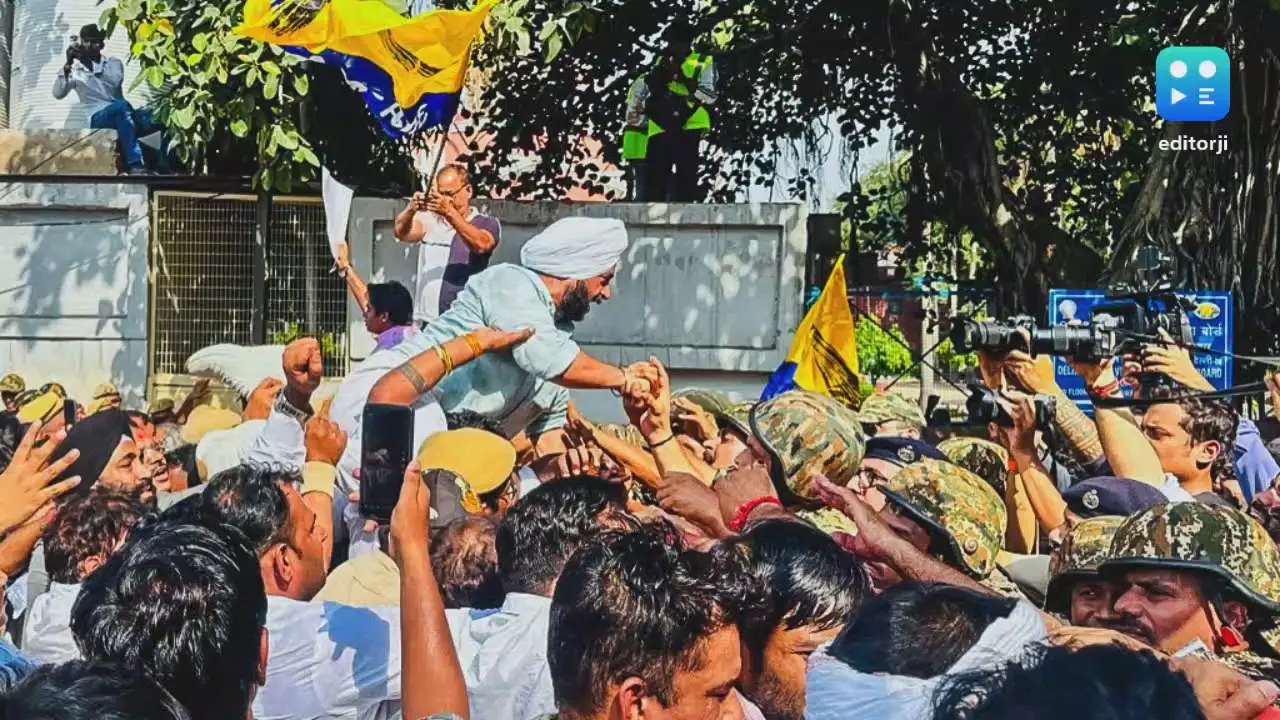
As election season inches closer, massive rallies with seas of people as far as the eye can see give a shining picture of our country as the world’s largest democracy. A fact that no party in power ever loses an opportunity to remind us - however as many say, the devil lies in the detail and a breakdown of India’s first past the post election system begs one to ask the question - what is the majority in India?
India votes as per the first past the post system, also known as the system of winner takes all. Simply broken down, this method of voting means that each person of the electorate gets one vote and the candidates who gets the most votes wins - regardless of what their vote share is.
This system works for a multiparty set up like India, where a simple majority is tough to reach. But that being said, as with all other systems - there are loopholes and shortcoming in this one too.
One of the largest criticisms about FPTP is that it’s not representative in nature. Minorities, on account of never being able to beat out winning candidates in securing a greater number of votes, end up missing out on the opportunity of getting a seat at the decision-making table.
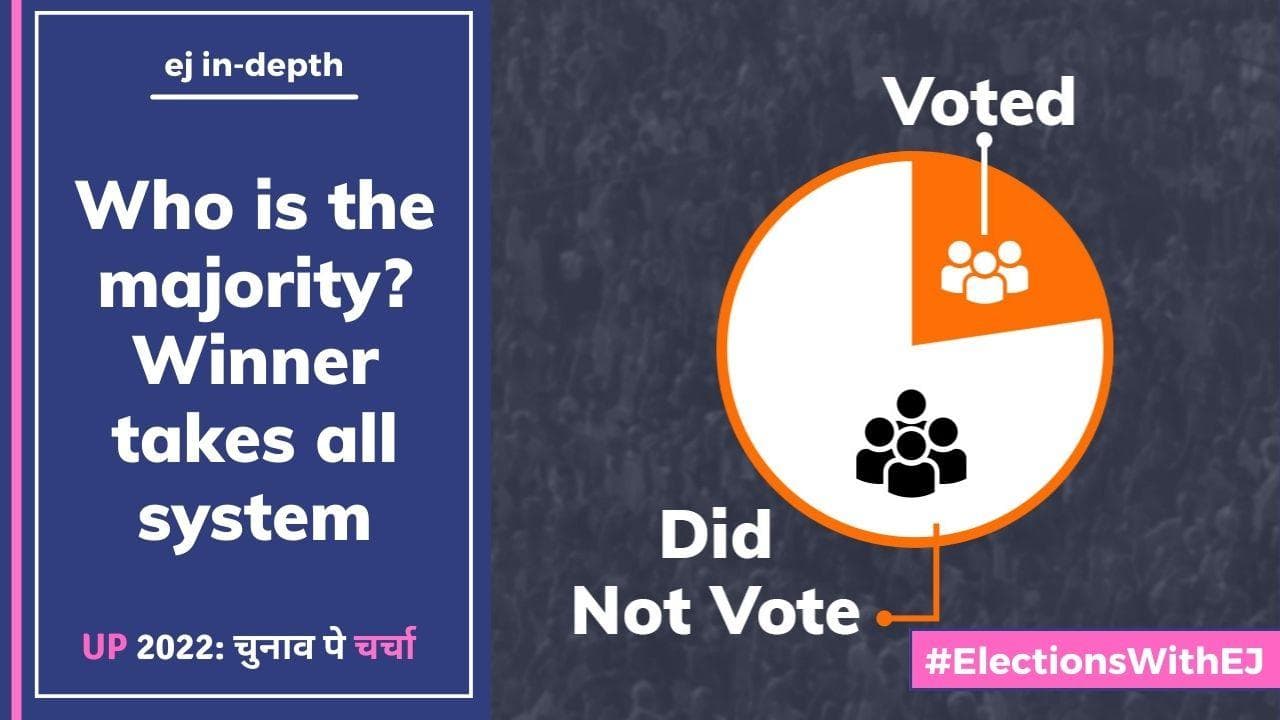
Another criticism is that since it’s about the candidate who gets the greatest number of votes - the gap between the people who actually voted for you, versus the entire population is very wide. Let’s try to understand this using the example of Amethi constituency in Uttar Pradesh.
In the 2017 Assembly election, Amethi had about 3 lakhs 34 thousand eligible electors. Of this only 1 lakh 87 thousand voted. That is a 56% voter turnout. Of this turn out - only 64,226 picked Garima Singh as their MLA - just 34% of the voters, and only 19% of the eligible voters. Despite the fact that a BJP MLA was not picked by 81% of the population in her constituency - we still call this the popular vote.
Another facet of the FPTP is that there is no correlation between the vote shares and the seats secured. In 2017, the SP had a 21.8% vote share, and the BSP a 22.2% vote share, however despite the fact that BSP had more votes in terms of numbers, the SP secured 47 seats and the BSP only 19. This is because it’s not about the votes that are polled but the margins of victory and loss in each constituency.
The numbers are a little confusing, but what are the other alternatives?
Some have suggested a proportional representation system which is about allotting seats in the ratio of the vote share. If a party has 30% votes, give them 30% seats - it sounds simpler than it is. Many say that this is a logistical nightmare and can lead to severely unstable governments. In fact, arguing against the system of proportional representation, Dr.B R Ambedkar had said that reservation is a far better safeguard to the rights of minorities and marginalised groups.
Let’s take a look at the numbers as they stand in UP today. In 2017, the BJP secured close to 40% of the total votes polled. The voter turnout was at an impressive 61.04% of the electorate. However, this number diminishes to 24.2% of the people who were actually eligible to vote. Another way of looking at it is 75.8% of eligible voters in the state didn’t support BJP.
It has been the same story nationally since the start.
No party, not even Congress under Jawaharlal Nehru, has won 50% vote share in any national elections, beginning 1951. The most a party has got is 48% under Rajiv Gandhi in 1984. The Congress won 404 of 514 Lok Sabha seats after Indira Gandhi's assassination.
For four decades after Independence, Congress ruled the country with just over 40% voteshare.
As the Congress domination waned and coalition era kicked in in late 80s and 90s, vote share of the main winning party plunged to 30%. 1996 to 2009, parties formed govts with less than 30% voteshare. The winning party's voteshare again crossed 30% when Narendra Modi-led BJP swept to power.
So is there some confusion about ‘majority’ in our country? Yes
There then remains only one way to lessen the gap in the numbers - and you know it already! Go vote! The biggest tool in our hands when it comes to making the assembly more representative in nature is to make sure that we exercise our sacred right to vote. There is enough time, so if you haven’t already - make sure to go and get your voter ID card made, and make these elections as democratic as possible!