Highlights

  • Have a contingency fund that can sustain you for at least 6 months
  • Get a personal health insurance plan and term plan
  • Divert investments towards paying off EMIs if needed

Latest news

Future Netwings Solution Enhances Service Delivery with the Business Continuity Policy

Future Netwings Solution Enhances Service Delivery with the Business Continuity Policy

India-UK trade deal likely by May 1; Europe deal expected by year-end

India-UK trade deal likely by May 1; Europe deal expected by year-end

VerSe Innovation Appoints Prasanna Prasad as Chief Product and Technology Officer to Accelerate AI-Led Product and Platform Innovation

VerSe Innovation Appoints Prasanna Prasad as Chief Product and Technology Officer to Accelerate AI-Led Product and Platform Innovation

Changing Aspirations of Premium Homebuyers in NCR

Changing Aspirations of Premium Homebuyers in NCR

Airfloa Rail Technology's FY26 Business Update and Strategic Direction

Airfloa Rail Technology's FY26 Business Update and Strategic Direction

Sanjay Khanna Appointed as Chairman & Managing Director of BPCL

Sanjay Khanna Appointed as Chairman & Managing Director of BPCL

Galgotias University Placement Report: 4700+ Offers Across Top Recruiters in 2026

Galgotias University Placement Report: 4700+ Offers Across Top Recruiters in 2026

"Be the same loving brother you are to me...": Sanjay Dutt pens heartfelt birthday note for Anant Ambani

"Be the same loving brother you are to me...": Sanjay Dutt pens heartfelt birthday note for Anant Ambani

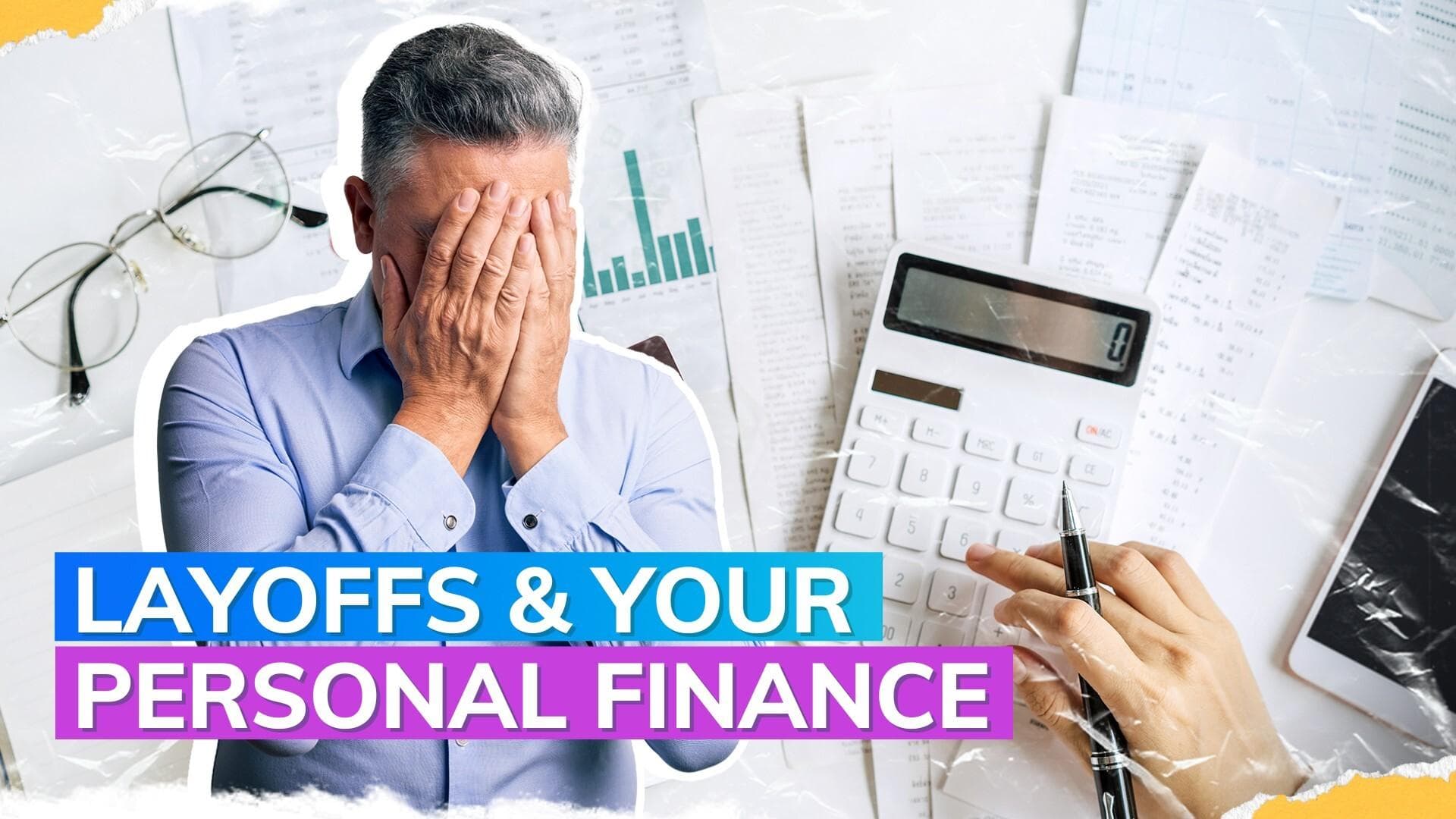
How to manage your personal finance amid layoffs

Here are some important things that can help you manage your personal finances if you've lost your job or think you might, in this period of widespread layoffs

How to manage your personal finance amid layoffs

In the current environment, the risk of losing one’s job only seems to be rising. Across the globe including in India, for the last several months, companies have been announcing layoffs, amid an uncertain economy.

Since 2022, over 25,000 employees have been let go by Indian startups, according to Inc42. According to the website layoff.fyi, which keeps track of layoffs, more than one lakh employees were laid off in the first few months of 2023 and about 1.4 lakh people were laid off globally in 2022.

Now, more than ever, it is becoming increasingly important to ensure one is financially prepared in case of such an eventuality. So, what can you do to prepare for such a situation?

Create a contingency fund
Financial Expert, Kalpesh Ashar believes everyone should have a contingency fund or an emergency fund in place. This emergency fund serves as a safety net in case you lose your job. Its a fund you can dip into to meet your daily expenses, when your regular monthly income has been affected.

The ideal amount to keep in an emergency fund is at least six times your regular monthly required expenses. This will allow you to tide over at least 6 months without a regular job. However, Ashar says, the larger your emergency reserve, the better your safety net is.

While calculating your emergency fund corpus, be sure to include all your recurring monthly obligation such as rent, utilities, insurance premium, school fees, EMIs etc.

Health Insurance
A personal health insurance cover is an absolute must. Depending only on your employer’s insurance is definitely not advisable. Investment Expert, Karthik Jhaveri says, people tend to spend a yearly insurance premium on a casual night out with friends but end up cutting back on getting insurance. Health insurance gets you covered for an entire year and the premiums are not so much that they would burn a hole in your pocket, he adds. Trying to save money by cutting back on health insurance is a bad idea. In fact, its better to get a personal health cover and pay off the premium while you still have a steady monthly cash flow coming in.

In the eventuality that your fear of losing your jobs becomes a reality, what should you do?

Assessment of you savings & expenses
First, examine the money and savings that you already have. Ideally, you've planned for this eventuality and have an emergency fund that’s available to you, until you find a new job.

Next, you should evaluate your expenses.
Which of your expenses are optional or discretionary? Can you cut them out for the time being?

Now, assess the cost of your basic needs – housing, food, transportation, medical care etc.

Make your debts a priority
Next, you should examine your debts. Do you have the money to pay them off over the next few months? If you don’t, you need a plan B. For instance, if you have debt from multiple lenders, such as banks and/or family members, consider talking to them about your circumstances and deferring their interest payments rather than missing EMI payments, suggests Kalpesh Ashar.

Divert your routine investments
Karthik Jhaveri recommends diverting investments into paying EMIs. If you frequently invest or make contributions to a retirement plan, you should determine if you can continue to do so, or if you need to stop them to pay off your EMIs, temporarily.

Another option is to dissolve your SIPs or recurring deposits temporarily and divert them towards paying off your loan. It’s also important to keep in mind that most investment instruments offer flexible payment methods, so as soon as you get back to earning a regular income you can, and must replenish them.

Taking a personal loan
This must be an absolute last resort and only if you’re completely out of options. If your savings and emergency money are insufficient, you may need to explore other sources of funding. But, opting for a personal loan could drag you into a vicious debt cycle. Added to that it is difficult to secure a small loan, just to pay off your EMIs, says Karthik Jhaveri.

ADVERTISEMENT

Up Next

How to manage your personal finance amid layoffs

How to manage your personal finance amid layoffs

Centre plans to borrow Rs 8.20 lakh cr from market in first half of FY27

Centre plans to borrow Rs 8.20 lakh cr from market in first half of FY27

Reliance denies buying Iranian oil amid US sanctions waiver

Reliance denies buying Iranian oil amid US sanctions waiver

Premium petrol price up Rs 2, industrial diesel up Rs 22; no change in normal petrol, diesel rates

Premium petrol price up Rs 2, industrial diesel up Rs 22; no change in normal petrol, diesel rates

India's GDP expected to register over 8 pc growth in Sep-Dec: Report

India's GDP expected to register over 8 pc growth in Sep-Dec: Report

Govt announces seven measures to help boost exports

Govt announces seven measures to help boost exports

ADVERTISEMENT

editorji-whatsApp

More videos

RBI keeps interest rates on hold after US trade deal boosts outlook

RBI keeps interest rates on hold after US trade deal boosts outlook

RBI proposes to compensate customers up to Rs 25,000 loss due to fraud

RBI proposes to compensate customers up to Rs 25,000 loss due to fraud

RBI raises GDP growth projection of Q1, Q2 of FY27

RBI raises GDP growth projection of Q1, Q2 of FY27

RBI pauses rate cuts, retains interest rate at 5.25 pc

RBI pauses rate cuts, retains interest rate at 5.25 pc

Rupee jumps 122 paise to close at 90.27 against US dollar on India-US trade deal

Rupee jumps 122 paise to close at 90.27 against US dollar on India-US trade deal

Stock markets cheer India-US trade deal: Sensex, Nifty surge 2.5 pc

Stock markets cheer India-US trade deal: Sensex, Nifty surge 2.5 pc

UPI transactions hit record high of Rs 230 lakh crore in 2025-26 till Dec: Govt

UPI transactions hit record high of Rs 230 lakh crore in 2025-26 till Dec: Govt

Explained: India-US trade deal, tariffs and trade benefits

Explained: India-US trade deal, tariffs and trade benefits

Trade deal with US adds momentum to India's growth ambition: Industry leaders

Trade deal with US adds momentum to India's growth ambition: Industry leaders

Rupee jumps 119 paise to 90.30 against the US dollar on India-US trade deal

Rupee jumps 119 paise to 90.30 against the US dollar on India-US trade deal

Editorji Technologies Pvt. Ltd. © 2022 All Rights Reserved.