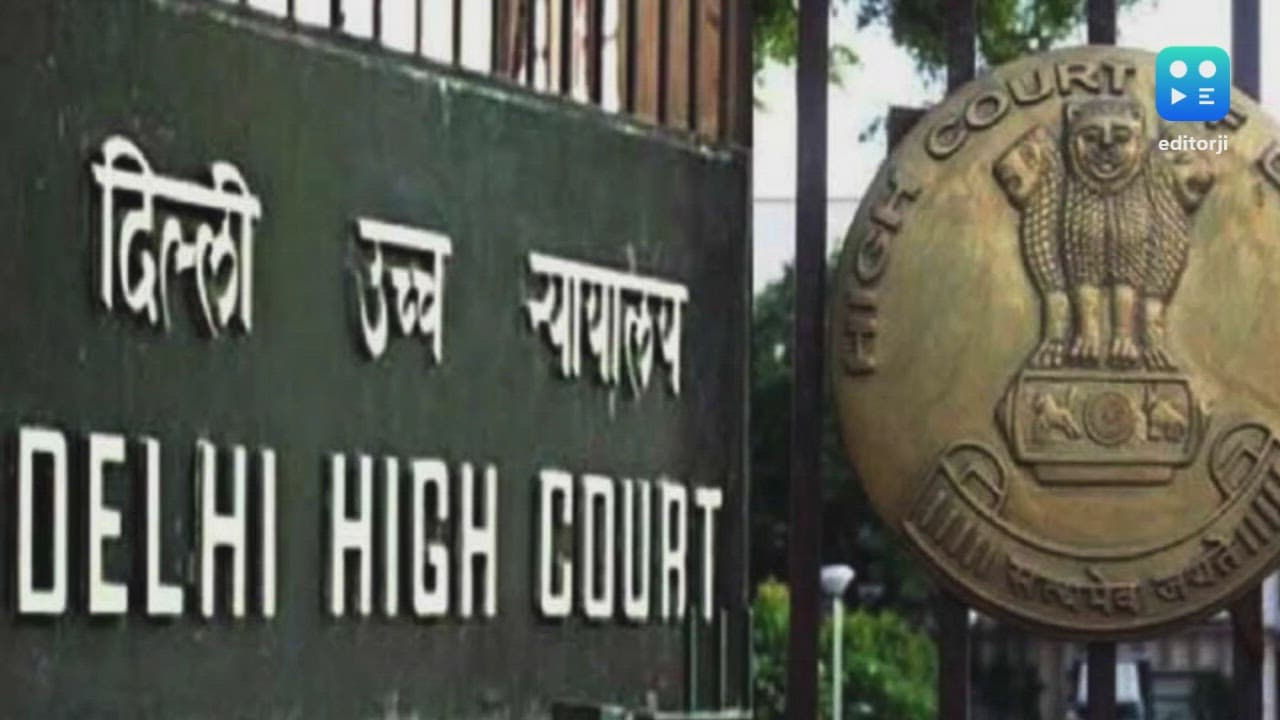
The Supreme Court on Monday put on hold several key provisions of the Waqf (Amendment) Act, 2025, including the clause that only those practising Islam for the last five years can dedicate a property as Waqf, but refused to stay the entire law.
“We have held that presumption is always in favour of constitutionality of a statute and intervention (can be done) only in the rarest of rare cases,” a bench of Chief Justice B R Gavai and Justice Augustine George Masih said in its interim order on the intensely debated issue.
The apex court also pressed pause on the powers given to a collector to adjudicate the status of waqf properties and ruled on the contentious issue of non-Muslim participation in Waqf Boards, directing that the Central Waqf Council should not have more than four non-Muslim members out of 20, and State Waqf Boards not more than three of 11.
The CJI said the bench has considered the “prima facie challenge” to each section in the new law and found that “no case was made out to stay entire provisions of the statute".
"However some sections need some protection,” he said.
The bench made clear that its directions were prima facie and interim in nature and they would not prevent the petitioners or the government from advancing full arguments on the constitutional validity of the law at the stage of final hearing.
The detailed judgement is awaited.
CJI Gavai then referred to the provisions which have been interfered with or stayed by the interim order.
“The requirement that a person has to be a practicing Muslim for the last five years before he can dedicate a property as waqf (Section 3(r)) has been stayed until the state governments rules are framed for examining whether a person is a practicing Muslim or not. Without any such rule/ mechanism, the provision will lead to an arbitrary exercise of power,” the order said.
One of the most significant interventions came in relation to Section 3C, which had vested powers in designated government officers to determine the status of Waqf properties.
The bench stayed a proviso to Section 3C(2) of the law, which said a property would not be deemed Waqf until a government officer’s report confirmed no encroachment.
It also stayed the operation of section 3C(3), which authorised the officer to declare a property as government land and alter revenue records.
The order stalled Section 3C(4), which required the state government to direct the Waqf Board to correct its records on the basis of the officer’s findings.
“Permitting the collector to determine the rights is against the separation of powers; the executive cannot be permitted to determine the rights of citizens,” it said.
The bench clarified that until the title to a property is finally adjudicated under Section 83 by the Waqf Tribunal, and subject to appeal before the High Court, neither the possession of the Waqf nor its records would be disturbed. However, during the pendency of inquiry, no third-party rights could be created in such properties, it said.
On the non-Muslim participation in Waqf Boards, the bench declined to stay the provisions but imposed limitations.
While not striking down Section 23, which deals with the appointment of chief executive officers (CEOs), the bench said, “As far as possible, efforts should be made to appoint the CEO, who is also the ex-officio secretary of the board, from the Muslim community.” It, however, refused to interfere with the provision mandating registration of Waqfs, observing that it was not a new requirement and had existed under earlier legislations of 1995 and 2013.
According to the Act, Waqf refers to an endowment made by a Muslim for charitable or religious purposes, such as building mosques, schools, hospitals, or other public institutions. "Another defining feature of a Waqf is that it's inalienable- which means it cannot be sold, gifted, inherited or encumbered," it states.
On May 22, the Supreme Court reserved its orders on three key issues, including the power to denotify properties declared as "waqf by courts, waqf-by-user or waqf by deed", which cropped up during the hearing of pleas challenging the validity of the Waqf (Amendment) Act, 2025.
Apart from the issue of denotification, petitioners raised questions over the composition of state waqf boards and the Central Waqf Council, where they contended that only Muslims should operate except ex-officio members. The third issue relates to a provision that says a waqf property will not be treated as a waqf when the collector conducts an inquiry to ascertain if the property is government land.
On April 25, the Union Ministry of Minority Affairs filed a preliminary 1,332-page affidavit defending the Waqf (Amendment) Act, 2025 and opposed any "blanket stay" by the court on a "law having presumption of constitutionality passed by Parliament".
The Centre notified the Act on April 8 after it got President Droupadi Murmu's assent on April 5.
The Lok Sabha and the Rajya Sabha passed the Waqf (Amendment) Bill, 2025 on April 3 and April 4 respectively.