Highlights

  • Foreign Exchange Management Act replaced Foreign Exchange Regulation Act in 1999
  • This act gives power to the central government for restricting activities like money transfer to and from India

Latest news

iQOO Buds Review: Monster Battery and Serious Gaming Chops for under ₹2,000 

iQOO Buds Review: Monster Battery and Serious Gaming Chops for under ₹2,000 

Repo rate today at 5.25%: how long an RBI decision takes to reach your home loan interest rate

Repo rate today at 5.25%: how long an RBI decision takes to reach your home loan interest rate

CMF Buds Neo Review: 35dB ANC, 52-Hour Battery and Incredible Value

CMF Buds Neo Review: 35dB ANC, 52-Hour Battery and Incredible Value

iQOO Z11 Review: A Balanced Mid-Range Powerhouse

iQOO Z11 Review: A Balanced Mid-Range Powerhouse

Samsung Galaxy Watch 9 Review: Familiar, Faster And Better Where It Matters

Samsung Galaxy Watch 9 Review: Familiar, Faster And Better Where It Matters

Samsung Galaxy Watch Ultra2 Review: A Smarter, Tougher and Longer-Lasting Ultra

Samsung Galaxy Watch Ultra2 Review: A Smarter, Tougher and Longer-Lasting Ultra

Gabit Smart Ring Review: A Better Way To Track Your Health? 

Gabit Smart Ring Review: A Better Way To Track Your Health? 

Xiaomi Power Bank 5i 20000 67W Review: A Powerful Travel Companion

Xiaomi Power Bank 5i 20000 67W Review: A Powerful Travel Companion

Foreign Exchange Management Act: All that you need to know

Foreign Exchange Management Act was introduced to facilitate external trade and payments while assisting in orderly development and maintenance of the Indian forex market. 

Foreign Exchange Management Act: All that you need to know

The Enforcement Directorate carried out searches at three premises linked to Edtech firm Byju's in Bengaluru under the Foreign Exchange Management Act (FEMA) provisions. As per ED, the searches revealed that the company has received foreign direct investment of about Rs 28,000 crore during the period from 2011 to 2023.

Similarly, ED had registered a case against BBC India under the Foreign Exchange Management Act for alleged foreign exchange violations.

What is the Foreign Exchange Management Act?

FEMA was primarily introduced to facilitate external trade and payments while assisting in orderly development and maintenance of the Indian forex market. This act gives power to the central govt to regulate the flow of payments to and from a person situated outside the country. It essentially outlines the procedure to deal with all foreign exchange related transactions in India.

Why was FEMA introduced?

FEMA was brought in as a replacement to the Foreign Exchange Regulation Act (FERA). Introduced in 1999, and enforced in 2000, FEMA was formulated to fill the gaps and loopholes of FERA. With India’s liberalisation process that began in 1991, FERA was no longer compatible with India’s post-liberalisation policies.

How is FEMA different from FERA?

  1. One of the main differences between the two acts is that violations of the rules of FEMA is considered a civil offence while in FERA it was considered a criminal offence.
  2. FERA was used to regulate payments and foreign exchange in India, while FEMA is an act to promote orderly management of the foreign exchange in India.
  3. While FERA rules regulated foreign payments, FEMA focussed on increasing forex reserves, promoting foreign payments and foreign trade.

To whom does FEMA apply?

This act is applicable to all the Indian citizens and to the agencies or companies located outside India but is managed by an Indian citizen. Apart from this, foreign exchange, foreign security, exports and imports of any commodity and/or services, securities as defined under Public Debt Act 1994, banking, financial and insurance services, any overseas company owned by an Indian and has an ownership of 60% or more also come under FEMA provisions.

Prohibited activities under FEMA

There are certain transactions that are prohibited under FEMA. Examples of these include:

  1. Any kind of remittance out of lottery winnings
  2. Any kind of remittance from the income of racing, riding, etc.
  3. Commissions on equity investment of Indian companies abroad
  4. Transaction with a resident of Bhutan and Nepal

What is allowed under FEMA?

However, transactions that are permitted under FEMA include:

  1. $ 10,000 from any number of visits to foreign countries excluding Nepal & Bhutan
  2. Donation and gift per donor not exceeding $125,000 in a financial year
  3. Corporate donation of 1% of forex earnings during the preceding three financial years or $ 5 million. Whichever is less will be accepted for a specified purpose
  4. $25,000 per business trip abroad for each stay
  5. $ 25,000 for attending specialised training or conference
  6. $ 100,000 for medical treatment

What happens if FEMA is violated?

Any person breaching the FEMA provisions, will be liable to pay a penalty up to thrice the sum involved in such contravention or up to Rs 2 lakh. If that person continues to break the rules, a penalty of Rs 50,000 will be added for everyday during which he/she broke the rules.

Frequently Asked Questions

The Foreign Exchange Management Act (FEMA) was introduced to facilitate external trade and payments while assisting in orderly development and maintenance of the Indian forex market. It gives power to the central government to regulate the flow of payments to and from a person situated outside the country and outlines the procedure to deal with all foreign exchange related transactions in India.

ADVERTISEMENT

Up Next

Foreign Exchange Management Act: All that you need to know

Foreign Exchange Management Act: All that you need to know

Repo rate today at 5.25%: how long an RBI decision takes to reach your home loan interest rate

Repo rate today at 5.25%: how long an RBI decision takes to reach your home loan interest rate

Step-by-step guide to apply for a mortgage loan online with minimal documentation

Step-by-step guide to apply for a mortgage loan online with minimal documentation

Honda Activa 6G: Everything You Need to Know Before Buying

Honda Activa 6G: Everything You Need to Know Before Buying

How much does a ULIP plan really cost? A break-down of all charges

How much does a ULIP plan really cost? A break-down of all charges

Centre plans to borrow Rs 8.20 lakh cr from market in first half of FY27

Centre plans to borrow Rs 8.20 lakh cr from market in first half of FY27

ADVERTISEMENT

editorji-whatsApp

More videos

Reliance denies buying Iranian oil amid US sanctions waiver
Reliance denies buying Iranian oil amid US sanctions waiver

Premium petrol price up Rs 2, industrial diesel up Rs 22; no change in normal petrol, diesel rates

Premium petrol price up Rs 2, industrial diesel up Rs 22; no change in normal petrol, diesel rates

India's GDP expected to register over 8 pc growth in Sep-Dec: Report

India's GDP expected to register over 8 pc growth in Sep-Dec: Report

Govt announces seven measures to help boost exports
Govt announces seven measures to help boost exports

RBI keeps interest rates on hold after US trade deal boosts outlook

RBI keeps interest rates on hold after US trade deal boosts outlook

RBI proposes to compensate customers up to Rs 25,000 loss due to fraud
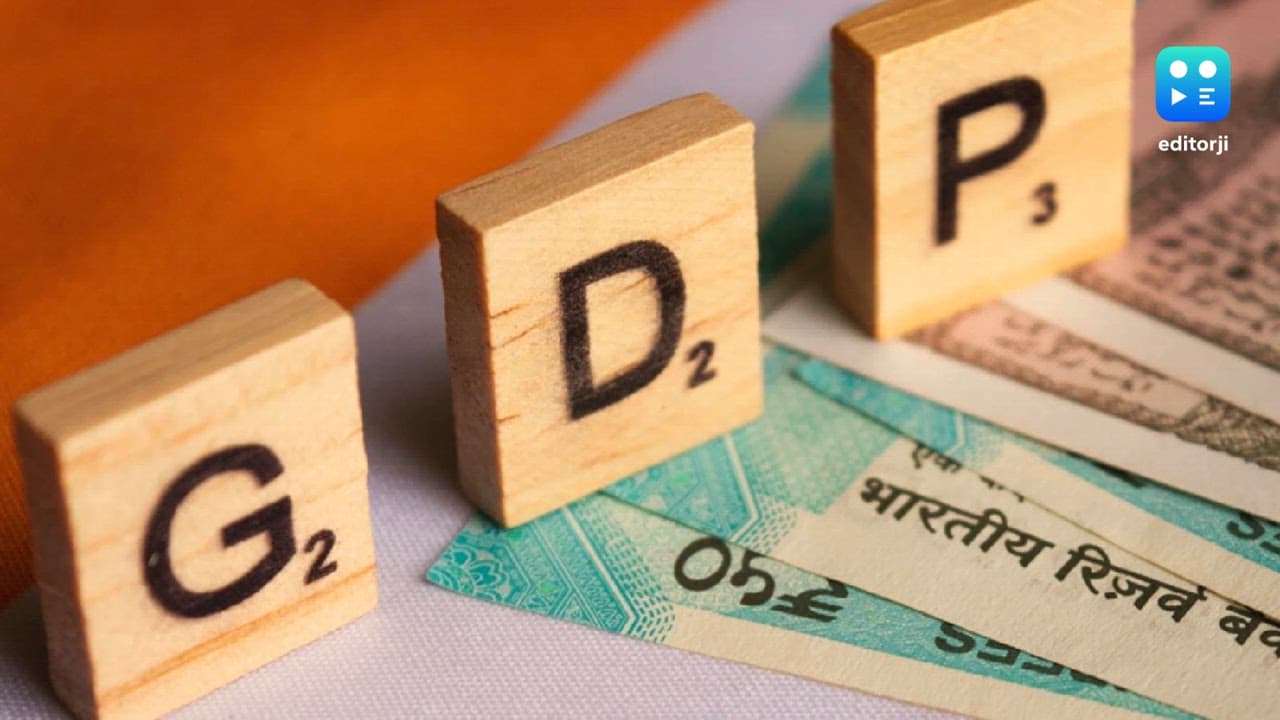
RBI proposes to compensate customers up to Rs 25,000 loss due to fraud

RBI raises GDP growth projection of Q1, Q2 of FY27
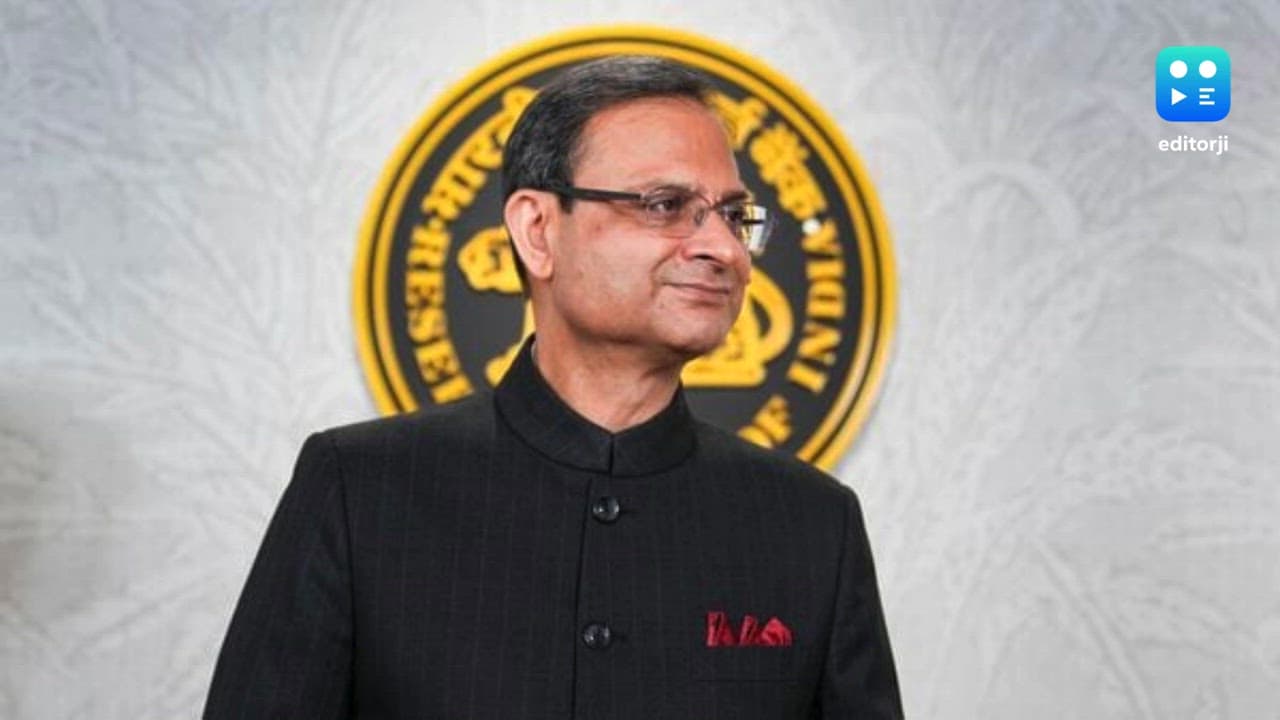
RBI raises GDP growth projection of Q1, Q2 of FY27

RBI pauses rate cuts, retains interest rate at 5.25 pc

RBI pauses rate cuts, retains interest rate at 5.25 pc

Rupee jumps 122 paise to close at 90.27 against US dollar on India-US trade deal

Rupee jumps 122 paise to close at 90.27 against US dollar on India-US trade deal

Stock markets cheer India-US trade deal: Sensex, Nifty surge 2.5 pc

Stock markets cheer India-US trade deal: Sensex, Nifty surge 2.5 pc

Editorji Technologies Pvt. Ltd. © 2022 All Rights Reserved.