Years late and billions over budget, NASA's new moon rocket makes its debut next week in a high-stakes test flight before astronauts get on top.
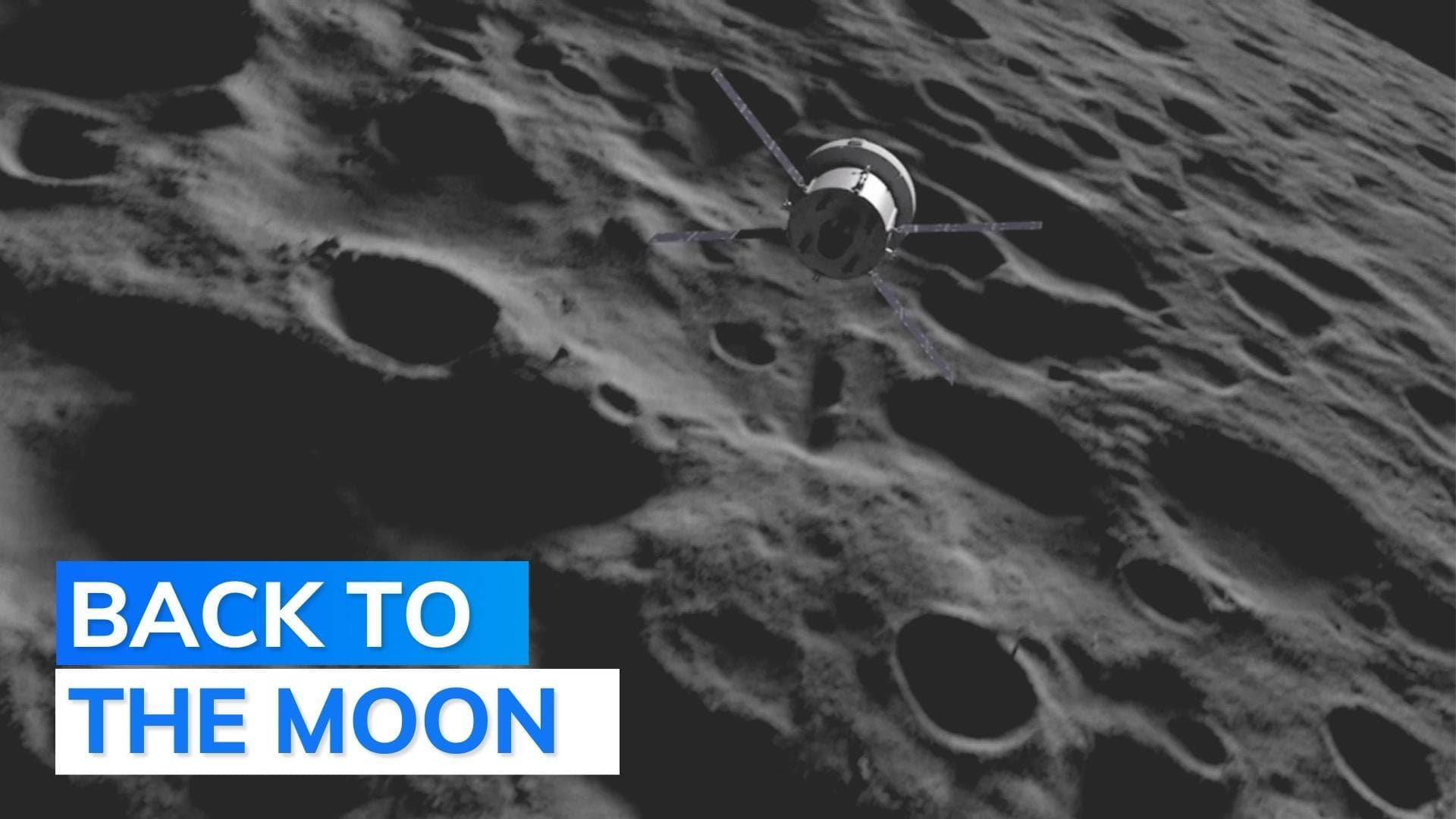
The 322-foot rocket will attempt to send an empty crew capsule into a far-flung lunar orbit, 50 years after NASA's famed Apollo moonshots.
If all goes well, astronauts could strap in as soon as 2024 for a lap around the moon, with NASA aiming to land two people on the lunar surface by the end of 2025.
Liftoff is set for Monday morning from NASA's Kennedy Space Center.
The six-week test flight is risky and could be cut short if something fails, NASA officials warn.
“We're going to stress it and test it. We're going make it do things that we would never do with a crew on it in order to try to make it as safe as possible,” NASA Administrator Bill Nelson told The Associated Press on Wednesday.
The retired founder of George Washington University's space policy institute said a lot is riding on this trial run. Spiraling costs and long gaps between missions will make for a tough comeback if things go south, he noted.
“It is supposed to be the first step in a sustained program of human exploration of the moon, Mars, and beyond," said John Logsdon. “Will the United States have the will to push forward in the face of a major malfunction?" The price tag for this single mission: more than $4 billion. Add everything up since the program's inception a decade ago until a 2025 lunar landing, and there's even more sticker shock: $93 billion.
Also watch: NASA's James Webb telescope captures Jupiter like never before
Here's a rundown of the first flight of the Artemis programme, named after Apollo's mythological twin sister.
ROCKET POWER The new rocket is shorter and slimmer than the Saturn V rockets that hurled 24 Apollo astronauts to the moon a half-century ago. But it's mightier, packing 4 million kilograms of thrust.
It's called the Space Launch System rocket, SLS for short, but a less clunky name is under discussion, according to Nelson.
Unlike the streamlined Saturn V, the new rocket has a pair of strap-on boosters refashioned from NASA's space shuttles.
The boosters will peel away after two minutes, just like the shuttle boosters did, but won't be fished from the Atlantic for reuse.
The core stage will keep firing before separating and crashing into the Pacific in pieces. Two hours after liftoff, an upper stage will send the capsule, Orion, racing toward the moon.
MOONSHIP NASA's high-tech, automated Orion capsule is named after the constellation, among the night sky's brightest. At 11 feet tall, it's roomier than Apollo's capsule, seating four astronauts instead of three. For this test flight, a full-size dummy in an orange flight suit will occupy the commander's seat, rigged with vibration and acceleration sensors.
Two other mannequins made of material simulating human tissue — heads and female torsos, but no limbs — will measure cosmic radiation, one of the biggest risks of spaceflight. One torso is testing a protective vest from Israel.
Unlike the rocket, Orion has launched before, making two laps around Earth in 2014.
This time, the European Space Agency's service module will be attached for propulsion and solar power via four wings.
FLIGHT PLAN Orion's flight is supposed to last six weeks from its Florida liftoff to Pacific splashdown, twice as long as astronaut trips in order to tax the systems.
It will take nearly a week to reach the moon, 386,000 kilometers away. After whipping closely around the moon, the capsule will enter a distant orbit with a far point of 61,000 kilometers.
That will put Orion 450,000 kilometers from Earth, farther than Apollo. The big test comes at mission's end, as Orion hits the atmosphere at 40,000 kph on its way to a splashdown in the Pacific.
The heat shield uses the same material as the Apollo capsules to withstand reentry temperatures of 2,750 degrees Celsius.
But the advanced design anticipates the faster, hotter returns by future Mars crews.
HITCHHIKERS Besides three test dummies, the flight has a slew of stowaways for deep space research. Ten shoebox-size satellites will pop off once Orion is hurtling toward the moon.
The problem is these so-called CubeSats were installed in the rocket a year ago, and the batteries for half of them couldn't be recharged as the launch kept getting delayed. NASA expects some to fail, given the low-cost, high-risk nature of these mini satellites.
The radiation-measuring CubeSats should be OK. Also in the clear: a solar sail demo targeting an asteroid.
In a back-to-the-future salute, Orion will carry a few slivers of moon rocks collected by Apollo 11's Neil Armstrong and Buzz Aldrin in 1969, and a bolt from one of their rocket engines, salvaged from the sea a decade ago. Aldrin isn't attending the launch, according to NASA, but three of his former colleagues will be there: Apollo 7's Walter Cunningham, Apollo 10's Tom Stafford and Apollo 17's Harrison Schmitt, the next-to-last man to walk on the moon.