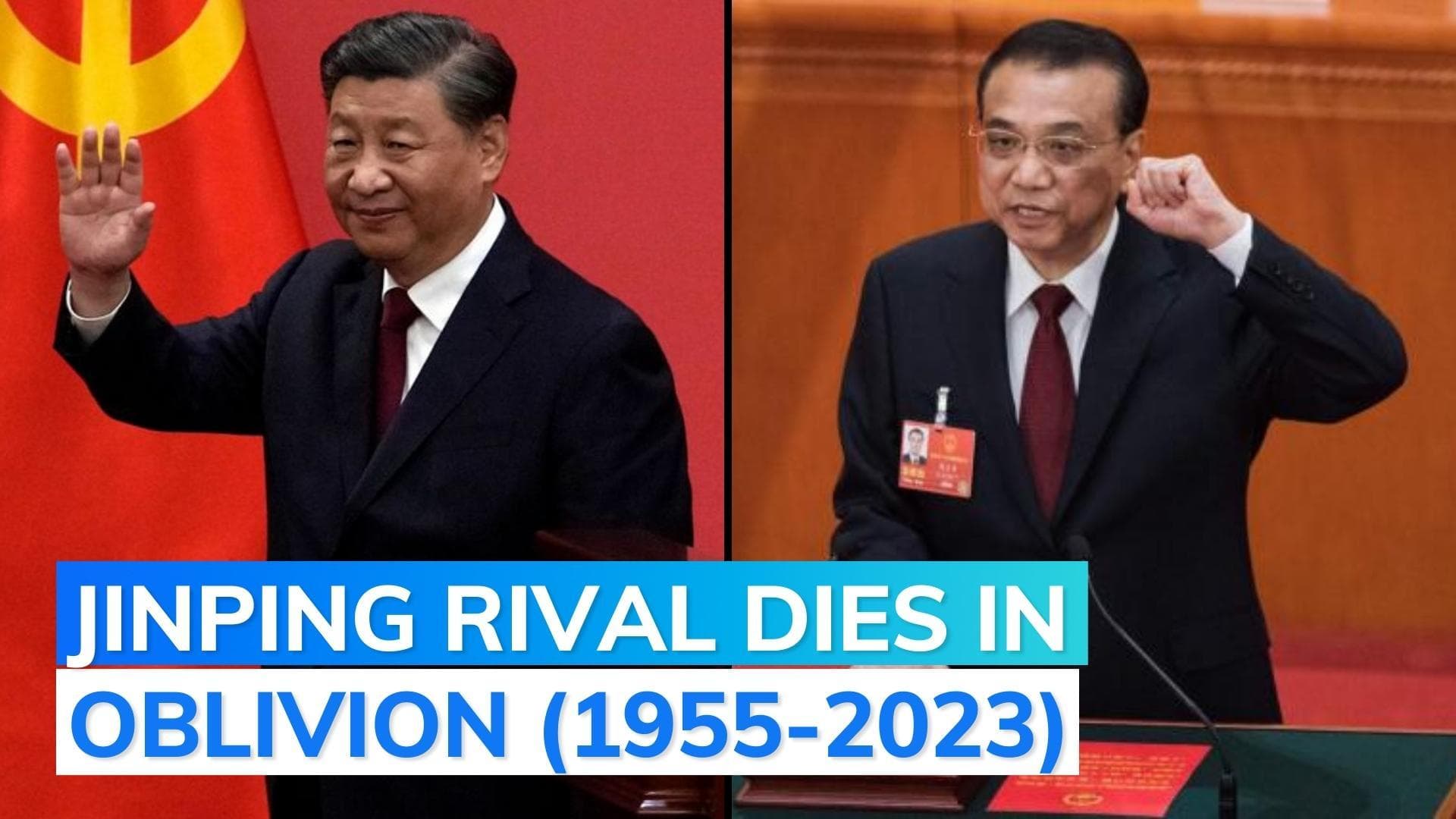
Former Premier Li Keqiang, China's top economic official for a decade, died Friday of a heart attack. He was 68.
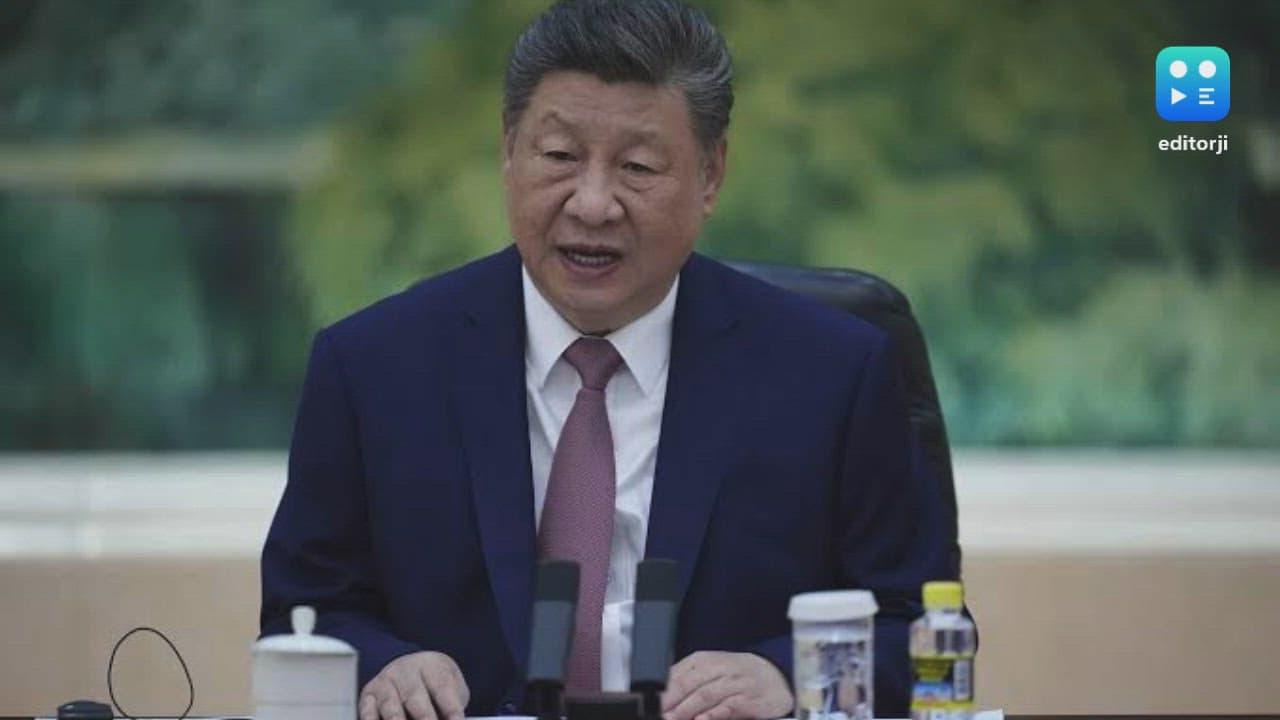
Li was China's No. 2 leader from 2013-23 and an advocate for private business but was left with little authority after President Xi Jinping made himself the most powerful Chinese leader in decades and tightened control over the economy and society.
CCTV said Li had been resting in Shanghai recently and had a heart attack on Thursday. He died at 12:10 a.m. Friday.
Li, an English-speaking economist, was considered a contender to succeed then-Communist Party leader Hu Jintao in 2013 but was passed over in favor of Xi. Reversing the Hu era's consensus-oriented leadership, Xi centralized powers in his own hands, leaving Li and others on the party's ruling seven-member Standing Committee with little influence.
As the top economic official, Li promised to improve conditions for entrepreneurs who generate jobs and wealth. But the ruling party under Xi increased the dominance of state industry and tightened control over tech and other industries. Foreign companies said they felt unwelcome after Xi and other leaders called for economic self-reliance, expanded an anti-spying law and raided offices of consulting firms.
Also Watch: Expected stronger intervention: Hamas official on Hezbollah's backing in war with Israel
Li was dropped from the Standing Committee at a party congress in October 2022 despite being two years below the informal retirement age of 70.
The same day, Xi awarded himself a third five-year term as party leader, discarding a tradition under which his predecessors stepped down after 10 years. Xi filled the top party ranks with loyalists, ending the era of consensus leadership and possibly making himself leader for life. The No. 2 slot was filled by Li Qiang, the party secretary for Shanghai, who lacked Li Keqiang's national-level experience and later told reporters that his job was to do whatever Xi decided.
Li Keqiang, a former vice premier, took office in 2013 as the ruling party faced growing warnings the construction and export booms that propelled the previous decade's double-digit growth were running out of steam.
Government advisers argued Beijing had to promote growth based on domestic consumption and service industries. That would require opening more state-dominated industries and forcing state banks to lend more to entrepreneurs.
Li's predecessor, Wen Jiabao, apologized at a March 2012 news conference for not moving fast enough.
In a 2010 speech, Li acknowledged challenges including too much reliance on investment to drive economic growth, weak consumer spending and a wealth gap between prosperous eastern cities and the poor countryside, home to 800 million people.
Li was seen as a possible candidate to revive then-supreme leader Deng Xiaoping's market-oriented reforms of the 1980s that started China's boom. But he was known for an easygoing style, not the hard-driving impatience of Zhu Rongji, the premier in 1998-2003 who ignited the construction and export booms by forcing painful reforms that cut millions of jobs from state industry.
Li was believed to have supported the “China 2030” report released by the World Bank and a Cabinet research body in 2012 that called for dramatic changes to reduce the dominance of state industry and rely more on market forces.
The Unirule Institute, an independent think tank in Beijing, said state industry was so inefficient that its return on equity — a broad measure of profitability — was negative 6%. Unirule later was shut down by Xi as part of a campaign to tighten control over information.
In his first annual policy address, Li in 2014 was praised for promising to pursue market-oriented reform, cut government waste, clean up air pollution and root out pervasive corruption that was undermining public faith in the ruling party.
Xi took away Li's decision-making powers on economic matters by appointing himself to head a party commission overseeing reform.
Xi's government pursued the anti-graft drive, imprisoning hundreds of officials including former Standing Committee member Zhou Yongkang. But party leaders were ambivalent about the economy. They failed to follow through on a promised list of dozens of market-oriented changes. They increased the dominance of state-owned banks and energy and other companies.
Xi's government opened some industries including electric car manufacturing to private and foreign competition. But it built up state-owned “national champions” and encouraged Chinese companies to use domestic suppliers instead of imports.
Borrowing by companies, households and local governments increased, pushing up debt that economists warned already was dangerously high.
Beijing finally tightened controls in 2020 on debt in real estate, one of China's biggest industries. That triggered a collapse in economic growth, which fell to 3% in 2022, the second-lowest in three decades.
Li showed his political skills but little zeal for reform as governor and later party secretary of populous Henan province in central China in 1998-2004.
Li earned the nickname “Three Fires Li” and a reputation for bad luck after three fatal fires struck Henan while he was there. A Christmas Day blaze at a nightclub in 2000 killed 309 people. Other officials were punished but Li emerged unscathed.
Meanwhile, provincial leaders were trying to suppress information about the spread of AIDS by a blood-buying industry in Henan.
Li's reputation for bad luck held as China suffered a series of deadly disasters during his term.
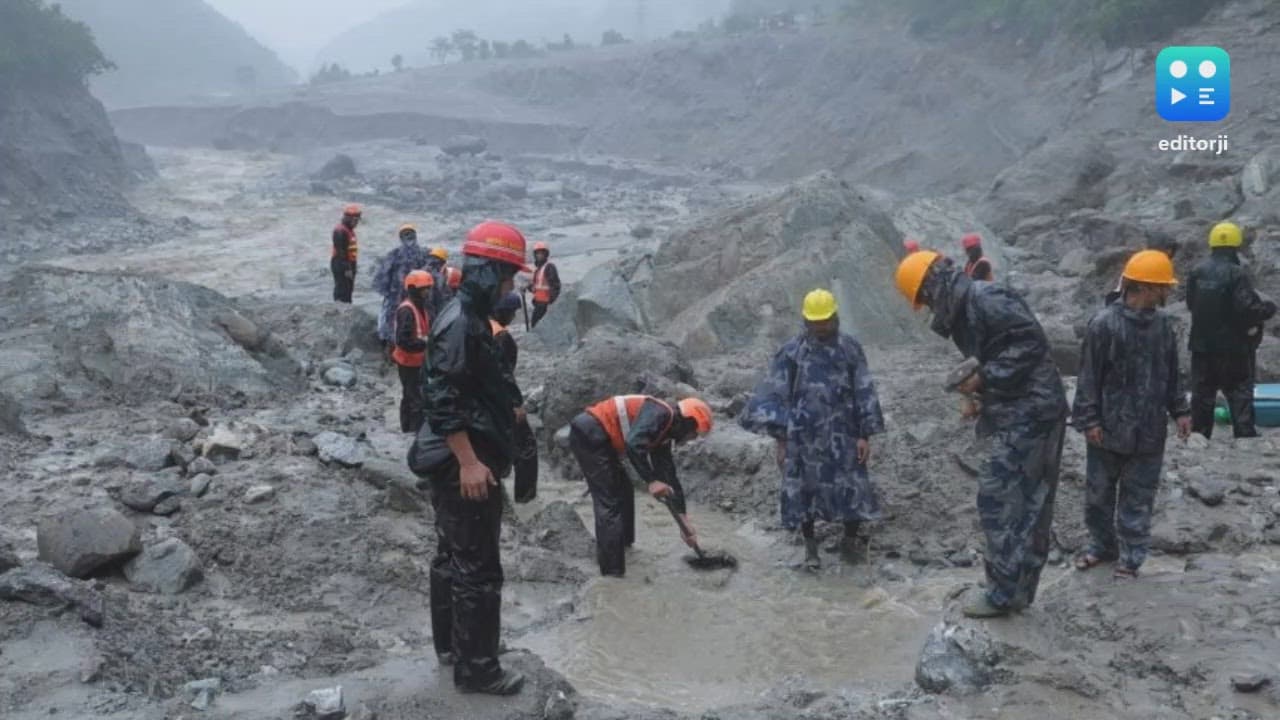
Days after he took office, a landslide on March 29, 2013, killed at least 66 miners at a gold mine in Tibet and left 17 others missing and presumed dead.
Also Watch: Death penalty for former Indian naval officers in Qatar: What is the case?
In the eastern port of Tianjin, a warehouse holding chemicals exploded Aug. 12, 2015, killing at least 116 people.
A China Eastern Airlines jetliner plunged into the ground on March 22, 2022, killing all 132 people aboard. Authorities have yet to announce a possible cause.
Li oversaw China's response to COVID-19, the first cases of which were detected in the central city of Wuhan. Then-unprecedented controls were imposed, shutting down most international travel for three years and access to major cities for weeks at a time.
In one of his last major official acts, Li led a Cabinet meeting that announced Nov. 11, 2022, that anti-virus controls would be relaxed to reduce disruption after the economy shrank by 2.6% in the second quarter of the year. Two weeks later, the government announced most travel and business restrictions would end the following month.
Li was born July 1, 1955, in the eastern province of Anhui and by 1976 was ruling party secretary of a commune there.
Studying law at Peking University, he was the campus secretary of the ruling party's Communist Youth League, an organization that launched the political careers of former party leaders Hu Jintao and Hu Yaobang. He was a member of the League's Standing Committee, a sign he was seen as future leadership material.
After serving in a series of party posts, Li received his Ph.D. in economics in 1994 from Peking University.
Following Henan, Li served as party secretary for Liaoning province in the northeast as part of a rotation through provincial posts and at ministries in Beijing that was meant to prepare leaders. He joined the party Central Committee in 2007.
Also Watch: Joe Biden: Israel has right 'to respond to the slaughter of its people'