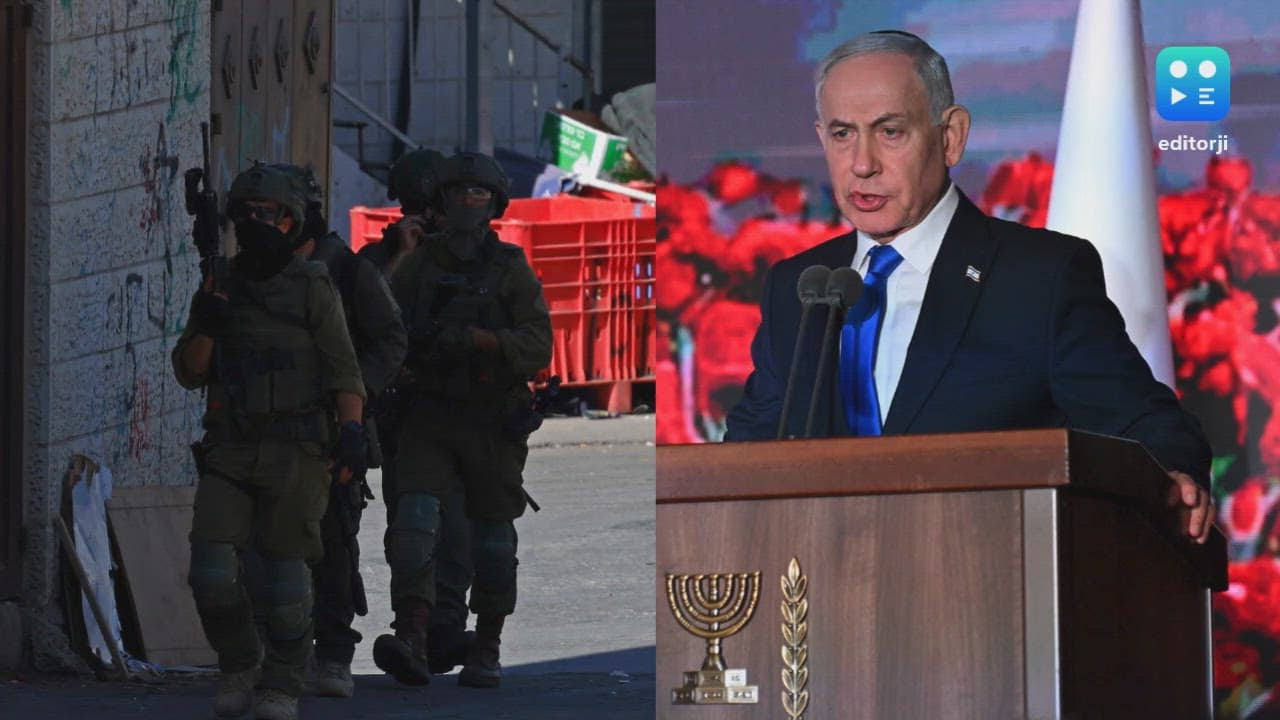
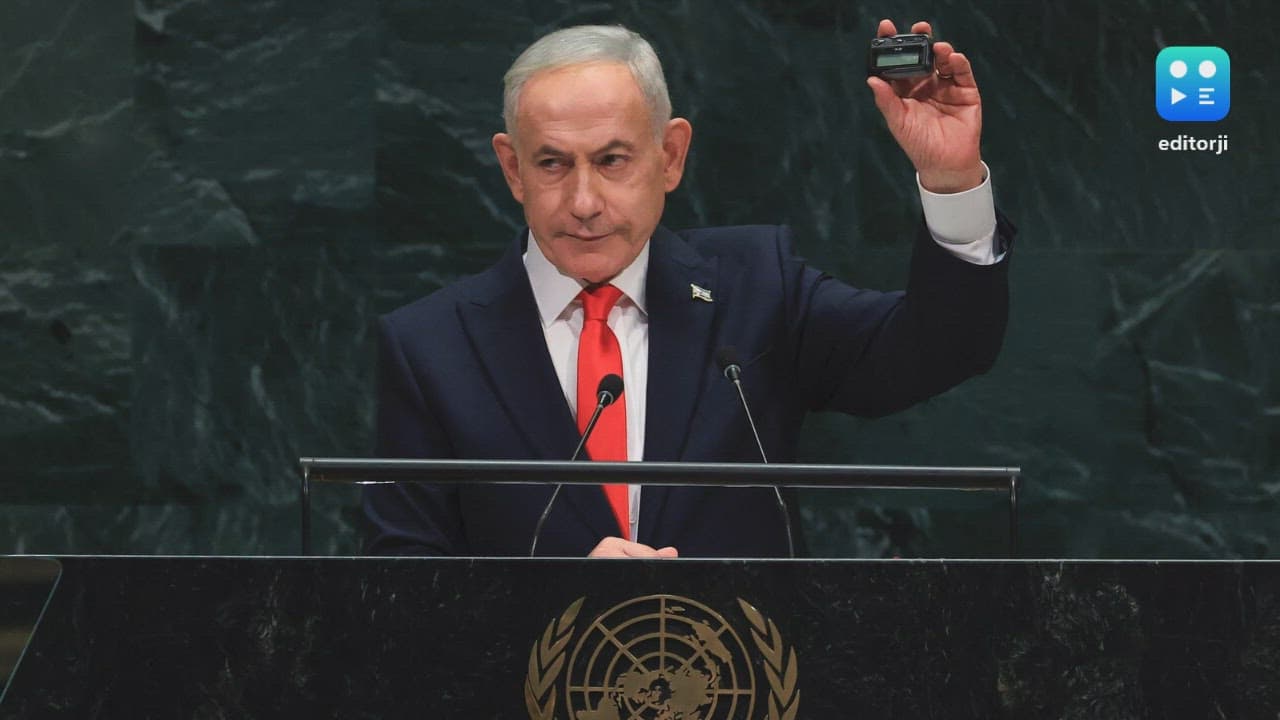
Election-weary Israelis will go to the polls on Tuesday, the fifth in less than four years, in which former prime minister Benjamin Netanyahu will try to stage a comeback, amidst indications that the outcome this time too is too close to call.
The prospect of the next government hinges around two factors - the level of right-wing polarisation, not necessarily in favour of veteran politician Netanyahu but for him to lead the coalition, and the extent of voter apathy, surprisingly, in the Arab sector.
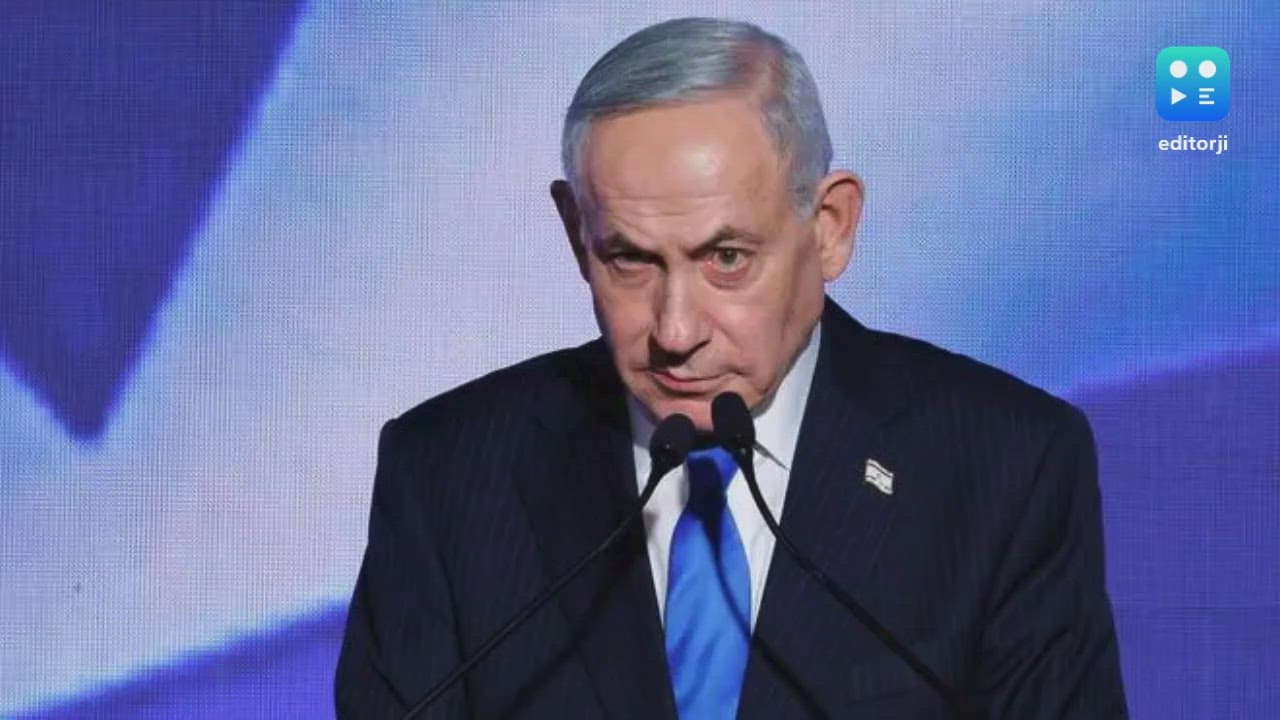
Netanyahu, 73, Israel's longest-serving prime minister and among one of the most polarising ones whose leadership plagued by charges of graft has been at the centre of current instability, is looking to make a comeback which would largely depend on both these factors.
Israel has a parliamentary system made up of several parties – none of which have ever received enough votes on their own to secure a majority of seats in the 120-member parliament. That means parties must team up to form coalitions and reach the 61 seats needed to form a ruling government.
The last four elections in Israel ended in an indecisive mandate, at times alliances falling short by just one vote in the Knesset. The results of Tuesday's vote is expected to be out by Wednesday.
It will be the first time since 2009 when Netanyahu will be running into the polls not as the prime minister.
He hopes that the anti-incumbency factor also boosts his prospects of a return given that the loosely garnered alliance of ideologically divergent political parties, built around opposition to his political leadership, failed to survive for long.
Netanyahu has left no stone unturned to ensure that right-wing votes "do not go waste" as per Israeli election laws where political parties have to cross the 3.25 per cent votes threshold, even personally getting involved in closing 'deals' between warring right-wing factions over seat allotment.
The right-wing seems to have benefitted from these efforts with opinion polls putting it tantalisingly close to a majority, but not clearly, even at the expense of Netanyahu's Likud party dropping in number of seats.
Current Prime Minister Yair Lapid is hoping his centrist Yesh Atid party will come in a strong second place.
Defence Minister Benny Gantz is aiming for a strong showing at the head of a new party called National Unity.
The final polls suggest that Netanyahu’s party and its potential allies are hovering right around the knife edge number of 60 seats.
The general trend among voters reflects a tendency to remain loyal to their ideological inclination, which means that a lot of those right-wing voters who do not want to cast their ballot in favour of Netanyahu would still do so for a political party that would back his premiership.
A lot of voters who last time opted for Netanyahu's "friends turned foes" but felt 'cheated' when they opted to join hands with parties in the Centre and Left, and even an Arab party, to form a government, look to be coming back to the right-wing camp whether by backing Likud or parties that would support a government led by Netanyahu.
The resultant change has led to the rise of an unexpected kingmaker, Itamar Ben-Gvir, whom not long ago Israelis would treat as a fringe element not even worthy of being considered a part of the Israeli mainstream.
Known for his inflammatory anti-Arab speeches and stunts, Ben-Gvir is particularly attracting supporters in a previously untapped chunk of young ultra-Orthodox Jews, one of the fastest-growing segments of the country’s population.
Polls indicate that his Religious Zionism party could emerge as the third-largest party in the 120-member Knesset (Israeli parliament) and help Netanyahu come back to power.
Israel’s 1.3 million ultra-Orthodox Jews make up 13 per cent of the population. The community commonly referred to as the Haredim is growing at a breakneck rate with an average birth rate more than twice the national average.
Children make up half of their population with young adults between 18-35 comprising another quarter, as per local media reports.
The ultra-Orthodox have largely voted for two Haredi political parties — United Torah Judaism and Shas over the past several decades.
The campaigns of both these parties have demonstrated a huge concern due to the rise of support for Ben-Gvir among its voting constituents.
Ben-Gvir first entered parliament in 2021, after his Jewish Power party merged with the Religious Zionism party. While the Israel-Palestinian conflict may have disappeared from Israeli election discourse, almost 20 per cent of the country's Arab population still have a major role to play in deciding the fate of Tuesday's election.
A 'Joint List' of Arab parties in 2015 secured a record-breaking 15 seats in Parliament and a matching performance could have proved problematic for Netanyahu, but the Arab population is a divided and disillusioned lot this time out.
It is noteworthy that there are about 90,000 Jews of Indian origin in Israel but their representation in politics has been at best insignificant, and nil in the parliament in the last few decades.