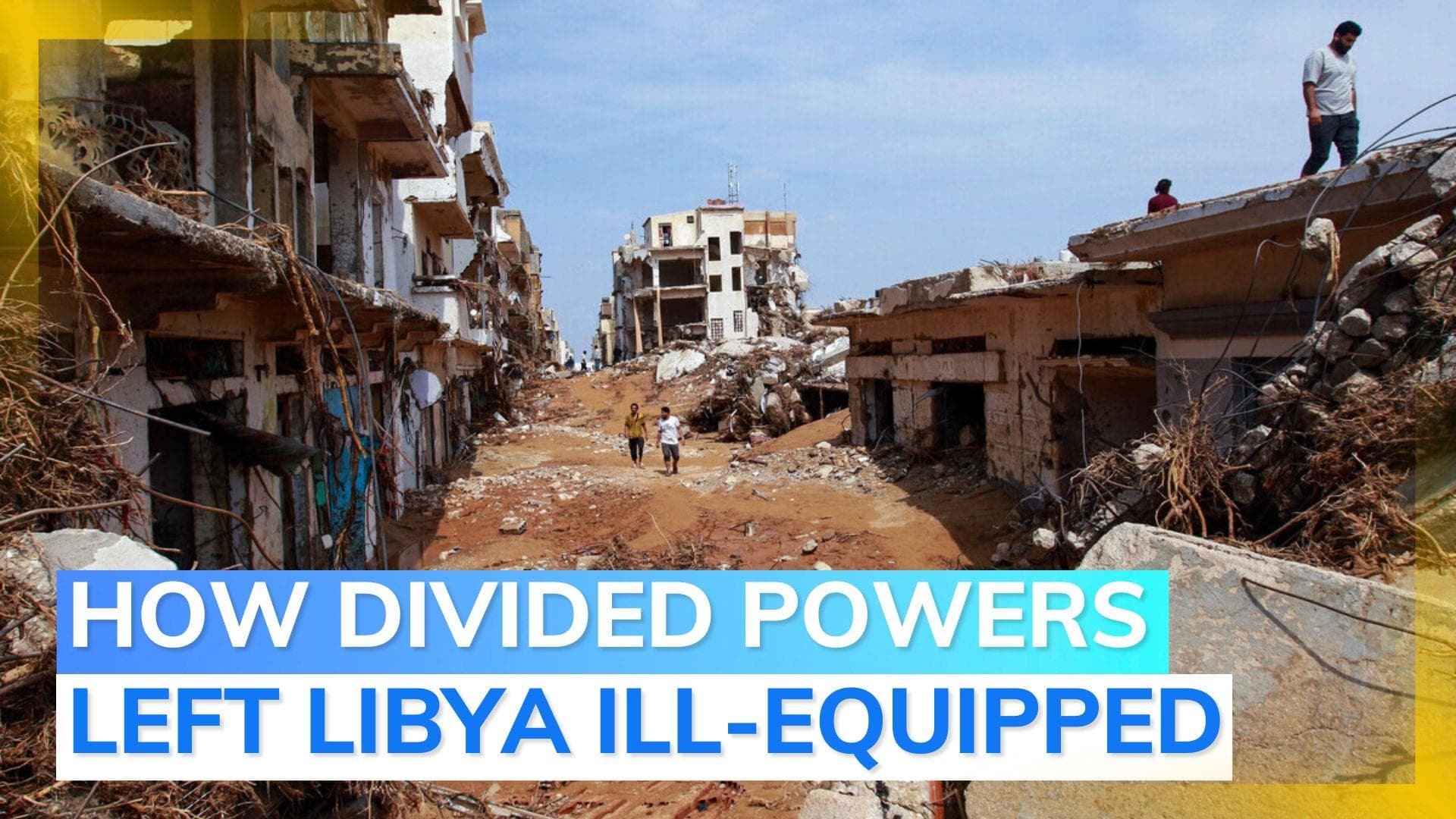
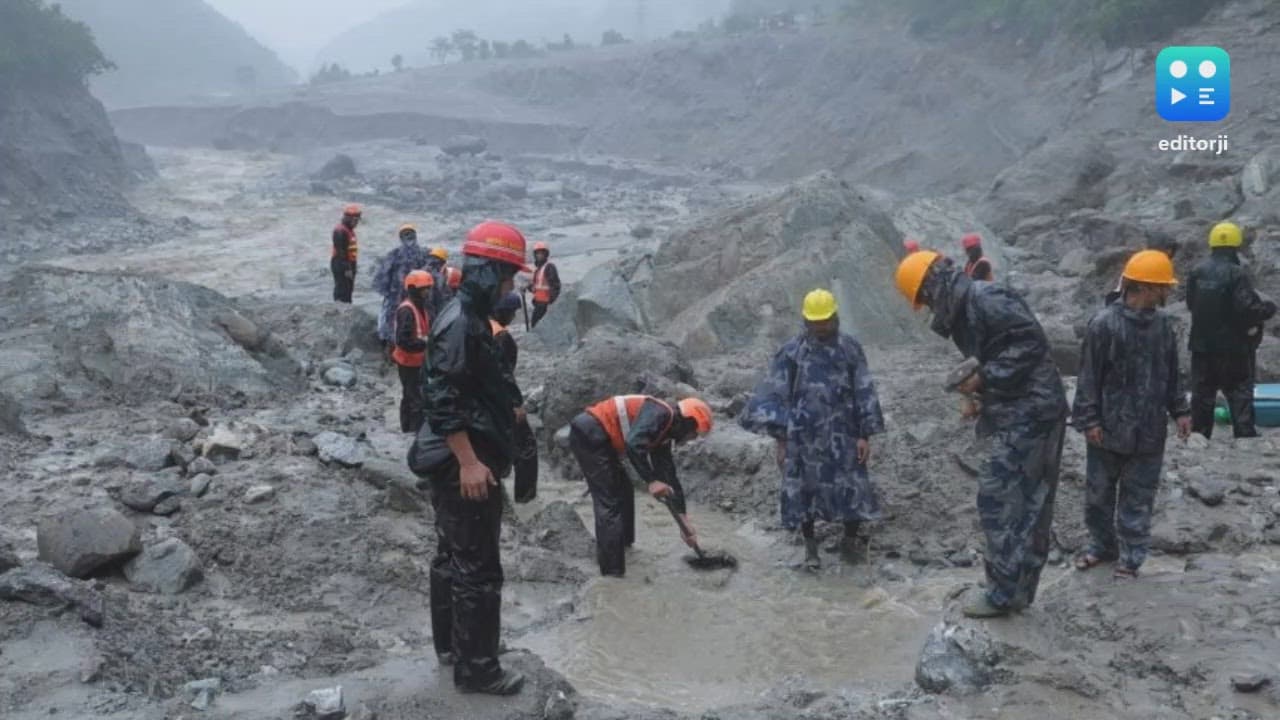
A storm that has killed thousands of people and left thousands more missing in Libya is the latest blow to a country that has been gutted by years of chaos and division.
The floods are the most fatal environmental disaster in the country's modern history. Years of war and lack of a central government have left it with crumbling infrastructure that was vulnerable to the intense rains.
Libya is currently the only country yet to develop a climate strategy, according to the United Nations.
The North African country has been divided between rival administrations and beset by militia conflict since the NATO-backed Arab Spring uprising toppled autocratic ruler Moammar Gadhafi in 2011.
The city of Derna in the country's east saw the most destruction, as large swaths of riverside buildings vanished and washed away after two dams burst.
Videos of the aftermath show water gushing through the port city's remaining tower blocks and overturned cars, and later, bodies lined up on sidewalks covered with blankets, collected for burial. Residents say the only indication of danger was the loud sound of the dams cracking, with no warning system or evacuation plan.
Here's a look at why the storm was so destructive and what obstacles stand in the way of getting aid to those who need it most.
TWO GOVERNMENTS, TWO PRIME MINISTERS
Since 2014, Libya has been split between two rival governments, each backed by international patrons and numerous armed militias on the ground.
In Tripoli, Prime Minister Abdul Hamid Dbeibah heads Libya's internationally recognised government. In Benghazi, the rival prime minister, Ossama Hamad, heads the eastern administration, which is backed by powerful military commander Khalifa Hiftar.
Both governments and the eastern commander have separately pledged to help the rescue efforts in the flood-affected areas, but they have no record of successful cooperation.
Rival parliaments have for years failed to unify despite international pressure, including planned elections in 2021 that were never held.
As recent as 2020, the two sides were in an all-out war. Hifter's forces besieged Tripoli in a year-long failed military campaign to try to capture the capital, killing thousands. Then in 2022, former eastern leader Fathi Basagah tried to seat his government in Tripoli before clashes between rival militias forced him to withdraw.
The support of regional and world powers has further entrenched the divisions. Hifter's forces are backed by Egypt, Russia, Jordan and the United Arab Emirates, while the West Libya administration is backed by Turkiye, Qatar and Italy.
The UAE, Egypt and Turkiye are all helping rescue efforts on the ground. But as of Tuesday, rescue operations were struggling to reach Derna.
Claudia Gazzini, a senior Libya analyst at International Crisis Group, says the problem is partially logistical with many of the roads entering the port city having been severed by the storm. But political strife also plays a role.
“International efforts to send rescue teams have to go through the Tripoli-based government,” said Gazzini. That means permissions to allow aid inside the most affected areas have to be approved by rival authorities.
She was sceptical that the Benghazi government could manage the problem alone, she said.
GROWING UNREST AND DISCONTENT
The flooding follows a long line of problems born from the country's lawlessness.
Last month, protests broke out across Libya after news broke of a secret meeting between the Libyan and Israeli foreign ministers. The demonstrations turned into a movement calling for Debibah to resign.
Earlier in August, sporadic fighting broke out between two rival militia forces in the capital, killing at least 45 people, a reminder of the influence rogue armed groups wield across Libya.
Libya has become a major transit point for Middle Eastern and African migrants fleeing conflict and poverty to seek a better life in Europe. Militias and human traffickers have benefited from the instability in Libya, smuggling migrants across borders from six nations, including Egypt, Algeria and Sudan.
Meanwhile, Libya's rich oil reserves have done little to help its population. The production of crude oil, Libya's most valued export, has at times slowed to a trickle due to blockades and security threats to companies. Allocation of oil revenues has become a key point of disagreement.
TALE OF A NEGLECTED CITY
Much of Derna was constructed when Libya was under Italian occupation in the first half of the 20th century. It became famous for its scenic white beachfront houses and palm gardens.
But in the aftermath of Gaddafi's ouster in 2011, it disintegrated into a hub for Islamist extremist groups, was bombarded by Egyptian airstrikes and later besieged by forces loyal to Hiftar. The city was taken by Hiftar's forces in 2019.
Like other cities in the east of the country, it has not seen much rebuilding or investment since the revolution. Most of its modern infrastructure was constructed during the Gaddafi era, including the toppled Wadi Derna dam, built by a Yugoslav company in the mid-1970s.
According to Jalel Harchaoui, an associate fellow specializing in Libya at the London-based Royal United Services Institute for Defence and Security Studies, Hiftar views the city and its population with suspicion and has been reluctant to allow it too much independence. Last year, for instance, a massive reconstruction plan for the city was led by outsiders from Benghazi and elsewhere, not natives of Derna.
“Tragically, this mistrust might prove calamitous during the upcoming post-disaster period,” Harchaoui said.