Jerusalem, Aug 8 (AP) Israel has announced plans to seize control of Gaza City, a move that has been met with strong rejection from Palestinians and widespread international condemnation. The decision, reached during a late-night security Cabinet meeting, marks a significant escalation in Israel's 22-month conflict with Hamas and raises concerns within Israel regarding the hostages still being held by Hamas.
Another major ground operation is likely to worsen the already dire humanitarian situation, as Israel's ongoing air and ground attacks have brought the territory to the brink of famine. Hamas has vowed that the people of Gaza will “remain defiant against occupation.”
Latest Developments:
German Military Equipment Utilized in Gaza
Zain Hussain, an arms transfers researcher at the Stockholm International Peace Research Institute, indicated that German military hardware has been deployed in Gaza. While Germany has halted defense exports to Israel, this measure is expected to have a limited effect. Hussain noted that German companies supply 30% of Israel's defense imports, primarily naval armaments. Germany's commitment to providing Israel with arms, including small warships and tank engines for Merkava tanks and Namer armored personnel carriers, reflects longstanding defense ties.
German-made Sa'ar corvettes, equipped with advanced radar systems and cannons, have reportedly targeted locations in Gaza. Since 2018, Germany has significantly increased its presence in the Israeli arms market, with a focus on naval hardware like corvettes and torpedoes. Despite Germany's discomfort with Israel's actions in Gaza, Hussain emphasized that this alone might not halt Israel's operations, as Israel continues to receive strong support from the USA.
Diplomatic Efforts by Egypt and Qatar
Mediators from Egypt and Qatar are drafting a new framework aimed at ending the conflict and securing the release of all hostages, alive or deceased, in exchange for Israel's withdrawal from Gaza. Two anonymous Arab officials have confirmed these efforts, which have the support of major Arab Gulf monarchies concerned about potential regional destabilization.
The proposed framework seeks to address the contentious issue of Hamas' weapons, with discussions focusing on “freezing arms” — allowing Hamas to retain its weapons but not use them, while also relinquishing control of the strip. A Palestinian-Arab committee could manage Gaza and oversee reconstruction efforts until a new Palestinian administration is established, including a police force trained by two U.S. allies in the Middle East. The potential role of the Western-backed Palestinian Authority remains unclear.
A senior Hamas official, preferring anonymity, acknowledged awareness of the mediation efforts but lacked detailed information. The AP contacted the governments of Qatar, Egypt, and Israel for comments. U.S. envoy Steve Witkoff reportedly conveyed to hostage families that Israel is pursuing a comprehensive “all-or-nothing” approach to resolve the conflict and ensure the release of hostages.
Germany Halts Military Exports to Gaza
German Chancellor Friedrich Merz announced a temporary suspension of military exports that could be utilized in Gaza. Despite Germany's longstanding support for Israel, Merz highlighted the importance of securing a cease-fire and the release of Israeli hostages as top priorities. Merz acknowledged the difficulty in achieving these goals given Israel's intensified military actions in Gaza.
International Response to Israel's Gaza City Plan
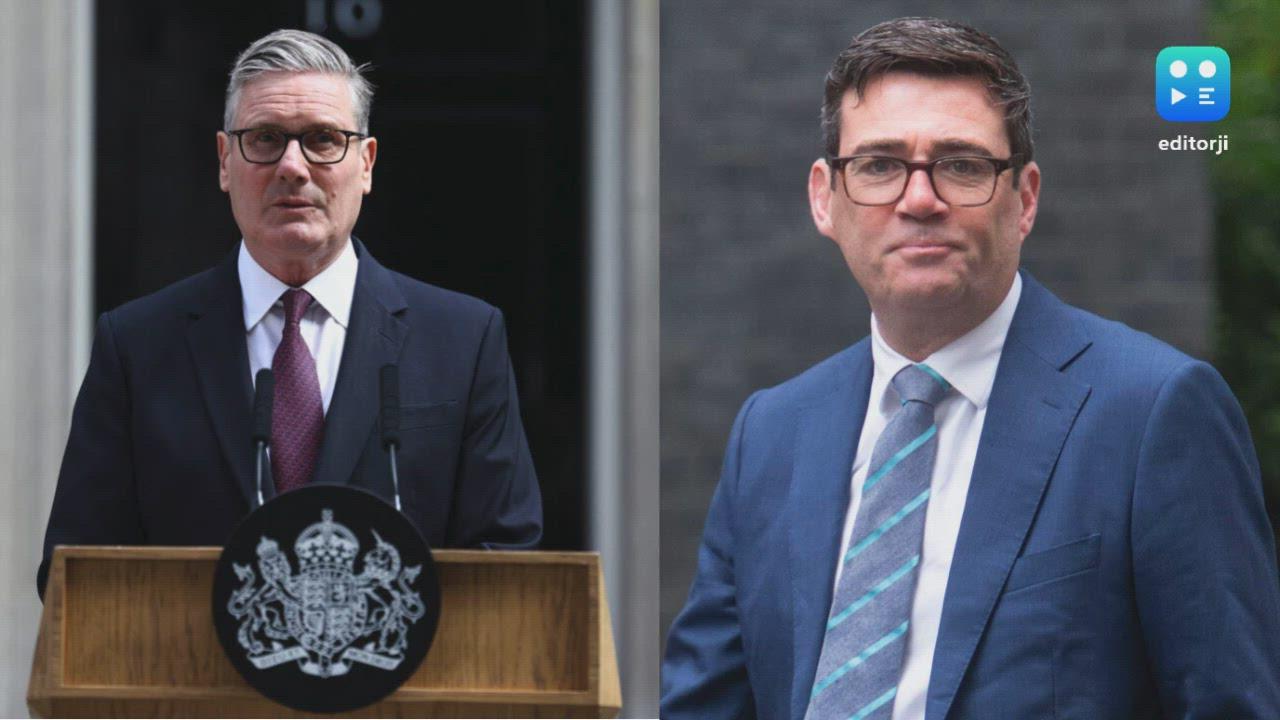
Israel's intention to escalate military operations in Gaza has been met with international criticism. British Prime Minister Keir Starmer has implored Israel to reconsider, asserting that diplomatic solutions remain possible if both parties eschew conflict. Spain's Foreign Minister José Albares warned that Israel's plan would lead to additional destruction and suffering. Turkey’s Foreign Ministry labeled the escalation as part of Israel’s “expansionist” agenda and urged for immediate acceptance of a ceasefire and negotiations for a two-state solution. Australia echoed these sentiments, with Foreign Minister Penny Wong advocating for a two-state solution as the only viable path to a lasting peace: a Palestinian state and the State of Israel coexisting peacefully within internationally recognized borders. (AP) SKS SCY
(Only the headline of this report may have been reworked by Editorji; the rest of the content is auto-generated from a syndicated feed.)