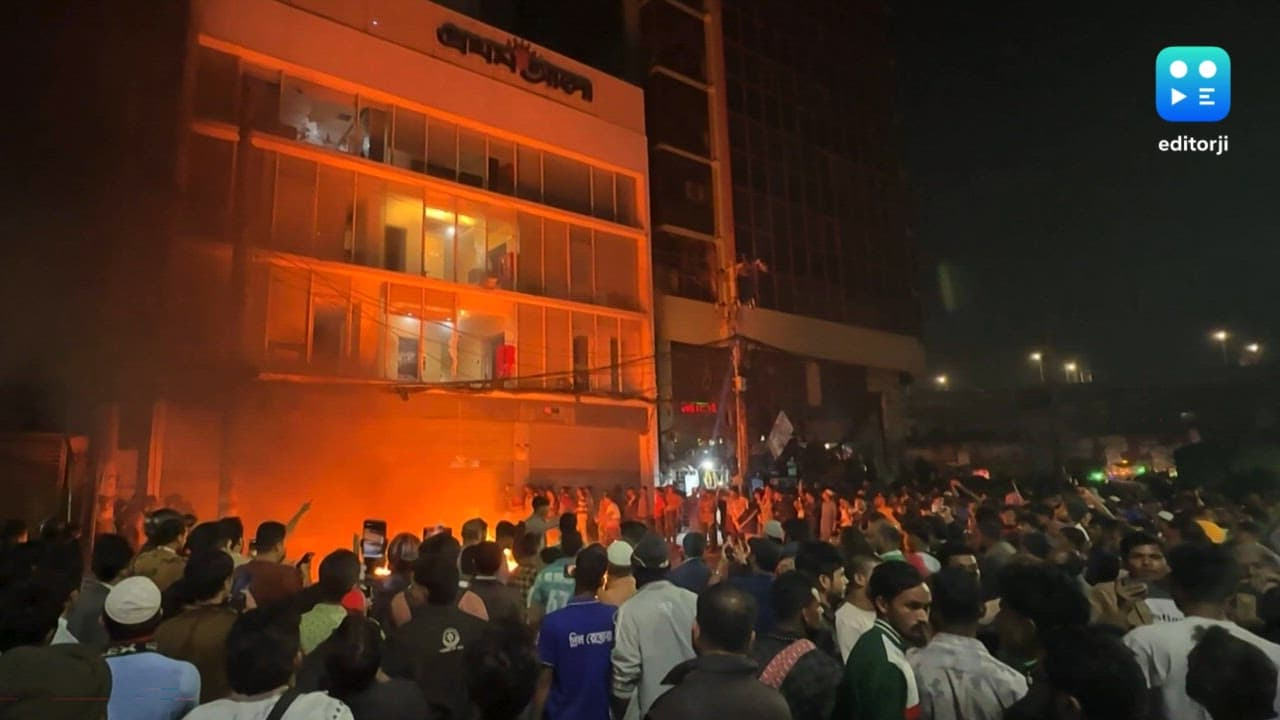
Deir al-Balah (Gaza Strip), Sep 9 (AP) The Israeli military has called for a complete evacuation of Gaza City, preluding its planned escalation of offensive actions in the region. This urgent plea highlights the extreme conditions, including chronic food shortages, faced by hundreds of thousands of individuals in northern Gaza.
The warning on Tuesday marks the first comprehensive call for evacuation in this particular phase of conflict. Previously, Israel had only advised specific areas of Gaza City to evacuate in anticipation of localized military operations or strikes.
Associated Press reporters observed increased movement from north to south Gaza, with vehicles loaded with supplies and people traversing, though there was no mass exodus.
Israel demolishes multiple towers in Gaza City Israeli Defence Minister Israel Katz reported on Tuesday that Israel has destroyed 30 high-rise buildings in Gaza, alleged to be used by Hamas for military purposes.
Prime Minister Benjamin Netanyahu stated that at least 50 "terror towers" have been targeted and destroyed, signifying the first phase before more intensive ground operations are undertaken. Netanyahu emphasized these demolitions are part of a strategy to dismantle what Israel describes as Hamas's final stronghold, urging Palestinians to seek refuge in a designated safe zone in southern Gaza.
Limited response to evacuation warnings Despite the broad evacuation advisories, residents have shown reluctance to leave. Israel's earlier directives targeting specific neighborhoods had minimal effect due to the population's fatigue from recurrent displacements. Additionally, there is skepticism regarding the safety of relocating to southern Gaza.
According to the Israeli military and the United Nations, approximately 1 million Palestinians reside in north Gaza, nearly half of the region's 2.1 million population. By September 7, a coalition of aid groups reported that 50,000 people had moved south, while a similar number relocated within northern Gaza. This data is compiled via eyewitness reports, social media, and on-ground partners, as access to northern Gaza remains restricted.
Military spokesperson Col. Avichay Adraee underscored last week's prediction that Gaza City's evacuation was "inevitable," promising humanitarian aid to families relocating south. Nonetheless, aid organizations caution that the current infrastructure cannot adequately sustain these displaced populations.
Protests against Israeli military actions Palestinians, including healthcare professionals, staged a protest in Gaza City on Tuesday to denounce Israeli evacuation warnings.
"We will never leave our land ... healthcare workers won't leave, and we are calling for protection," stated Dr. Muneer al-Boursh, the head of the Health Ministry in Gaza.
According to Dr. Rami Mhanna, managing director of Shifa Hospital, operations at the facility continue despite mounting tension in the city. "So far, things are as usual," he said, mere hours after the evacuation order was given. Despite the stress, he noted there was no noticeable displacement around the hospital.
In Jerusalem, families of hostages and former captives urged Israeli lawmakers to halt the offensive, citing a history of negotiating prisoner releases with Hamas as more effective.
UN highlights economic barriers to relocation The United Nations' humanitarian agency highlighted the economic obstacles faced by families wishing to evacuate. The cost of moving to southern Gaza, exceeding USD 1,000 for many, is prohibitive. Additionally, available displacement sites are overcrowded.
A recent UN initiative aimed at supplying temporary shelters reported more than 86,000 tents and gear awaiting entry clearance to Gaza. The UN agency overseeing refugee assistance reported that Israeli strikes on residential towers have left many families homeless.
COGAT, the Israeli body overseeing aid, stated 1,500 aid trucks delivered goods to Gaza last week. Plans are underway to import 100,000 tents, awaiting in Jordan, but modifications are necessary as plastic poles will replace metal ones repurposed as rocket materials by militants.
Conflict in Gaza erupted when Hamas captured 251 individuals on October 7, 2023, resulting in over 1,200 deaths, predominantly among Israeli civilians. Forty-eight hostages remain in Gaza, about 20 are believed to be alive.
Israel's retaliatory efforts have resulted in at least 64,522 Palestinian casualties, as reported by Gaza's Health Ministry, which does not distinguish between civilian and combatant deaths. Approximately half of those killed were women and children, with substantial urban destruction and nearly 90 percent displacement in the 2 million-strong population.
Teenagers killed in the West Bank On Monday, two 14-year-old Palestinian boys were killed in Jenin, in the Israeli-occupied West Bank, according to the Palestinian Health Ministry based in Ramallah.
The Israeli military reported an encounter in Jenin involving individuals approaching Israeli forces under conditions deemed threatening, though details are scarce due to military area restrictions.
West Bank tensions escalate following a deadly attack in Jerusalem where two Palestinians shot at a bus stop, killing six people—the deadliest civilian assault in Israel in almost a year. Defence Minister Katz has imposed sanctions on the attackers' hometowns, ordering demolition of unpermitted structures and canceling 750 work visas for residents. (AP) SKS GSP GSP
(Only the headline of this report may have been reworked by Editorji; the rest of the content is auto-generated from a syndicated feed.)