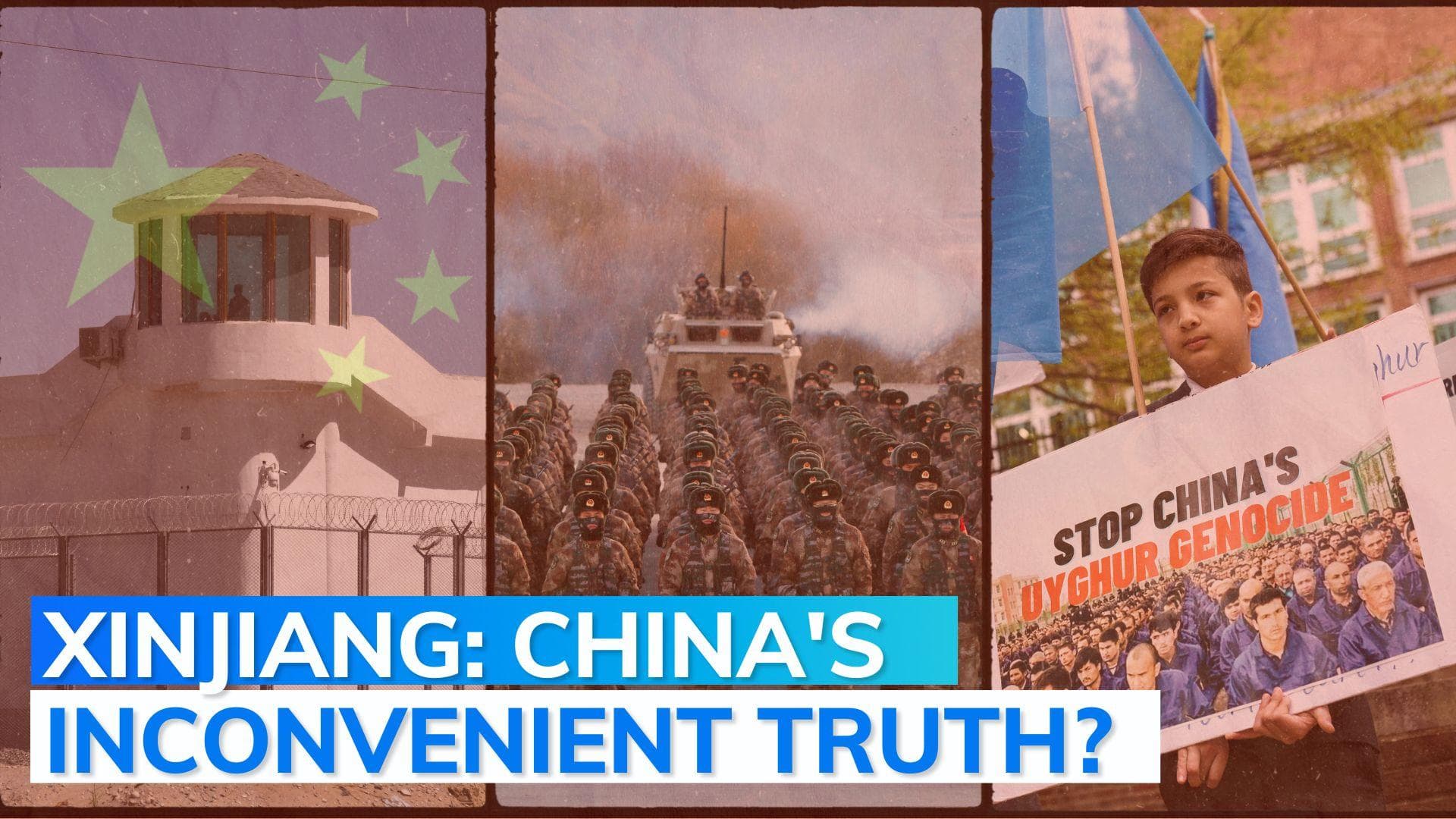
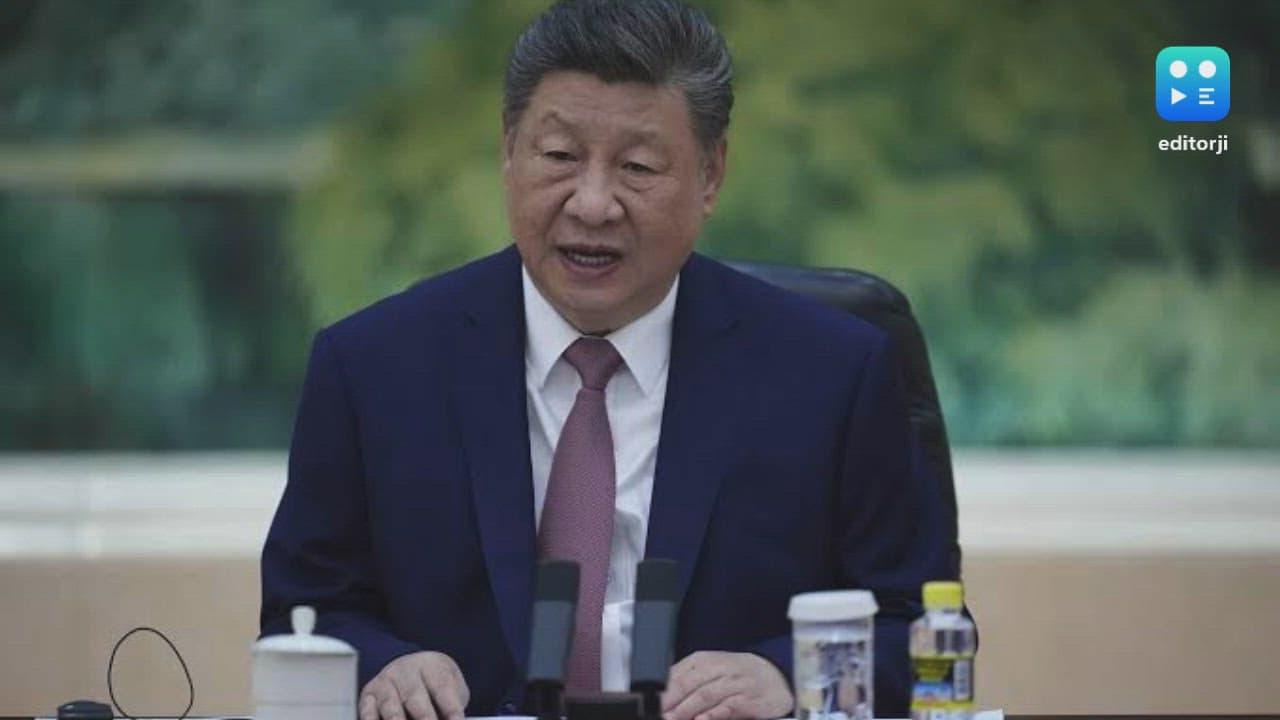
China has been accused of human rights violation and genocide of Uyghurs, an ethnic minority group in the northwestern region of Xinjiang.
China has dismissed the allegations as “disinformation and lies fabricated by anti-China forces and out of the presumption of guilt.”
The Uyghur issue particularly gained international attention after the release of a UN report in 2018 which was followed by the UN human rights chief’s visit to the region, leaks of classified government documents such as the one published by the International Consortium of Investigative Journalists famously known as the ‘China Cables’, investigations by human rights activists, and most importantly testimonies from members of the community themselves.
The alleged detentions, forcible training as well as abuses inside enclosed government facilities have been described by the government of the United States, parliaments of the UK as well as European Union nations and many international groups as a form of “genocide”. But mystery still shrouds the region and the so-called detention centres that China calls Vocational Education and Training Centers (VETCs) as no media or human rights observers have been given unfettered access to them.
Why is Xinjiang important for China?
Located in the northwest, Xinjiang covers more than 1.6 million sq km and is the largest region of China. It is rich in oil and natural gas besides its natural beauty.
China has been ramping up energy production in Xinjiang with the aim of bolstering oil extraction and refining, coal production, power generation, and natural gas production and transport.
Pipelines and high-voltage wires are now visible in the deserts of the region, as per a New York Times report.
Xinjiang has an estimated 21 billion tons of oil reserves, a fifth of China’s total. With explorations underway major new deposits are being found.
It also has the country’s largest coal reserves, an estimated 40 percent of the national total, and the largest natural gas reserves, according to the Chinese Ministry of Land Resources. China is eyeing to capitalize on these energy reserves to power its cities and industries.
History of Xinjiang
The term Xinjiang translates to ‘new frontier’ or ‘borderland’.
Xinjiang has a long history of cross-migration by different minority groups owing to its location along the ancient Silk Road—a major trade route active from the second century to the mid-15th century.
The region has been declared independent twice. In 1933 and 1944 an independent East Turkestan was declared by the then-majority Uyghurs. Once the Uyghurs were defeated by nationalist Chinese and the second time by the Chinese communists with help from the erstwhile Soviet Union.
China believes it has an ancient claim to Xinjiang and considers it an “inseparable part of the Chinese nation”.
Uighurs, however, disagree. They argue that the region’s borders have been drawn and redrawn by the dominant powers over centuries.
Who are the Uyghurs?
There are about 12 million Uyghurs, mostly Muslim, living in Xinjiang, which is officially known as the Xinjiang Uyghur Autonomous Region (XUAR) also called East Turkestan by the Uyghur community.
The language spoken by the Uyghurs, which is of the same name, has Turkic roots.
The community culturally and ethnically doesn’t identify with the Han Chinese--the largest ethnic group in the country.
The Uyghurs have been practising Islam for centuries, tracing their religious influence to the Karakhanid, a Turkic fiefdom that ruled Central Asia from the 9th to the 13th century. Prior to this, they followed other religions including Zoroastrianism and Buddhism.
Uyghurs pitted against Han Chinese?
Other ethnic groups residing in the region include Kazakhs, Kyrgyz, Mongols, Tajiks, Uzbeks and Tatars but of late, Xinjiang has allegedly witnessed the mass migration of members of the Han Chinese community to the region.
Many have accused the state of encouraging the resettlement to allegedly change the demography and dilute the minority population that makes up less than half of the Xinjiang residents.
Beijing has also allegedly stepped-up security measures in Xinjiang in recent years in what it calls an effort to combat separatism and Islamic extremism it thinks stems from the different ethnic and religious identity of the Uyghurs in the region.
In 1953, the Uyghur population was spread in more than 75 percent of the region, according to a census cited in the UN report while the Han Chinese accounted for seven percent. That number now stands at around 42 percent.
Violent clashes involving both Uyghurs and Han killed around 200 people in the regional capital Urumqi in 2009, as per an AFP report.