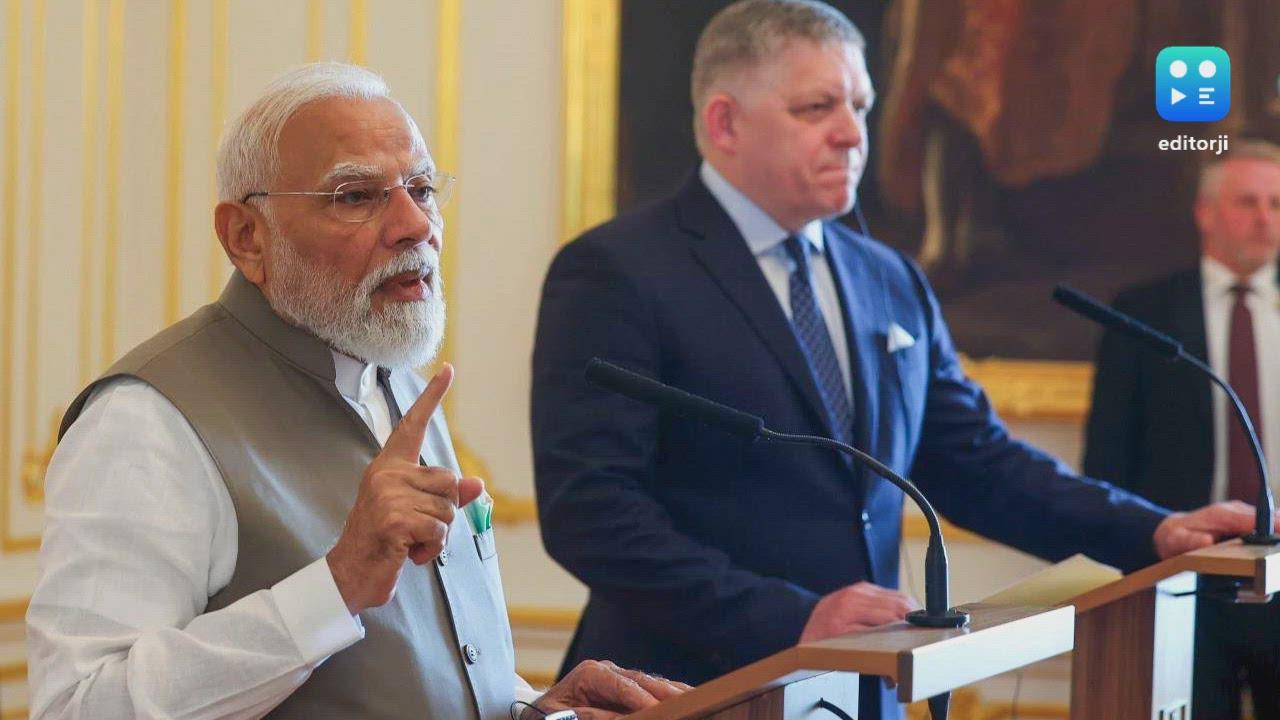
Washington, Sep 4 (AP) — Increasingly, politicians are turning to Artificial Intelligence as a convenient scapegoat to avoid blame for embarrassing situations. Since AI is not a person, it cannot defend itself, file lawsuits, or leak information, making it a plausible target for blame despite its known credibility issues in distinguishing fact from fiction in an era replete with mis- and disinformation.
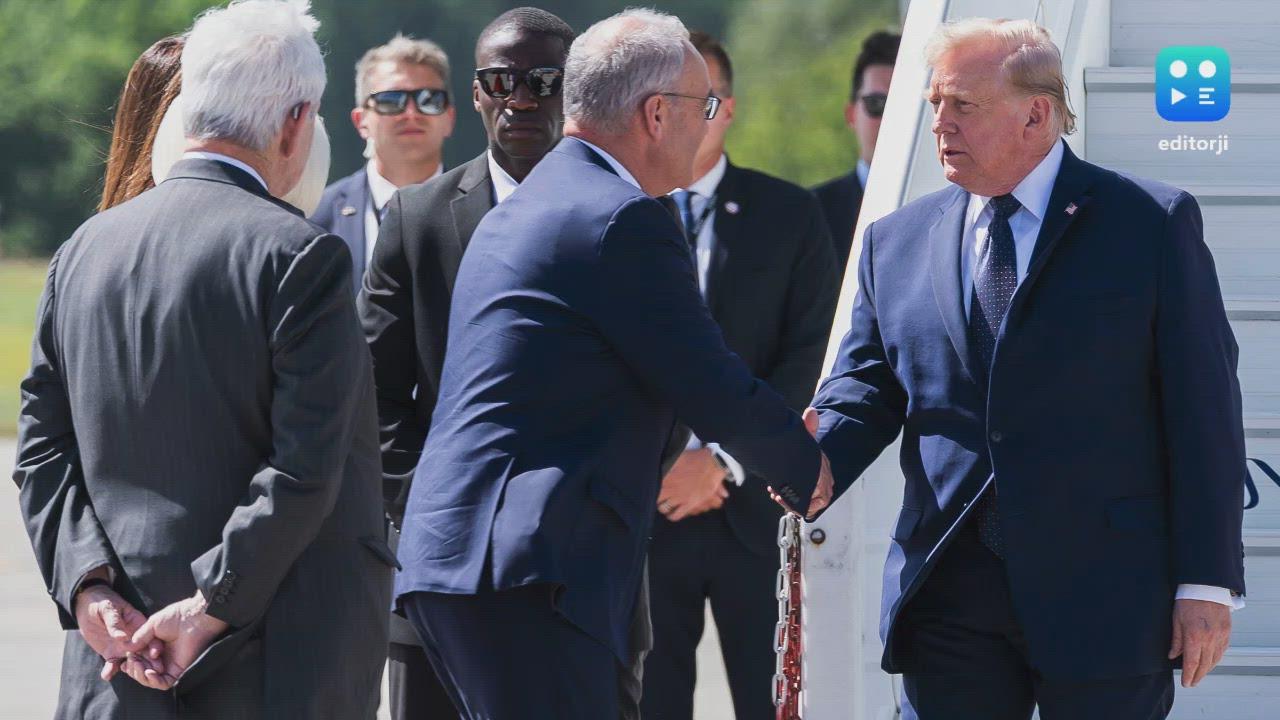
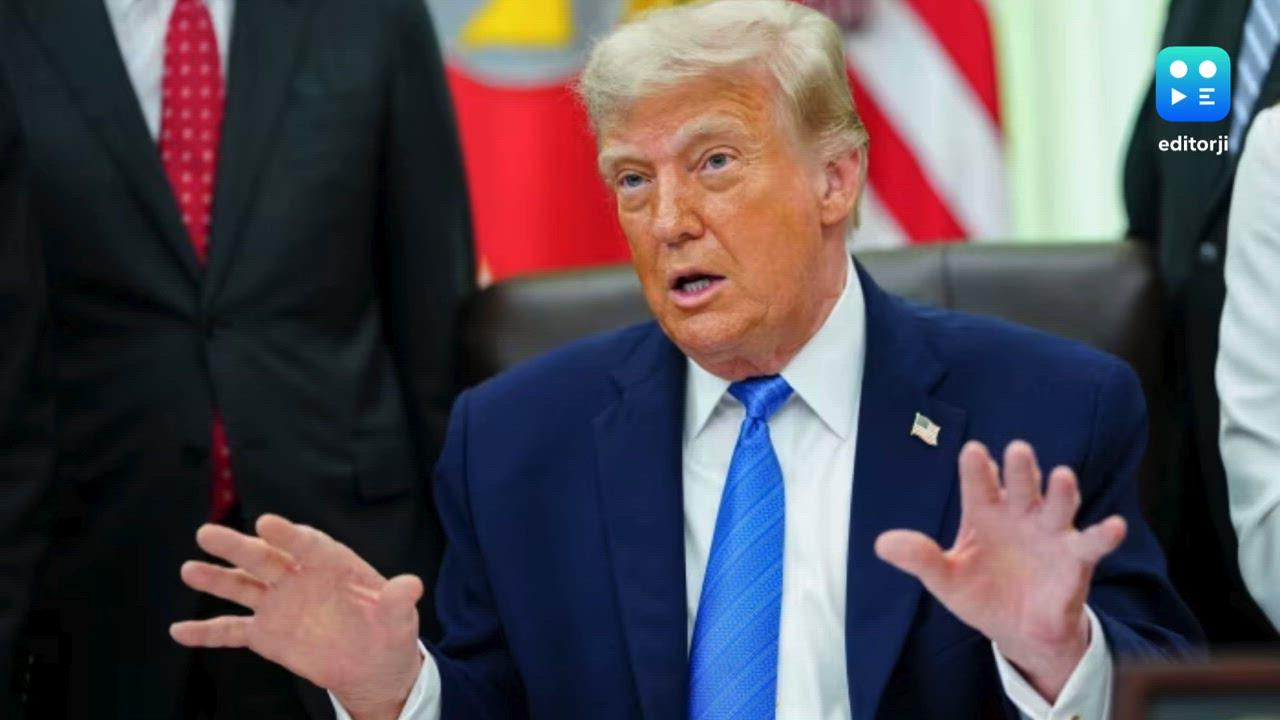
However, analysts suggest that when the truth becomes foggy, it creates an advantage for the untruthful. This phenomenon is often referred to as "the liar's dividend." On Tuesday, President Donald Trump showed his support for this tactic. When asked about viral footage allegedly showing someone tossing an object from an upper-story White House window, Trump responded, "No, that's probably AI," despite his press team confirming the video's authenticity to reporters.
Trump, known for molding truth to fit his narrative, seems to embrace the AI-blaming trend.
“If something happens that's really bad," he told reporters, “maybe I'll have to just blame AI.” He is not alone in adopting this stance.
AI is frequently scapegoated — sometimes justly, sometimes unjustly. On the same day in Caracas, Venezuelan Communications Minister Freddy Ñáñez questioned a Trump administration video that purportedly showed a U.S. strike on a vessel in the Caribbean targeting Venezuela's Tren de Aragua gang, resulting in 11 deaths. The video displayed a multi-engine speedboat at sea, followed by a bright flash and flames.
“Based on the video provided, it is very likely that it was created using Artificial Intelligence,” Ñáñez stated on his Telegram account, criticizing its "almost cartoonish animation."
Blaming AI can sometimes be done as a form of compliment. (“He's like an AI-generated player,” tennis player Alexander Bublik said of his U.S. Open opponent Jannik Sinner on ESPN). Yet, experts warn the practice can become dangerous when adopted by the powerful.
Digital forensics expert Hany Farid has long cautioned against the potential of AI-generated "deepfake" images, voices, and videos being misused for fraud or political disinformation, but he notes there's a deeper concern.
“I've always contended that the larger issue is that when you enter this world where anything can be fake, then nothing has to be real,” said Farid, a professor at the University of California, Berkeley. “You get to deny any reality because all you have to say is, 'It's a deepfake.'” That wasn't the case a decade or two ago, he added. Trump issued a rare apology in 2016 for his inappropriate comments in the notorious "Access Hollywood" tape. Meanwhile, his opponent, Democrat Hillary Clinton, apologized for calling some of his supporters "a basket of deplorables."
Toby Walsh, a chief scientist and AI professor at the University of New South Wales in Sydney, warns that blaming AI not only causes issues in the digital realm but impacts the real world as well.
“It leads to a dark future where we no longer hold politicians (or anyone else) accountable,” Walsh noted in an email. “It used to be that if you were caught on tape saying something, you had to own it. This is no longer the case."
Danielle K. Citron of Boston University School of Law and Robert Chesney of the University of Texas predicted the issue in their 2019 research, referring to it as "the liar's dividend."
“If the public loses faith in what they hear and see and truth becomes a matter of opinion, then power flows to those whose opinions are most prominent—empowering authorities along the way," they wrote in the California Law Review. “A sceptical public will be primed to doubt the authenticity of real audio and video evidence.”
Polls suggest that many Americans are wary of AI. According to a Pew Research Centre poll from August 2024, about half of U.S. adults expressed feeling “more concerned than excited” regarding AI's increasing role in daily life. The growing mistrust of AI is evident in Quinnipiac's April poll as well, where approximately three-quarters of participants admitted they could only trust AI-generated information "some of the time" or "hardly ever." Moreover, nearly 60% were "very concerned" about political leaders potentially employing AI to spread false or misleading details.
They have justification to be worried, and Trump's influence has significantly contributed to the erosion of trust and truth.
Trump’s history of disseminating misinformation and even outright lies precedes AI technology. He popularized the term “fake news,” a phrase now ubiquitously used to express skepticism toward media reports. CBS’ “60 Minutes” journalist Leslie Stahl revealed that in 2016, Trump told her in private that he tries to “discredit” journalists so when unfavorable stories surface, they go unbelieved.
Trump's recent claim regarding AI's involvement in the White House window footage isn't his first accusation of AI use. In 2023, he alleged that the anti-Trump Lincoln Project employed AI in a video to portray him unfavorably.
In a video named “Feeble,” a female narrator mocks Trump: “Hey Donald ... you're weak. You seem unsteady. You need help getting around.” She challenges his "manhood," accompanied by visuals focused on two blue pills and clips of Trump struggling with words.
“The perverts and losers at the failed and once-disbanded Lincoln Project, and others, are using AI (Artificial Intelligence) in their Fake television commercials in order to make me look as bad and pathetic as Crooked Joe Biden,” Trump shared on Truth Social.
The Lincoln Project informed The Associated Press at the time that AI was not used in the said spot.
(Only the headline of this report may have been reworked by Editorji; the rest of the content is auto-generated from a syndicated feed.)