Highlights

AI may disrupt economic models.
Universal basic income is an option.
Political decisions are key.

Latest news

Ashes 2025: Travis Head slams unbeaten 142 to crush England's Ashes hopes

Ashes 2025: Travis Head slams unbeaten 142 to crush England's Ashes hopes

Tipra Motha youth wing protests Bangladesh leader's anti-India remarks in Agartala

Tipra Motha youth wing protests Bangladesh leader's anti-India remarks in Agartala

Bangladesh interim government condemns violence amid nationwide unrest
Bangladesh interim government condemns violence amid nationwide unrest

AAP holds review meeting in Navsari ahead of municipal corporation elections
AAP holds review meeting in Navsari ahead of municipal corporation elections

Parliament concludes productive winter session; Rajya Sabha 121%, Lok Sabha 111%

Parliament concludes productive winter session; Rajya Sabha 121%, Lok Sabha 111%

AAP holds protest in Ahmedabad’s Naroda after demolition of houses, alleges lack of rehabilitation

AAP holds protest in Ahmedabad’s Naroda after demolition of houses, alleges lack of rehabilitation

AAP claims major win in Punjab local body polls; Gujarat unit sees momentum ahead of state elections

AAP claims major win in Punjab local body polls; Gujarat unit sees momentum ahead of state elections

US Democrats release Epstein photos showing Bill Gates, Noam Chomsky

US Democrats release Epstein photos showing Bill Gates, Noam Chomsky

AI’s Promised Abundance Sparks Debate on Fair Distribution

AI's impact on society raises questions about
resource distribution, challenging traditional economic models.
Universal basic income and services may ensure technological gains are equitably shared,
while existing solutions to poverty should not be overlooked.

AI’s Promised Abundance Sparks Debate on Fair Distribution

Sydney, Aug 19 (The Conversation): Artificial intelligence (AI) is arguably the defining technology of our time, yet its future impact remains a subject of debate. While techno-optimists foresee a future of material abundance driven by AI, what this means for society is unclear.

Despite the potential of AI to solve complex problems and create abundance, there remains the pressing issue of how this will be utilized. For instance, in Australia, around 7.6 million tonnes of food are wasted annually, despite one in eight citizens experiencing food insecurity due to financial constraints.

This raises questions about whether resources brought about by AI will be distributed fairly. The integration of AI could disrupt our economic model. As articulated by Lionel Robbins, modern market economics focuses on allocating scarce resources to meet unlimited demands. But with AI promising abundance, the relationship between scarcity and economic functionality is challenged, which could be exacerbated by concerns of job displacement.

Massive unemployment due to technology is not the sole driver of joblessness in market economies; systemic issues also play a role. John Maynard Keynes demonstrated that recessions may result from the market system itself, causing poverty despite existing resources.

The recent economic downturn in Australia, driven by the pandemic rather than market failure, highlighted a potential solution to the new economic challenge. During this period, changes to government benefits significantly reduced poverty and food insecurity, despite reduced economic productivity.

This experience has fueled global discussions around implementing a "universal basic income." Researchers in Australia, including those from the Australian Basic Income Lab, are exploring this concept as a way of ensuring technology-fueled abundance is shared equitably.

In discussing universal basic income, it's crucial to consider how it could affect wealth inequality. Some advocate for this income as a "rightful share" of wealth, arguing that technological advancements and social cooperation are collective human achievements that should benefit everyone equally, much like a nation’s natural resources.

These debates are longstanding, reminiscent of early 20th-century discussions during industrialization and automation in Britain. The controversies surrounding technological change aren’t new, as evidenced by historical resistance movements like the Luddites.

An alternative to a universal basic income is to rethink the distribution of AI gains through "universal basic services." Rather than giving individuals money, societies could directly provide essentials such as healthcare, education, and energy for free. This would require recalibrating the application of AI technology to prioritize communal benefit.

No one can guarantee that AI will lead to a utopian society. Proposals such as universal basic income and services underscore that AI alone won't achieve this ideal. As Peter Frase outlines, technological advancement paired with ecological challenges can produce varied outcomes, dependent on political decisions regarding resource distribution. The current dominance of tech giants hints at a scenario reminiscent of "technofeudalism," a concept described by Yanis Varoufakis, signaling a shift away from democratic and market-based systems to a more controlled technological dominion.

Relying on a technological utopia overlooks actionable solutions available now; the world already produces enough food, and methods to eradicate poverty are known. We don’t need AI to illuminate these possibilities. (The Conversation) SKS GRS GRS

(Only the headline of this report may have been reworked by Editorji; the rest of the content is auto-generated from a syndicated feed.)

ADVERTISEMENT

Up Next

AI’s Promised Abundance Sparks Debate on Fair Distribution

AI’s Promised Abundance Sparks Debate on Fair Distribution

Arsonists target Bangladesh newspapers after student leader's death

Arsonists target Bangladesh newspapers after student leader's death

US Democrats release Epstein photos showing Bill Gates, Noam Chomsky

US Democrats release Epstein photos showing Bill Gates, Noam Chomsky

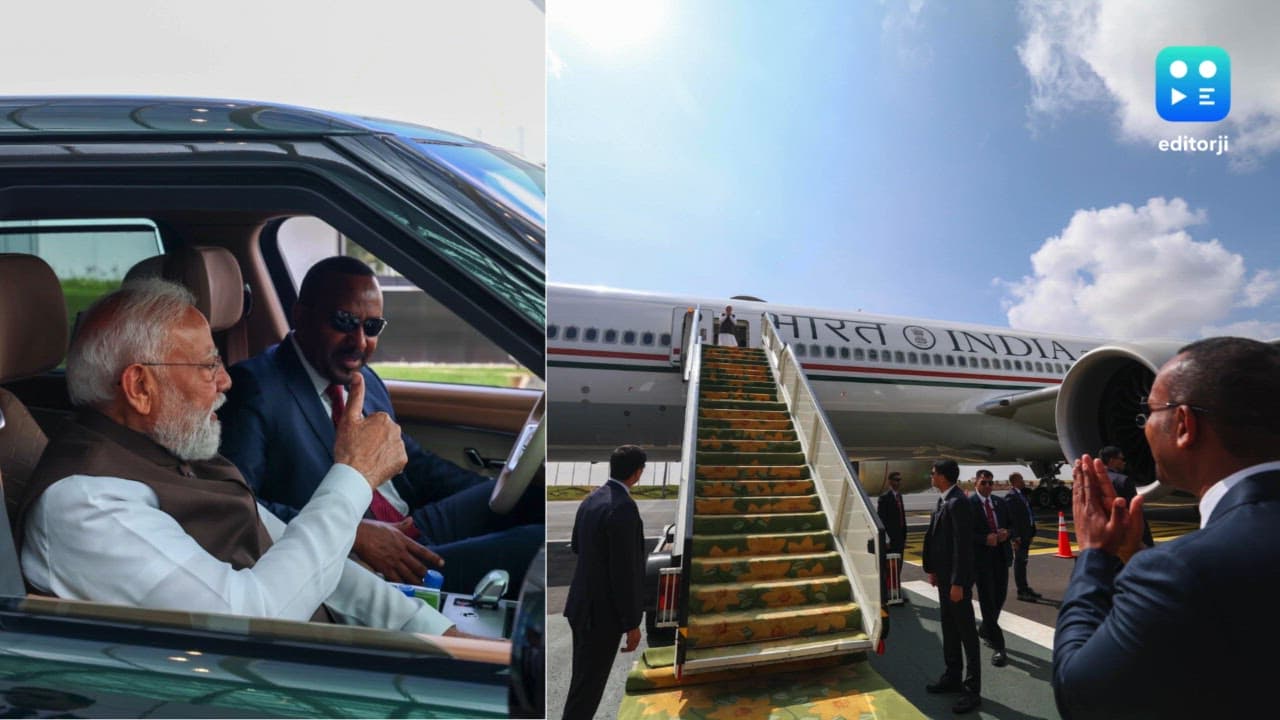
PM Modi departs for Oman on last leg of three-nation visit

PM Modi departs for Oman on last leg of three-nation visit

India closes visa application centre in Bangladesh capital due to security situation

India closes visa application centre in Bangladesh capital due to security situation

Pakistan to sell 100 pc stake in PIA after bidders demand complete control post-privatisation

Pakistan to sell 100 pc stake in PIA after bidders demand complete control post-privatisation

ADVERTISEMENT

editorji-whatsApp

More videos

India, Oman to sign free trade agreement in Muscat on Thursday
India, Oman to sign free trade agreement in Muscat on Thursday

India and Ethiopia are natural partners, says PM Modi in Ethiopian Parliament

India and Ethiopia are natural partners, says PM Modi in Ethiopian Parliament

Trump calls for global unity against radical Islamic terrorism after Bondi attack

Trump calls for global unity against radical Islamic terrorism after Bondi attack

India, Ethiopia elevate ties to strategic partnership as PM Modi holds talks with his counterpart

India, Ethiopia elevate ties to strategic partnership as PM Modi holds talks with his counterpart

PM Modi conferred Ethiopia’s highest civilian honour in Addis Ababa

PM Modi conferred Ethiopia’s highest civilian honour in Addis Ababa

Trump imposes full travel bans on seven more countries, Palestinians
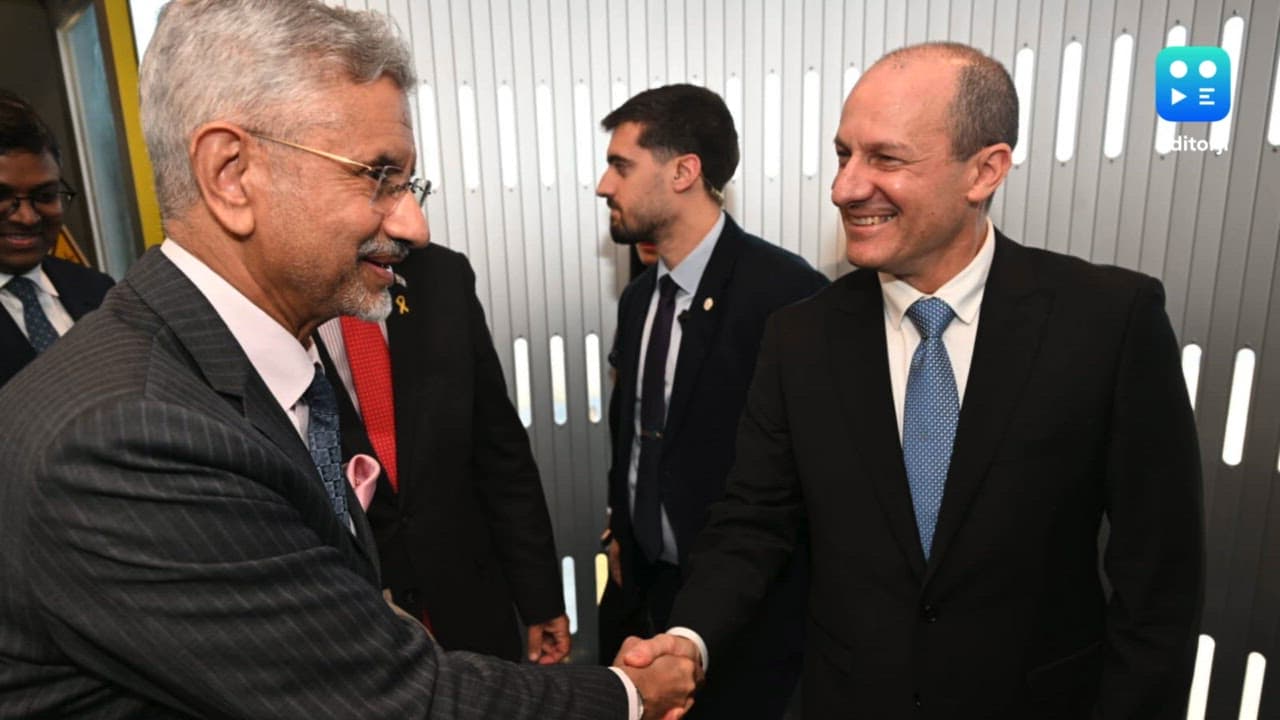
Trump imposes full travel bans on seven more countries, Palestinians

EAM S. Jaishankar arrives in Israel on two-day visit; to hold talks with top leadership
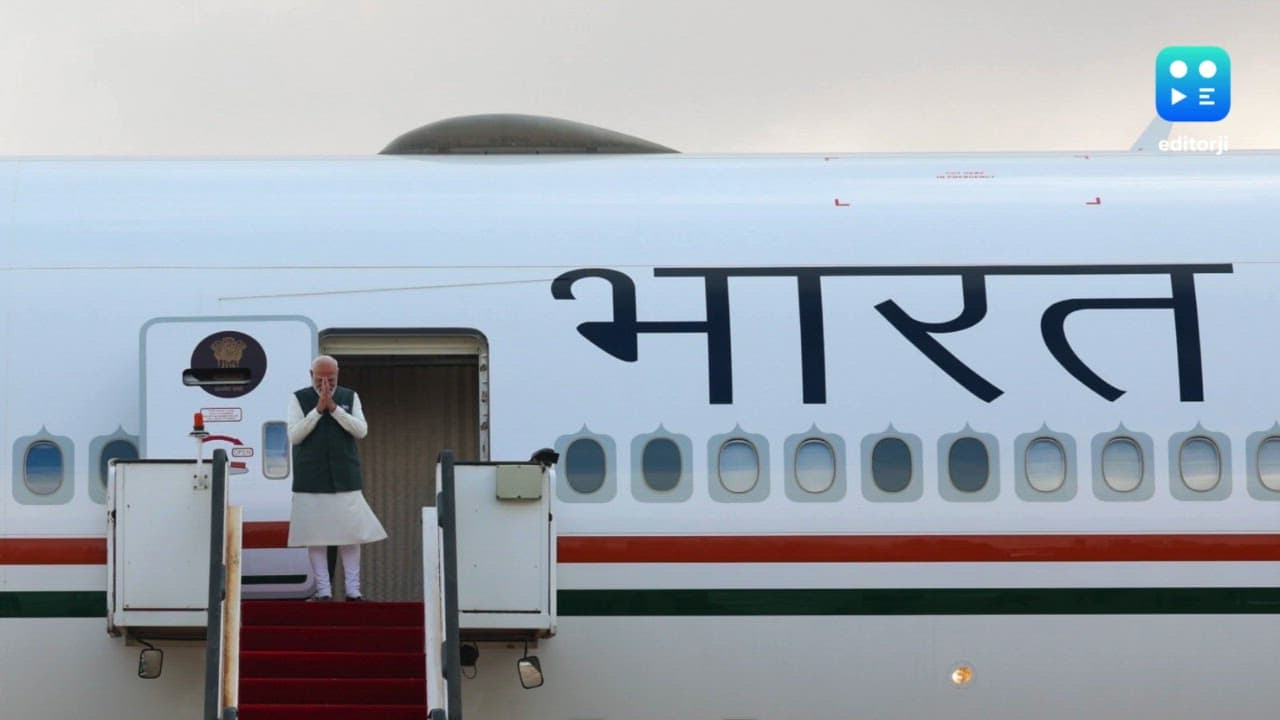
EAM S. Jaishankar arrives in Israel on two-day visit; to hold talks with top leadership

Prime Minister Narendra Modi departed for Ethiopia from Jordan

Prime Minister Narendra Modi departed for Ethiopia from Jordan

Magnitude 5.2 earthquake shakes Karachi and Balochistan, no casualty reported

Magnitude 5.2 earthquake shakes Karachi and Balochistan, no casualty reported

Crown Prince drives PM Modi to Jordan Museum in special gesture

Crown Prince drives PM Modi to Jordan Museum in special gesture

Editorji Technologies Pvt. Ltd. © 2022 All Rights Reserved.