New Delhi, Jun 5 (PTI) The Congress expressed strong disapproval on Thursday regarding Pakistan's recent appointments within the United Nations Security Council (UNSC), labeling it as "most unfortunate, ill-informed, and unacceptable." Pakistan's notable appointments include being named vice-chair of the 15-member UNSC Counter-Terrorism Committee and the chair of another significant panel within the global body.
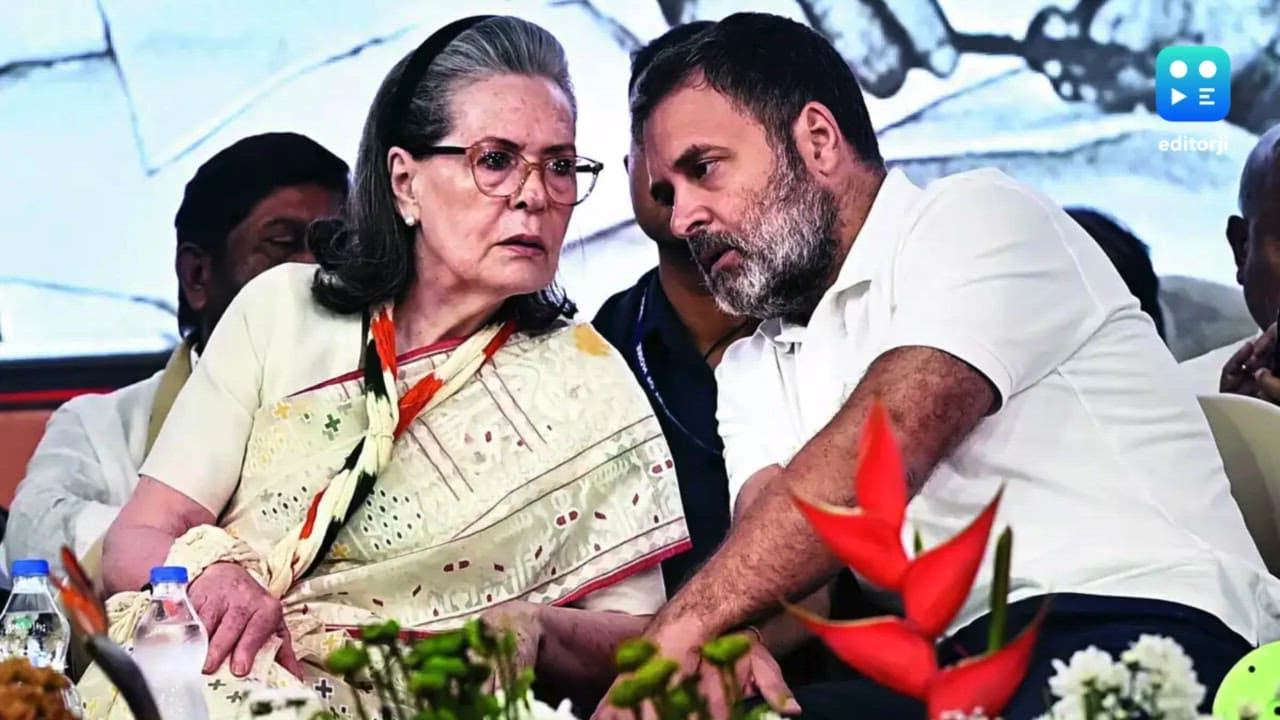
In its official statement, Congress President Mallikarjun Kharge emphasized the need for the Indian government to employ robust diplomatic strategies to de-hyphenate India and Pakistan from international perspectives. Kharge urged the global community to acknowledge and uphold India’s stance against terrorism emanating from Pakistan.
The Congress criticized this development as indicative of a broader issue, attributing it to a collapse in India's foreign policy. This criticism was accompanied by questions regarding the international community's continued legitimization of Pakistan, despite its alleged sponsorship of terrorism.
"It is imperative to hold Pakistan accountable for its transgressions, not only for India's security but also in the interest of the global community," Kharge stated.
These remarks followed the announcement of Pakistan assuming the chairmanship of the Taliban Sanctions Committee of the UNSC for 2025, in addition to serving as vice-chair of the UNSC Counter-Terrorism Committee.
Kharge took to X to underline the stark contrast between the nations, noting, "Pakistan is the perpetrator of terror. India is a victim of terror. They cannot be equated. They should not be hyphenated."
He further criticized international financial entities like the IMF, ADB, and World Bank for their monetary support to Pakistan, which he alleges increases the military budget used for fostering terrorism against India.
Congress insists that the global community should support India's call for Pakistan to be reinstated on the Financial Action Task Force (FATF) grey list due to its history of terror financing, referencing Pakistan's previous inclusion in 2008 and 2012 after India's diplomatic efforts.
Kharge highlighted historical instances involving terrorists linked to Pakistan, such as Osama Bin Laden and Khalid Sheikh Mohammed, which reinforce the importance of international vigilance against Pakistan.
Congress spokesperson Pawan Khera further illustrated this point by noting the financial aid Pakistan received contemporaneously with geopolitical developments. He mentioned the IMF's disbursement of USD 1 billion to Pakistan, followed by World Bank's decision to confer USD 40 billion, and another USD 800 million from the ADB shortly after military operations in the region.
Khera attributed these developments to the failures of India's current foreign policy, questioning the global community's reasoning for allowing what he describes as continued legitimization of Pakistan's suspected sponsorship of terrorism.
Pakistan, as a non-permanent member of the 15-nation Security Council for the 2025-26 term, will preside over the 1988 Taliban Sanctions Committee, which enforces an assets freeze, travel bans, and arms embargoes on entities associated with the Taliban threatening Afghanistan's peace and security. Guyana and Russia will serve as vice-chairs of this committee.
Moreover, Pakistan will co-chair the Informal Working Groups on Documentation and Other Procedural Questions and the General UNSC Sanctions Issues.
The UNSC sanctions committees include all 15 members and make their decisions by consensus. India previously chaired the UNSC Counter-Terrorism Committee in 2022 during its non-permanent membership in the 2021-22 term.
India has consistently highlighted to the international community that Pakistan hosts the largest number of UN-designated terrorists and entities globally. The presence of Al Qaeda leader Osama bin Laden in Pakistan until his elimination by U.S. forces in 2011 is frequently cited in this context.
Currently, the UN Security Council's permanent members are China, France, Russia, the UK, and the US. Non-permanent members include Algeria, Denmark, Greece, Guyana, Pakistan, Panama, South Korea, Sierra Leone, Slovenia, and Somalia.
(Only the headline of this report may have been reworked by Editorji; the rest of the content is auto-generated from a syndicated feed.)