


Highlights
Cui Li speaks at AI event. ZTE integrates agentic AI. Emphasis on AI-human collaboration.
Latest news

AAP alleges detention of Gujarat chief Isudan Gadhvi in Khambhalia, raises questions over police action

AAP alleges targeted FIR campaign against workers in Gujarat

Ratnaveer Precision Engineering Limited to invest Rs. 338 crore

"This move goes beyond applause, gives performers a financial identity": Sonu Nigam on ISAMRA's Rs.100 Crore royalty distribution

"Not fully aware of the details": Keralam Chief Minister Pinarayi Vijayan reacts to Ranjith's arrest

Della Resorts hosts Ram Navami celebrations in Lonavala, bringing together over 5,300 attendees

The 'Perfect Colourants' Growth Story: Driven by Mr. Madan Humad Since 1987 as India's Leading Masterbatch and Compound Manufacturer & Exporter

GST collections rise 8.8% in March to Rs 2 lakh crore; steady annual growth at 8.3%
ZTE CDO Cui Li speaks at Economist Impact's AI Innovation Asia 2025


PRNewswire
Singapore, December 4: ZTE Corporation (0763.HK / 000063.SZ), a global leading provider of integrated information and communication technology solutions, announced that its Chief Development Officer, Cui Li, spoke at AI Innovation Asia 2025, hosted by Economist Impact, the thought-leadership arm of The Economist Group.
On the panel "How May AI Help You? Agentic AI and the Customer Experience", Cui Li shared ZTE's strategic vision for agentic AI and illustrated how it is already reshaping customer experience and operational models across the company. She also underscored its role in strengthening resilience, enhancing oversight and accountability, and urged organizations to prepare now for the era of agentic AI.
Q1: Setting the scene - How is agentic AI impacting customer experience in your sector?
Agentic AI is redefining the user experience--not only about UI design, but from response to understanding and co-creation. For ZTE, under our "AI for All" strategy, we are integrating agentic AI into four key areas: networks, computing, homes, and personal devices.
For example, we enable level 4 and beyond autonomous networks with three engines--Nebula Telecom Large Model, big data, and digital twin. In real practice, ZTE and China Mobile co-created multi-agents that can detect network problems and enable self-healing, cutting troubleshooting time by 47%.
Q2: Strategic transformation - How will increasing digital autonomy through agentic AI reshape how organizations build resilience and adaptability?
Actually, we're in a highly uncertain era now. This requires us to start with the end in mind, namely, always seek stability from uncertainty and build a strong moat like the snowball effect. Also we must stay agile to spot changes and pivot on a dime, evolving from a machine-like organization into an organic, adaptive one.
And then we need to know how AI can truly help us. Large AI models are already performing at or beyond PhD level. While agents take a step further by integrating memory and tools, acting as the real-world application of models. And agentic AI can coordinate different agents to automate more complex, time-consuming tasks. Of course, this is an ideal status. The truth is, whether agents or agentic AI, they are still at a very early stage, and face many technical challenges. But given the hypergrowth of AI, I believe that solutions will be right in place very soon.
And then I believe AI can exert effects only when we stick with it to the long haul. Intelligence is built on digital and network foundations. Without digital transformation, a company will not truly achieve intelligence, not to mention becoming more resilient or adaptable--it's just like trying to run before you can walk. Also, going intelligent requires knowledge engineering, process restructuring, and an AI mindset, which is a marathon, not a sprint.
At ZTE, our digital journey started in 2016, and then intelligent transformation in 2022. Here is our experience: infrastructure first, but keep a balance between hardware and software; carry out systematic planning from the top down, to ensure everyone is on the same page; make continuous investment, as disruptive breakthroughs come from every small step; and finally, start from high-value and concrete scenarios, then iterate fast to address any uncertainties along the way.
Q3: Oversight & accountability - As AI systems make more decisions autonomously, how can companies maintain oversight, ensure accountability, and preserve digital sovereignty?
In a nutshell, to keep humans in the loop. Tasks like design, review, decision-making, and supervision--they still need to be done by people, who should remain ultimately accountable. Automation is just a means, not an end. What humans should really worry about is not being replaced--it's stepping back or being absent in this process.
Every coin has two sides, so do these models. Their generalization, emergent abilities, and continuous evolution--yes, these are the features of a truly game-changing tech. But they inherently come with hallucinations, black-box problems, and so on. In addition, human has social intelligence and morality, something that AI can never truly master. So essentially, AI is built on statistical models--it lacks common sense in the real world, let alone navigating complex trade-offs like humans do.
More importantly, rolling out AI in a business needs the deep integration with know-how. We have to consider factors like accuracy, security, compliance, and division of responsibility, and take into account both workflows and KPIs. From ZTE's hands-on experience, I'd like to give some tips: First, companies should develop their own knowledge engineering projects and domain-specific large models--plus RAG and digital twins to be professional and reliable. Second, identify the concrete problems that agents need to solve. A one-size-fits-all agent often ends up doing nothing well. Third, know when to use agents or workflows. Agents are better at handling complex tasks with variable execution paths, while workflows are more accurate and efficient in highly predictable scenarios. Last, enable end-edge-cloud collaboration to ensure both cost efficiency and security. While among all these key parts, humans are still the ones steering AI in the right direction and creating real value.
Q4: Looking ahead - How do you see agentic AI evolving from task-based automation to integrated business partners, and what immediate actions should organisations take to future-proof themselves for agentic AI?
From a tech perspective, we can think of agents or agentic AI as proactive digital workers. Beyond simple or repetitive tasks, they can connect entire workflows, realize cognitive automation, and even self-evolve. Agents now work well in scenarios that are well-structured, info-heavy, fault-tolerant, and have clear feedback loops. But they often get stuck in the lab when the real-world environments become more complex or risky. So like I said, agents and agentic AI are still early. In the next year or two, they will mainly focus on vertical industries. After that, they will take on complex tasks with greater autonomy, getting more generalized, adaptive, and able to learn and evolve. Agents now are developing very fast. Gemini 3, which was just launched last month, sets a new bar for AI models with SOTA reasoning, multimodal understanding, and agentic capabilities.
For organizations, I think embracing AI is the only way to go. Deploying AI isn't just about connecting to APIs--it's reshaping processes, structures, teams. Companies need to first make mid- and long-term plans, and be adaptable enough to keep up with tech and market changes. Next, start from high-value, business-specific scenarios, and then iterate fast. That's how we can truly master AI. Also, it is reshaping our talent strategy. In the future, three types of talent will matter most: AI experts, who drive this technology forward; AI power users, who foster innovation and enhance efficiency; and people who go beyond AI with high-order thinking and a healthy mindset. Finally, to give AI full play, companies should restructure themselves and plan for a future of "human-AI symbiosis".
AI Innovation Asia 2025 is a high-level dialogue platform connecting enterprise leaders, technology pioneers, and policymakers. Centered on 15 in-depth thematic sessions and insights from over 40 industry experts, the platform focuses on the commercialization pathways of frontier technologies, such as generative AI and Agentic AI, to help businesses turn technical insight into tangible growth and navigate sustainable digital transformation across Asia-Pacific's complex market landscape.
MEDIA INQUIRIES:
ZTE Corporation
Communications
Email: ZTE.press.release@zte.com.cn
Photo - https://mma.prnewswire.com/media/2838339/ZTE_CDO_Cui_Li_speaks_at_Economist_Impact_s_AI_Innovation_Asia_2025.jpg
Logo - https://mma.prnewswire.com/media/2601626/ZTE_Logo.jpg
(ADVERTORIAL DISCLAIMER: The above press release has been provided by PRNewswire. ANI will not be responsible in any way for the content of the same)
Up Next

ZTE CDO Cui Li speaks at Economist Impact's AI Innovation Asia 2025

Centre plans to borrow Rs 8.20 lakh cr from market in first half of FY27

Reliance denies buying Iranian oil amid US sanctions waiver

Premium petrol price up Rs 2, industrial diesel up Rs 22; no change in normal petrol, diesel rates

India's GDP expected to register over 8 pc growth in Sep-Dec: Report

Govt announces seven measures to help boost exports

More videos

RBI keeps interest rates on hold after US trade deal boosts outlook

RBI proposes to compensate customers up to Rs 25,000 loss due to fraud

RBI raises GDP growth projection of Q1, Q2 of FY27
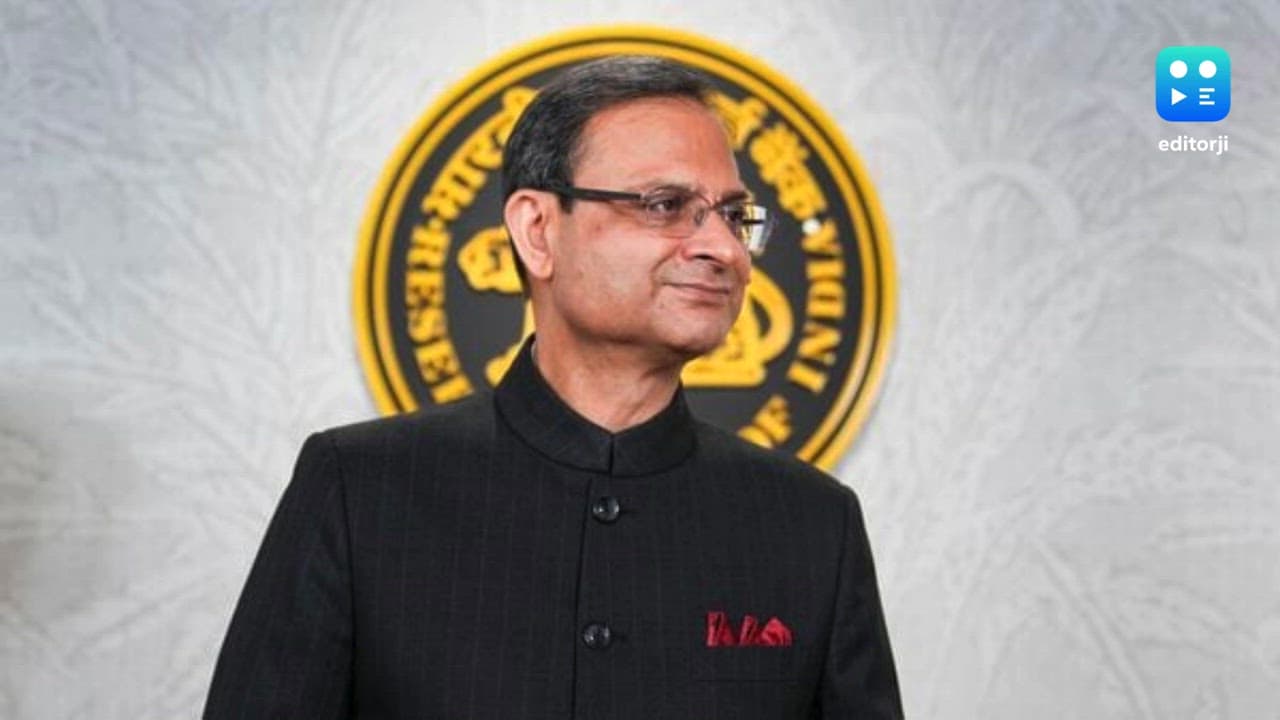
RBI pauses rate cuts, retains interest rate at 5.25 pc

Rupee jumps 122 paise to close at 90.27 against US dollar on India-US trade deal

Stock markets cheer India-US trade deal: Sensex, Nifty surge 2.5 pc

UPI transactions hit record high of Rs 230 lakh crore in 2025-26 till Dec: Govt

Explained: India-US trade deal, tariffs and trade benefits

Trade deal with US adds momentum to India's growth ambition: Industry leaders

Rupee jumps 119 paise to 90.30 against the US dollar on India-US trade deal