Highlights

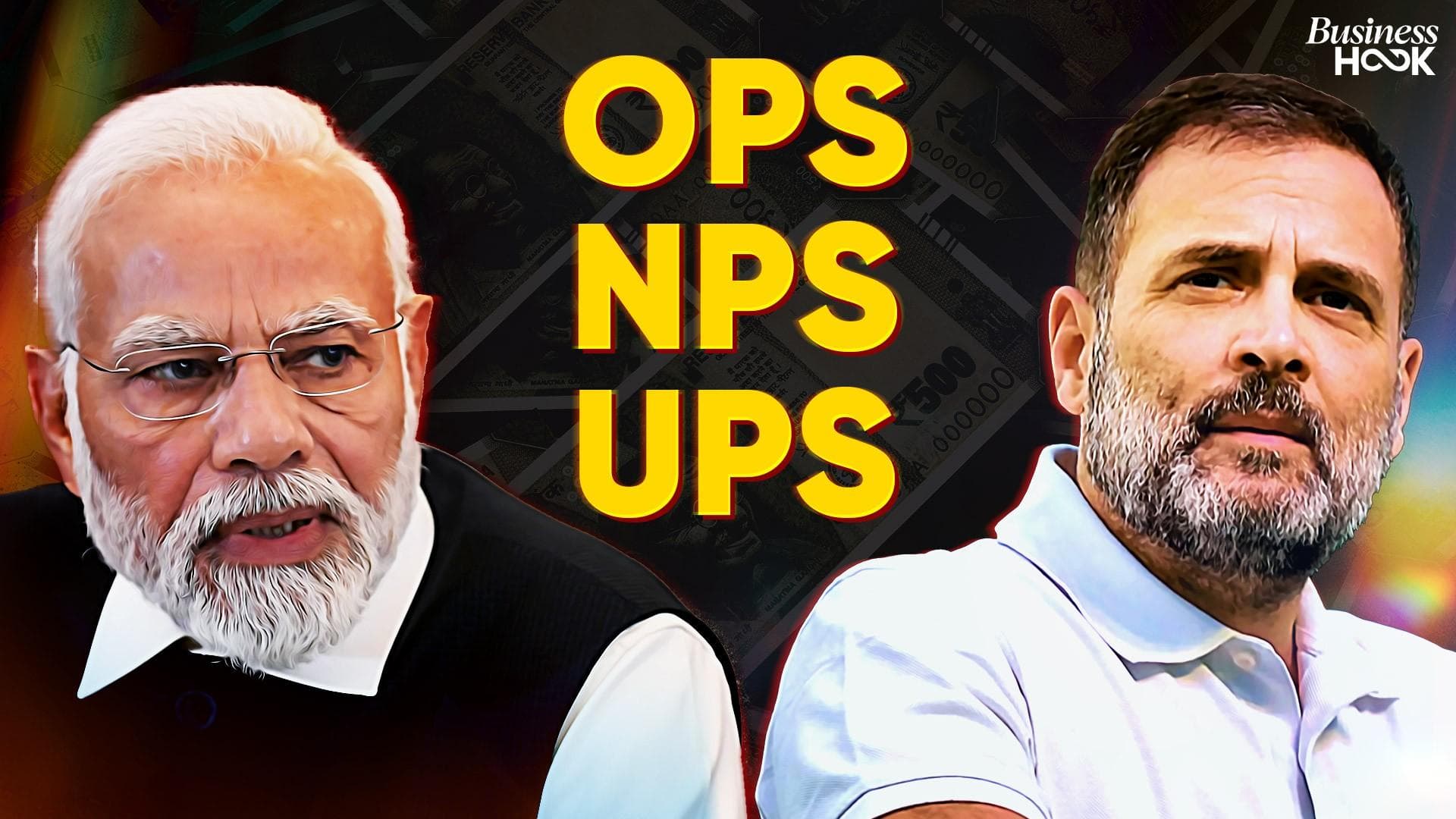
  • Till 2004, the Indian government had a pension system known as the Old Pension Scheme
  • In January 2004, the central government launched a new pension scheme or NPS
  • After political issue, govt launched Unified Pension Scheme (UPS)

Latest news
India, Russia are embarking on new journey of innovation, co-production and co-creation: PM Modi

India, Russia are embarking on new journey of innovation, co-production and co-creation: PM Modi

India is conducting independent and sovereign policy under leadership of PM Modi,  achieving very good results: President Putin

India is conducting independent and sovereign policy under leadership of PM Modi, achieving very good results: President Putin

Indian businesses can replace void left by Western companies in Russia, says Roscongress CEO Stuglev

Indian businesses can replace void left by Western companies in Russia, says Roscongress CEO Stuglev

Regulator DGCA eases flight duty norms for pilots amid IndiGo crisis

Regulator DGCA eases flight duty norms for pilots amid IndiGo crisis

Dalai Lama launches 'Forest Resources in India' focused on climate, conservation and community

Dalai Lama launches 'Forest Resources in India' focused on climate, conservation and community

RBI raises FY26 GDP growth projection to 7.3 pc

RBI raises FY26 GDP growth projection to 7.3 pc

AAP to hold farmers’ Mahapanchayat in Gujarat's Amreli on December 7 amid crop loss crisis

AAP to hold farmers’ Mahapanchayat in Gujarat's Amreli on December 7 amid crop loss crisis

OnePlus marks 12 years in India with a new six-star lineup for the 15R reveal

OnePlus marks 12 years in India with a new six-star lineup for the 15R reveal

India's New Unified Pension Scheme Explained: What It Means for Government Employees

Unified Pension Scheme. You must have heard the term a lot in the news recently. But are you wondering what the buzz is all about? Here we tell you how this major change will impact lakhs of government employees across India.

India's New Unified Pension Scheme Explained: What It Means for Government Employees

UPS Or Unified Pension Scheme!

You must have heard the term a lot in the news recently. But are you wondering what the buzz is all about?. Stay with us to learn how this major change will impact lakhs of government employees across India.

But first a rewind

Till 2004, the Indian government had a pension system which is now known as the Old Pension Scheme or OPS.

Under this system, government employees were entitled to pension payments as lifetime income security. The two defining features of this scheme were – One, government employees didn’t have to contribute towards pension during their working years.

Two, the benefit was defined based on the number of years served and the average salary of the last 10 months before retirement.

However, in January 2004 the central government launched a new pension scheme, which is also known as the National Pension System or NPS.

The big difference between the old and the new pension schemes is that under the NPS, employees too need to contribute towards their pension and the benefits are not defined as the new scheme is market linked.

The reason the government did away with the old pension scheme was that it was putting a lot of burden on its finances and was becoming unsustainable.

However, in recent years, NPS generated a lot of political debate due to its defined contribution and non-defined benefits. In fact, in states like Punjab and Himachal Pradesh, restoration of the Old Pension Scheme had become a key poll issue.

Meanwhile, experts argued that the new scheme was a win-win deal for all stakeholders. It generated better returns for employees thus leading to a bigger retirement corpus while easing the financial burden on the government.

Since the OPS versus NPS issue had taken such a political hue, the Narendra Government had promised a review of the matter. On August 24, 2024, it delivered on its promise by announcing a new pension mechanism called the Unified Pension Scheme or UPS, which will come into effect from the next financial year.

This scheme will be implemented from 01.04.2025 and will benefit 23 lakh Central Government employees.
So, how is the UPS different from the previous iteration of the pension scheme? Here are the key features of the scheme:

The biggest difference is that it restores defined benefits. So, government employees who serve for a minimum of 25 years will get an assured pension of at least 50% of the last 12 months’ average salary as pension.

Even those who have served for at least ten years will get a minimum pension of 10,000 rupees per month.

Also, the family pension to spouse will be given at 60 percent of the pension.

And, a lump sum amount will be provided to government employees at the time of retirement.

How will these defined benefits be funded? To do so, while the employee contribution under the UPS will remain unchanged at 10 percent of basic salary,

The government contribution will go up from current 14 percent to 18.5 percent.

Eligible government employees will have the option to chose between the two schemes. However, once they make their choice, they won't be allowed to switch back to the other scheme.

While the central government unveiled the Unified Pension Scheme, it said that states could also adopt it – and Maharashtra became the first state to do so.

What do you think of the Centre's decision? Share your thoughts in the comments. And don't forget to subscribe to our channel for more in-depth coverage of economic policies.

Also Read: Zomato’s New “Schedule Your Order” Feature: What You Need to Know

ADVERTISEMENT

Up Next

India's New Unified Pension Scheme Explained: What It Means for Government Employees

India's New Unified Pension Scheme Explained: What It Means for Government Employees

RBI trims policy interest rate by 25bps to 5.25pc, loans to get cheaper

RBI trims policy interest rate by 25bps to 5.25pc, loans to get cheaper

Rupee slumps to all-time low of 90.25 against US dollar in intra-day trade

Rupee slumps to all-time low of 90.25 against US dollar in intra-day trade

Reliance completes merger of Star Television Productions with Jiostar

Reliance completes merger of Star Television Productions with Jiostar

India to lead emerging market growth with 7pc GDP rise in 2025: Moody’s

India to lead emerging market growth with 7pc GDP rise in 2025: Moody’s

Nifty hits record high after 14 months; Sensex nears all-time peak

Nifty hits record high after 14 months; Sensex nears all-time peak

ADVERTISEMENT

editorji-whatsApp

More videos

Reliance stops Russian oil use at its only-for-export refinery to comply with EU sanctions

Reliance stops Russian oil use at its only-for-export refinery to comply with EU sanctions

ED attaches fresh assets worth over Rs 1,400 cr in case against Anil Ambani's Reliance Group

ED attaches fresh assets worth over Rs 1,400 cr in case against Anil Ambani's Reliance Group

India signs one-year deal to import 2.2 million tonnes of LPG from US

India signs one-year deal to import 2.2 million tonnes of LPG from US

India International Trade Fair begins at Pragati Maidan amid tight security

India International Trade Fair begins at Pragati Maidan amid tight security

Stock markets decline in initial trade on foreign fund outflows, weak Asian peers

Stock markets decline in initial trade on foreign fund outflows, weak Asian peers

Amazon to lay off 30,000 office workers amid AI-driven cost cuts

Amazon to lay off 30,000 office workers amid AI-driven cost cuts

US sanctions on Russian firms to hit Reliance; PSUs likely to keep buying Russian oil via traders

US sanctions on Russian firms to hit Reliance; PSUs likely to keep buying Russian oil via traders

Dream debut: LG Electronics India shares jump over 50 pc

Dream debut: LG Electronics India shares jump over 50 pc

One GB wireless data in India costs less than a cup of tea: PM Modi

One GB wireless data in India costs less than a cup of tea: PM Modi

Power struggle in Tata Trusts: Trustees clash over board appointments

Power struggle in Tata Trusts: Trustees clash over board appointments

Editorji Technologies Pvt. Ltd. © 2022 All Rights Reserved.