India overhauled its tax regime in 2025 with sharp cuts in Goods and Services Tax (GST) rates and a higher income tax exemption limit, with the spotlight now turning to customs duty rationalisation and procedural simplification in the coming Budget.
Next year will see the new simplified Income Tax Act, 2025, come into effect from April 1, replacing the over six-decade-old current Income Tax Act, 1961. Also, two new laws — one to levy additional excise duty on cigarettes and another to levy cess on pan masala over and above GST rates — will be implemented on a date decided by the government.
The tax reforms rolled out by the government in 2025 were aimed at stimulating demand amid a challenging global economic environment. With tariff uncertainties casting a shadow over economic decision-making, India's tax reform measures focused on boosting domestic demand to drive consumption and support growth.
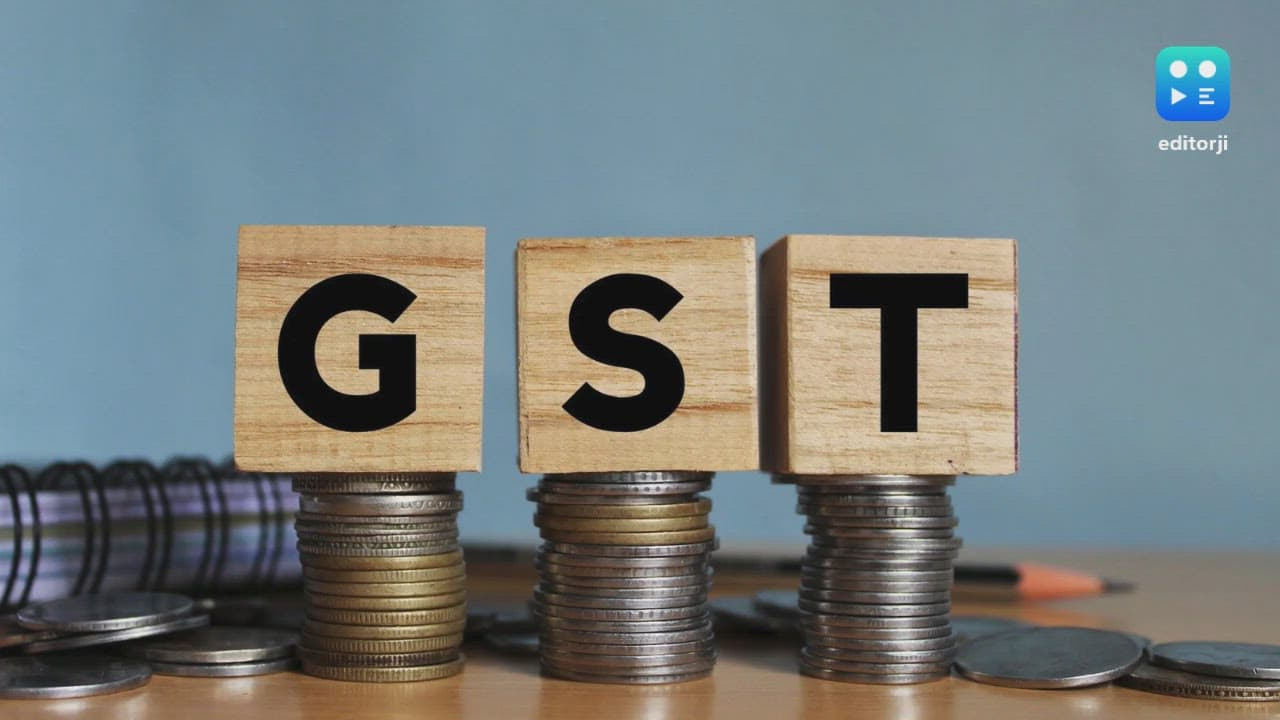
A key highlight was the reduction of GST rates on about 375 goods and services effective September 22, which lowered the tax burden on commonly used items and addressed long-standing concerns over inverted duty structures. The move to compress the four-tier GST slab structure of 5, 12, 18 and 28 per cent into two principal rates of 5 and 18 per cent, with a 40 per cent levy retained only for sin goods, marked a major step towards rationalisation and simplification of the indirect tax regime.
The GST overhaul was designed to make the indirect tax regime simpler and more predictable, with fewer rate slabs and reduced litigation. On the collections front, GST mop up touched a record high of Rs 2.37 lakh crore in April, and was averaging Rs 1.9 lakh crore during the current fiscal year. The sweeping rate cuts have put some pressure on the GST revenues with a slowing growth rate. India's Goods and Services Tax (GST) collections slipped to a year-low of Rs 1.70 lakh crore in November — growing at a meagre 0.7 per cent year-on-year. November was the first month that recorded the full impact of the GST rate cut effective September 22.
On the direct tax front, the government raised the income tax exemption limit, providing relief to middle-income taxpayers and leaving more disposable income in the hands of consumers. The move was seen as a consumption booster, particularly for urban households, while also reinforcing voluntary compliance under the simplified tax regime.
The Budget for 2025 announced that no income tax will be payable on income of Rs 12 lakh a year under the new income tax regime, which offers lower tax rates without the benefit of claiming exemptions and deductions. The tax rates applicable under this regime are 5 per cent of income between Rs 4-8 lakh, 10 per cent (Rs 8-12 lakh), and 15 per cent (Rs 12-16 lakh). Tax at 20 per cent rate is applicable on income between Rs 16-20 lakh, 25 per cent (Rs 20-24 lakh), and 30 per cent on income above Rs 24 lakh.
However, the tax cuts slowed down non-corporate income tax collections between April and mid-December. Net non-corporate tax (which includes taxes paid by individuals, HUFs, and firms) grew 6.37 per cent at Rs 8.47 lakh crore between April 1 and December 17, as against a 10.54 per cent growth in net corporate tax collection at Rs 8.17 lakh crore. Refund issuances slowed during the current fiscal year as the Income Tax department did extra analysis of high-value refund claims. Refund issuance dropped 14 per cent compared to last year to over Rs 2.97 lakh crore, according to recent data.
With major reforms in GST and income tax largely in place, policymakers have now turned their focus to customs duty rationalisation. Finance Minister Nirmala Sitharaman recently said that simplification of customs would be the next big reform agenda for the government. There is a need to bring the virtues of income tax, like faceless assessment, to the customs side in terms of transparency and entail duty rate-rationalisation. The government has steadily brought down customs duty over the last two years. But, the few items where the rates continue to be over the optimal level, would have to be brought down as well. "Customs is my next big cleaning-up assignment," Sitharaman said.
In the 2025-26 Budget, the government proposed eliminating seven additional customs tariff rates on industrial goods, following the removal of seven tariffs in 2023-24. The exercise reduced the total number of tariff slabs to eight.
As India heads to the next phase of tax reforms, simplification, predictability and ease of doing business are expected to remain at the centre of the policy agenda. Deloitte India Partner & Indirect Tax Leader Mahesh Jaising said, "evolving trade patterns, rising compliance costs, and persistent procedural bottlenecks signal the need for the next phase of Customs reforms."
Nangia Global Partner- Indirect Tax, Rahul Shekar, said emphasis should be on end-to-end digitalisation of customs processes, with uniform documentation, predictable classification practices and faster, risk-based clearances, which would enhance trade facilitation and investor confidence. The government could consider a one-time amnesty scheme for legacy customs disputes to unlock revenue and ease litigation burden, he added.