Beijing, Nov 7 (PTI) - China has officially commissioned its third aircraft carrier, the Fujian, touted as the nation's most advanced warship, featuring electromagnetic catapults. This significant development was marked by a ceremony attended by Chinese President Xi Jinping at the Sanya port in Hainan Province, held under tight security. Xinhua, the state-run news agency, reported on Xi's participation in the commissioning and flag-presentation ceremony on Wednesday, though the media announcement was made on Friday.
The Fujian boasts an Electromagnetic Aircraft Launch System (EMALS), a cutting-edge technology only mirrored by the American aircraft carrier USS Gerald R. Ford. In contrast, U.S. President Donald Trump expressed reservations, recently suggesting a return to steam power due to concerns about EMALS's cost, reliability, and maintenance difficulties, as reported by the Hong Kong-based South China Morning Post.
Although China's current trio of carriers is conventionally powered, reports suggest that the nation is constructing a fourth carrier in Dalian, potentially powered by nuclear propulsion. This shift could substantially enhance its endurance and global reach, offering sufficient power for sophisticated onboard systems.
Previously lagging behind major nations in developing aircraft carriers, China presently operates two others: the Liaoning, a refurbished Soviet-era vessel commissioned in 2012, and the Shandong, China's first indigenously built carrier, operational since 2019. Fujian is the largest among the three, with an 80,000-tonne displacement, and debuted following successful take-off and landing training for carrier-based aircraft J-15T, J-35, and KongJing-600.
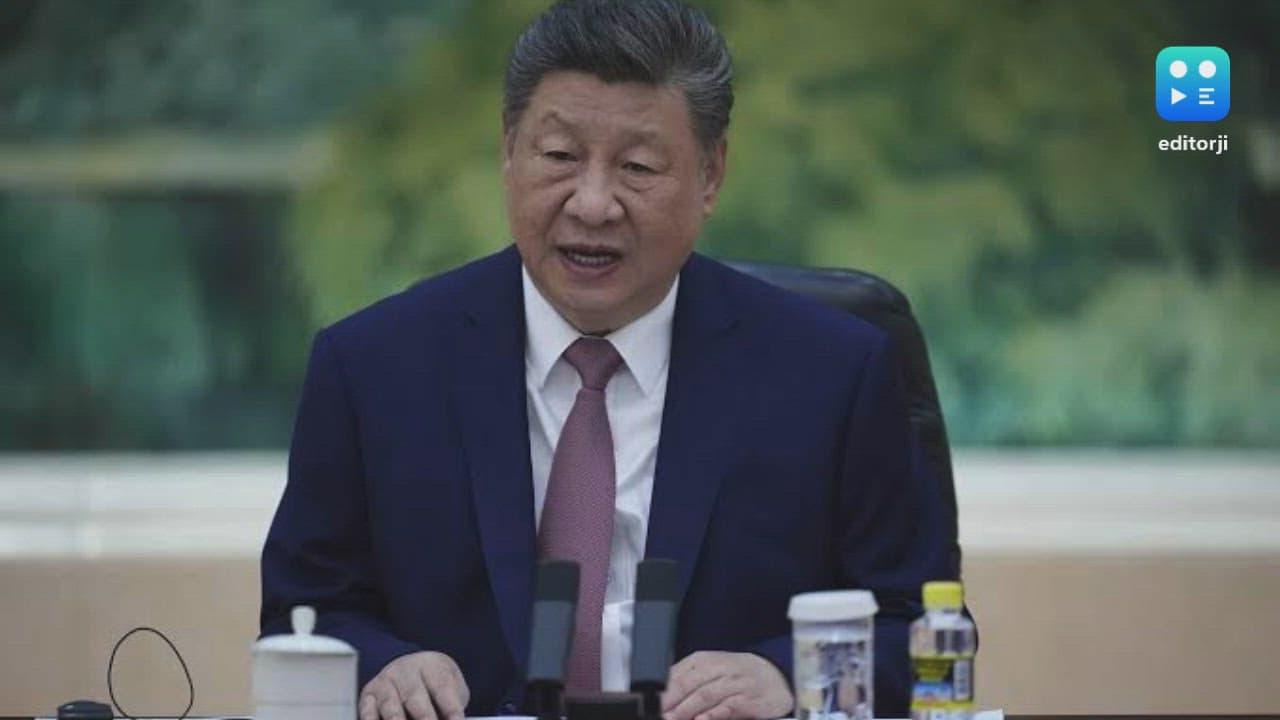
The state's analysts highlight that rising tensions with the U.S. may prompt China to expand its aircraft carrier fleet further, protecting various global maritime routes. During his visit to the Fujian, Xi Jinping, the head of the Central Military Commission, was briefed on its combat capabilities, specifically the advanced electromagnetic catapults. He also received updates on pilot briefings and the strategic advantages of these systems, a modernization initiative he personally advocated for.
With the Fujian operational, the Chinese navy is likely to allocate its carriers near contentious regions, such as the Taiwan Strait and the South China Sea, where China asserts extensive territorial claims contested by Taiwan, the Philippines, Vietnam, Malaysia, and Brunei. China's naval presence could also extend to the Indian Ocean and Arabian Sea, supported by bases in Djibouti and Gwadar, and infrastructure at Sri Lanka's Hambantota port.
A recent BBC report highlighted that China's naval fleet now surpasses the U.S.'s, featuring 234 operational warships compared to 219 by the U.S. Navy. Meanwhile, the Indian Navy, with two carriers, INS Vikrant and INS Vikramaditya, continues to upgrade its capabilities to secure dominance in the Indian Ocean.
China is also advancing a new fighter jet designed for carrier-based operations. According to Zhang Junshe, a Chinese military affairs expert, the commission of Fujian signifies a strategic shift for the Chinese navy from coastal defense to distant sea operations.
Zhang identified three major enhancements for the PLA Navy with Fujian's arrival: the adoption of the EMALS system, enabling aircraft to launch fully armed and fueled, thereby expanding combat radius and attack capabilities. Military commentator Song Zhongping recognized the rapid development pace of Fujian as remarkable, considering its flat deck and advanced technologies, including electromagnetic systems, providing the PLA with substantial advancements yet acknowledging current limitations in performance and quantity to counter foreign interventions in the Taiwan Strait.
Song remarked that Fujian, uniquely integrating fixed-wing aircraft and helicopters, heightens operational versatility. However, achieving full operational readiness necessitates enduring training and adaptation.
(Only the headline of this report may have been reworked by Editorji; the rest of the content is auto-generated from a syndicated feed.)